Table of Contents
South Korean viewers petitioned to cancel SBS drama Doctor X: The Age of White Mafia after it aired an episode featuring a survivor of the 5·18 Democratization Movement. The backlash centers on claims the show turned settled history into a “political issue.” The episode aired October 24, triggering immediate online criticism and a formal petition.
Why would a medical drama about doctors and hospital politics suddenly become a flashpoint for historical memory? That question sits at the heart of this story. Korea’s relationship with its own democratic history, it turns out, is far from fully resolved, even four decades later.
What Happened on SBS’s Doctor X
The scene itself seems simple enough. Lead character Kye Su-jung, played by Kim Ji-won, travels with colleagues to Gwangju to meet a survivor of the 5·18 Democratization Movement. They board a city bus marked route 518, a quiet nod to the uprising’s date, May 18, 1980.
For many viewers, this felt like a respectful homage. Gwangju’s own public transit system uses that number deliberately, a small but meaningful civic memorial woven into daily life. (Yes, an entire bus route was numbered specifically to honor the date — that’s how seriously the city treats this memory.)
But not everyone saw it that way. Within hours, some online commenters argued the drama was inserting a “political statement” into pure entertainment. A national petition calling for the show’s cancellation followed soon after, and the debate has not slowed down since.
The core complaint is that writers chose to dramatize a historical events many consider legally and academically settled. Korean courts have already ruled on the matter. Government commissions have documented it extensively. Yet the drama’s critics insist on calling it “controversial” anyway.
Why the 5·18 Democratization Movement Still Divides Opinion
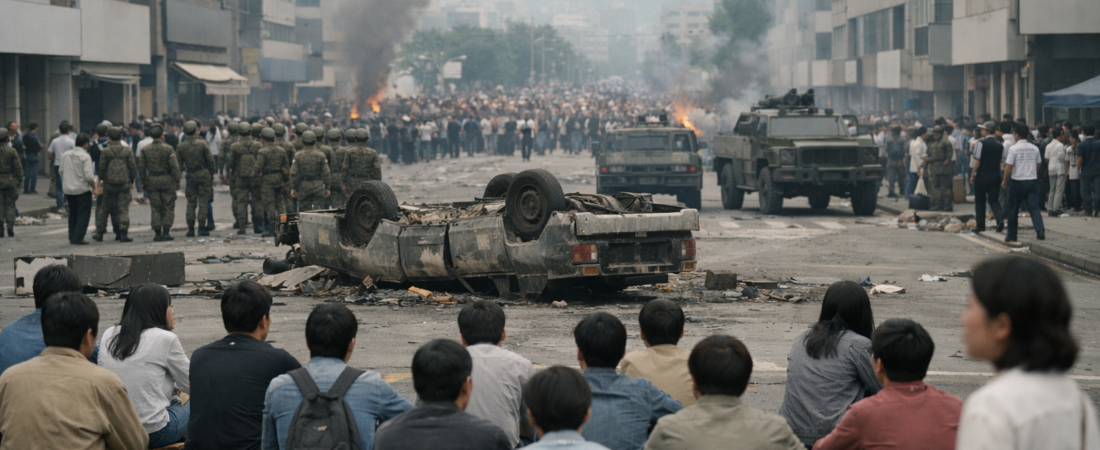
To understand the uproar, you need some background. The 5·18 Democratization Movement refers to the 1980 Gwangju uprising, when citizens rose against martial law under military leadership. Soldiers killed civilians during the crackdown, and the death toll remains debated, though official counts exceed 160, with many more wounded or missing.
Since democratization in the late 1980s, South Korea has formally recognized the 5·18 Democratization Movement as a legitimate pro-democracy uprising, not a riot or insurrection. Special legislation was passed. A national cemetery was built. Perpetrators were tried, and some were convicted, though political winners.
Despite this legal and historical consensus, a vocal minority continues to challenge the narrative. Some claim the death toll is exaggerated. Others argue North Korean agents infiltrated the protests, a theory repeatedly debunked by independent investigations and the Kyunghyang Shinmun.
So why does this fringe view persist decades after the official record closed the case? Partly, it reflects Korea’s deep political polarization, where historical memory often gets pulled into present-day partisan battles. The 5·18 Democratization Movement has, unfortunately, become shorthand for broader ideological fights rather than a shared chapter of national grief.
Fiction, Politics of Framing, and the Line Between Art and Advocacy
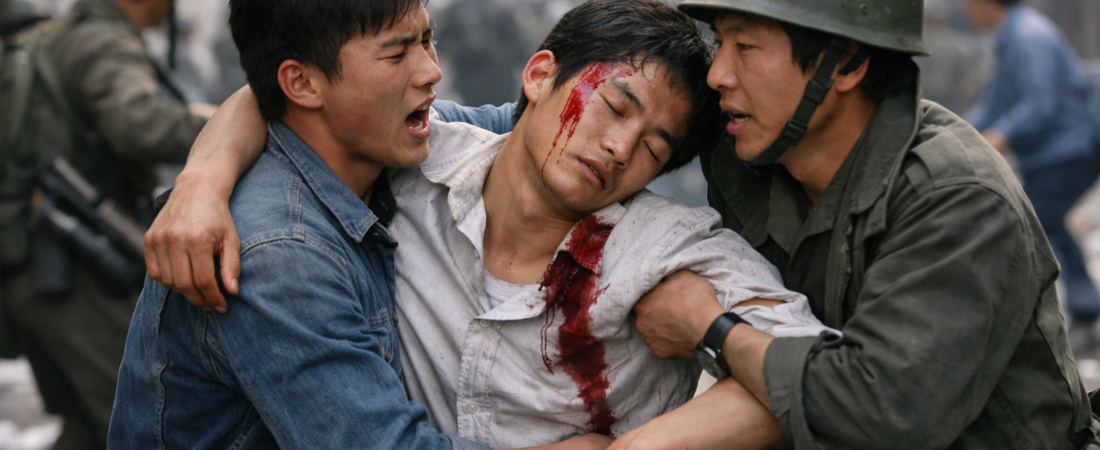
Here’s where things get genuinely complicated. Critics of the drama argue that fictionalizing the 5·18 Democratization Movement turns settled history into an open debate again. By showing survivors and their suffering, they claim, the show implicitly takes a side on something that should not require taking sides.
But doesn’t that argument work backwards? Depicting a documented historical tragedy is not the same as manufacturing political controversy around it. If anything, treating the subject as untouchable risks suggesting the history itself remains genuinely contested, when courts and historians say otherwise.
Television dramas have long used real historical backdrops to humanize suffering, from World War II films to Holocaust dramas. Few would call a film showing Holocaust survivors “politically framing” a settled historical fact. The same logic, many argue, should apply here.
Supporters of the episode say the backlash reveals something else entirely: an organized effort to relitigate a closed historical chapter through public pressure campaigns. Petitions calling for cancellation, they note, carry real weight with broadcasters worried about advertiser backlash. That gives a small but vocal group outsized influence over how major networks portray the 5·18 Democratization Movement going forward.
What This Controversy Reveals About Korea Today
This episode is not really about one SBS drama. It is about how a nation processes trauma that happened within living memory, while a new generation watches on streaming platforms with little direct context. Younger Korean viewers may know the 5·18 Democratization Movement only through textbooks, documentaries, or now, television dramas like this one.
That makes the stakes higher, not lower. If dramatized history gets quietly erased under pressure campaigns, future viewers lose one more channel for understanding what actually happened in Gwangju in 1980. Yet if every portrayal must be fought over publicly, writers may simply avoid the subject altogether, which helps no one either.
There is a harder truth worth naming here: Korea’s democratic memory remains genuinely contested ground, not because the facts are unclear, but because trust between different political communities has eroded. That is a real and painful gap, and pretending otherwise would be dishonest. Still, something hopeful persists in Gwangju itself, where citizens have spent decades building memorials, museums, and oral history archives specifically so memory cannot simply be erased or rewritten by pressure campaigns.
Human communities are remarkably good at preserving what matters to them, even under strain, and Gwangju’s quiet, patient documentation work over forty years proves that. But that same communal persistence can also calcify into defensiveness, turning every new portrayal into a battleground rather than an invitation to understand. The healthiest path forward probably holds both truths at once: honoring the dead honestly, while staying open enough to let new generations encounter that history through fresh storytelling.
Where this goes next likely depends on how SBS responds to the petition, and whether other networks grow more cautious about historical subjects. Korean broadcasters have faced similar pressure campaigns before, and outcomes have varied widely depending on political climate and audience response. The 5·18 Democratization Movement will likely remain a touchstone for how Korea negotiates memory, art, and politics for years to come.
What do you think — should dramas be free to portray settled historical tragedies like the 5·18 Democratization Movement without facing cancellation campaigns?
AI-Generated Photorealistic Image — All people, scenes, and details in this image are entirely AI-generated and fictional. Not a real photograph of an actual person or event. 이 이미지는 AI로 생성된 가상 이미지입니다.
Leave a Reply