Table of Contents
Can you demand a police officer’s private phone records just because you don’t trust the investigation? Heo Kyung-young thought so. But a Korean appellate court just told him no, twice.
This case might sound small at first. Yet it touches on something bigger: how far a citizen can go to challenge police authority in Korea.
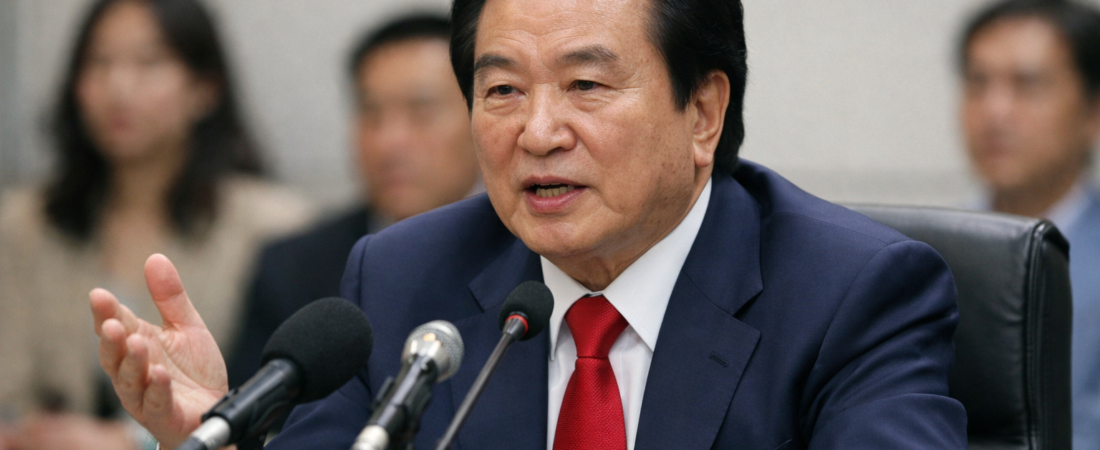
Heo Kyung-young, honorary representative of the National Revolution Party, recently lost his appeal in a lawsuit demanding phone call records from officers who investigated him. The court’s decision reveals a lot about legal limits, privacy protections, and the ongoing criminal case against him.
Who Is Heo Kyung-young?
You may not know the name Heo Kyung-young if you’re outside Korea. But inside the country, he’s a familiar and often controversial figure.
He has run for president multiple times. His campaign promises have ranged from unconventional to outright bizarre, earning him both mockery and a loyal following over the decades.
Heo Kyung-young leads the National Revolution Party, a minor political group he founded. Despite never winning national office, he remains a fixture in Korean political culture, known for public statements that grab headlines.
Why does this matter here? Because Heo Kyung-young is currently facing serious criminal charges, and this lawsuit connects directly to that larger legal battle.
He stands trial on charges of quasi-forcible indecent act and fraud. These are not minor accusations, and the case has drawn public attention across Korea.
Understanding who Heo Kyung-young is helps explain why he pushed so hard to obtain police phone records. He appears to believe the investigation against him was flawed or unfair.
The Lawsuit: What Heo Kyung-young Demanded
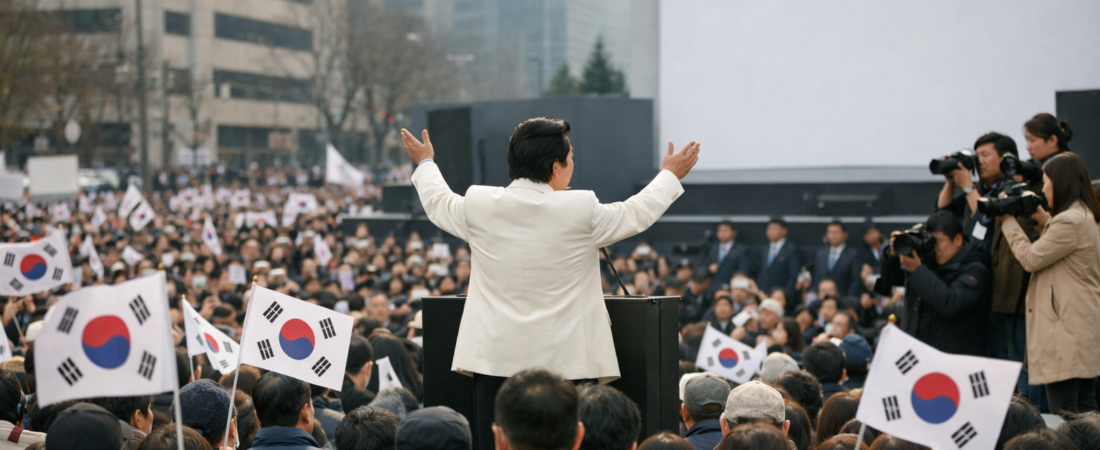
What exactly did Heo Kyung-young want? He asked for the phone call records of the police officers who investigated him.
His goal seemed clear. He wanted to prove, or at least suggest, some irregularity in how his case was handled.
This is not the first time a criminal defendant has tried this approach in Korea. Defendants sometimes seek investigators’ communication logs, hoping to find evidence of bias or procedural mistakes.
But here’s the key question: does simply requesting information mean you’re entitled to receive it? Not necessarily, according to Korean administrative law.
Heo Kyung-young filed this as an information disclosure lawsuit, a legal tool that lets citizens request records from public institutions. It’s a legitimate legal mechanism, used often in Korea for transparency purposes.
Yet this tool has limits. The requesting party still needs to show that the government agency actually holds the specific information being asked for.
This is exactly where Heo Kyung-young’s case ran into trouble. Let’s look at why the court rejected his claim, not once, but twice.
Why the Court Dismissed Heo Kyung-young’s Appeal
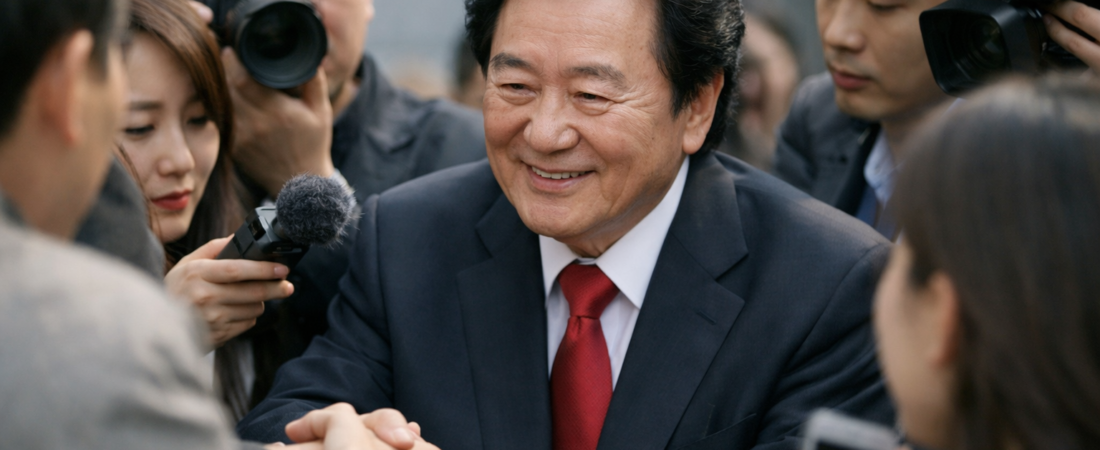
The appellate court dismissed Heo Kyung-young’s case, upholding the lower court’s original ruling. This means both levels of Korea’s judiciary agreed on the outcome.
But there’s an important legal distinction here. The court didn’t rule on the merits of whether police misconduct occurred.
Instead, the case was dismissed, a technical term in Korean law meaning the court found the lawsuit itself improperly filed or lacking a valid legal basis to proceed. This differs from a ruling that simply says “you lose on the facts.”
So why exactly did this happen to Heo Kyung-young? The court found insufficient proof that police actually possessed or managed the specific phone call records he wanted.
Think about it this way. If you ask a library for a book it never owned, the library can’t hand it over, no matter how many times you ask.
The court applied similar logic here. Without solid evidence that these records existed and were under police control, Heo Kyung-young’s request had no valid target to fulfill.
This ruling reflects a broader principle in Korean administrative litigation. Courts require concrete proof of a document’s existence and custody, not just suspicion or assumption.
You can read more about how Korean administrative law handles information disclosure claims through Korean News Report, which covers related legal proceedings involving Heo Kyung-young.
What does this teach us about the Korean legal system? It shows courts maintain strict evidentiary standards, even for public figures with strong opinions about their own treatment.
What’s Next for Heo Kyung-young
This lawsuit dismissal doesn’t end Heo Kyung-young’s legal troubles. The bigger case, the criminal trial, continues separately.
He faces charges of quasi-forcible indecent act and fraud, both serious allegations under Korean law. These charges carry real consequences if proven in court.
Quasi-forcible indecent act refers to sexual misconduct committed when a victim cannot properly consent, often due to incapacitation. Fraud charges typically involve deception for financial or personal gain.
Together, these accusations paint a serious picture for someone once known primarily for eccentric political campaigns. How will Heo Kyung-young’s public image survive this legal battle?
That remains uncertain. Korean courts move carefully through these proceedings, and outcomes can take months or even years to finalize.
What we do know is this: Heo Kyung-young’s attempt to access police phone records has failed at two judicial levels now. This closes one avenue of his defense strategy, though it doesn’t affect the primary criminal case’s substance.
His legal team may pursue other strategies moving forward. Whether that includes another appeal to Korea’s Supreme Court remains to be seen.
For now, the message from Korean courts is clear. Citizens cannot simply demand government records without solid proof those records exist and belong to the agency in question.
This case offers a useful lesson for anyone interested in Korean legal transparency laws. Even prominent public figures like Heo Kyung-young must meet the same evidentiary bar as everyday citizens.
Looking ahead, Heo Kyung-young’s criminal trial will likely draw continued media attention in Korea. His case sits at the intersection of celebrity politics, criminal justice, and information rights, a combination that rarely fades quietly from public view.
What do you think about the balance between a defendant’s right to challenge investigations and a government’s right to protect internal records?
AI-Generated Photorealistic Image — All people, scenes, and details in this image are entirely AI-generated and fictional. Not a real photograph of an actual person or event. 이 이미지는 AI로 생성된 가상 이미지입니다.



Leave a Reply