
Table of Contents
What happens when police no longer need a prosecutor’s approval to arrest you? That’s the question lawmaker Han Dong-hoon is asking Korea right now. He claims a proposed change to the Criminal Procedure Act hides a dangerous loophole inside its dense legal language.
Han Dong-hoon says this bill would let police make emergency arrests without a warrant, almost without limit. That’s a serious claim. So let’s break down what he’s saying, why it matters, and what it could mean for anyone living in Korea.
A Warning from Han Dong-hoon Sparks Debate
Han Dong-hoon didn’t mince words this week. He accused the Democratic Party of Korea of pushing a bill that sounds procedural but carries real risk. On the surface, it’s just an amendment to the Criminal Procedure Act.
Underneath, according to Han Dong-hoon, it quietly removes a key safeguard. Currently, police need prosecutor approval before making an emergency arrest. The proposed bill would replace that approval with a simple after-the-fact notification.
Think about that difference for a second. Approval means someone checks the decision before it happens. Notification just means someone finds out after it’s already done — too late to stop it.
Han Dong-hoon argues this isn’t a small technical tweak. He believes it fundamentally shifts power away from courts and prosecutors, and toward police discretion. That’s the heart of his objection, and it’s why he’s raising alarms publicly.
What Emergency Arrest Actually Means in Korea
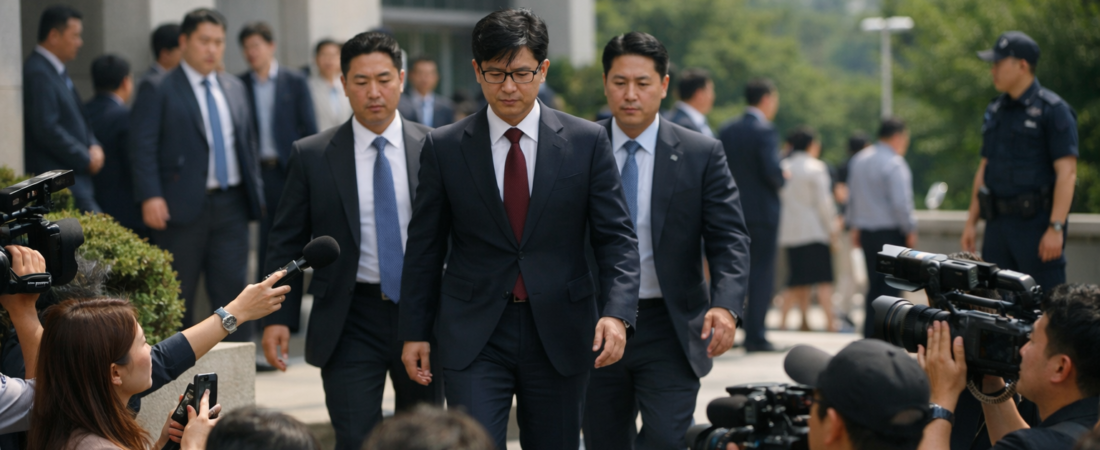
Let’s step back for context. Korea’s criminal justice system generally requires a warrant before police can arrest someone. Judges review the evidence first, then decide if an arrest is justified.
But real life doesn’t always allow time for that process. If a suspect might flee, destroy evidence, or harm someone, waiting for a judge isn’t realistic. That’s where “emergency arrest” comes in — a legal exception built for genuine emergencies.
Under current law, police can make this urgent arrest without a prior warrant. However, they must immediately report the arrest to a prosecutor. The prosecutor then reviews whether the emergency arrest was justified.
This review step matters more than it sounds. It’s a checkpoint, a second set of eyes on a police decision made under pressure. Han Dong-hoon insists this checkpoint exists specifically to protect citizens from mistakes or abuse.
Remove that checkpoint, he warns, and you remove the built-in correction mechanism. Emergency arrest was designed as a narrow exception. Han Dong-hoon fears the new bill could turn it into a much wider door.
Han Dong-hoon’s Core Argument, Explained
So what exactly is Han Dong-hoon objecting to? His argument centers on one specific procedural shift. The bill reportedly changes prosecutor “approval” into prosecutor “notification” for emergency arrests.
That single word change carries enormous weight. Approval implies power to say no. Notification implies nothing more than being informed.
Under the current system, a prosecutor can refuse to approve an emergency arrest if the justification looks weak. That refusal releases the suspect and holds police accountable. Under the proposed system, according to Han Dong-hoon, that refusal power effectively disappears.
Police would simply report the arrest afterward, and there’s little the prosecutor can do to reverse it in time. Is that a meaningful safeguard anymore, or just paperwork? Han Dong-hoon clearly believes it becomes the latter.
He frames this as more than a legal technicality. For Han Dong-hoon, it’s a question of balance of power. Give police too much unchecked authority, he argues, and citizens bear the consequences.
You can read more about ongoing legislative debates and coverage from Korean Daily Life News, which has followed this issue closely. Han Dong-hoon has repeated this warning across multiple public statements recently. He wants voters to understand what’s buried inside legal language most people never read closely.
Why This Fight Matters for Ordinary Citizens

Why should you care about a debate over prosecutor procedure? Because emergency arrest, done wrong, touches ordinary people’s lives directly. It’s not just about high-profile criminal cases.
Imagine being detained without a warrant, based purely on a police officer’s in-the-moment judgment. Now imagine that decision facing almost no independent review before it happens. That’s the scenario Han Dong-hoon says this bill could create.
Korea has a complicated history with police power and civil rights. Past decades under authoritarian rule saw law enforcement wield broad, unchecked authority over citizens. Modern reforms since democratization in 1987 were built specifically to prevent a return to that era.
Prosecutor oversight of emergency arrests is one piece of that reform legacy. Han Dong-hoon’s warning taps directly into this historical memory. Weakening oversight, even with good intentions, can feel like eroding hard-won democratic protections.
Of course, supporters of the bill likely have their own reasoning. Perhaps they see prosecutor approval as slow or bureaucratic in urgent situations. Perhaps they trust police discretion more than critics do.
But Han Dong-hoon’s concern isn’t really about trust in individual officers. It’s about system design — what happens when oversight quietly weakens over time? History shows that once a safeguard disappears, restoring it later is far harder than keeping it in the first place.
This is why Han Dong-hoon keeps pushing this issue into public conversation. He wants citizens, not just lawmakers, paying attention to the fine print. After all, laws like this rarely make headlines until something goes wrong.
Looking Ahead: What Comes Next
This debate is far from settled. The Democratic Party of Korea holds a majority in the National Assembly, giving it real power to advance this bill. Han Dong-hoon’s opposition, meanwhile, positions him as a check on that momentum.
Expect more public statements, committee debates, and possibly amendments before any final vote. Whether Han Dong-hoon’s warnings shape the bill’s final language remains to be seen. But his central question deserves attention regardless of political affiliation.
Should police gain more independent authority to arrest without warrants? Or should prosecutor oversight stay firmly in place as a citizen safeguard? Korea’s answer to this question will shape how power balances between law enforcement and legal review for years to come.
What do you think about Han Dong-hoon’s warning on police emergency arrest powers?
AI-Generated Photorealistic Image — All people, scenes, and details in this image are entirely AI-generated and fictional. Not a real photograph of an actual person or event. 이 이미지는 AI로 생성된 가상 이미지입니다.


Leave a Reply