Table of Contents
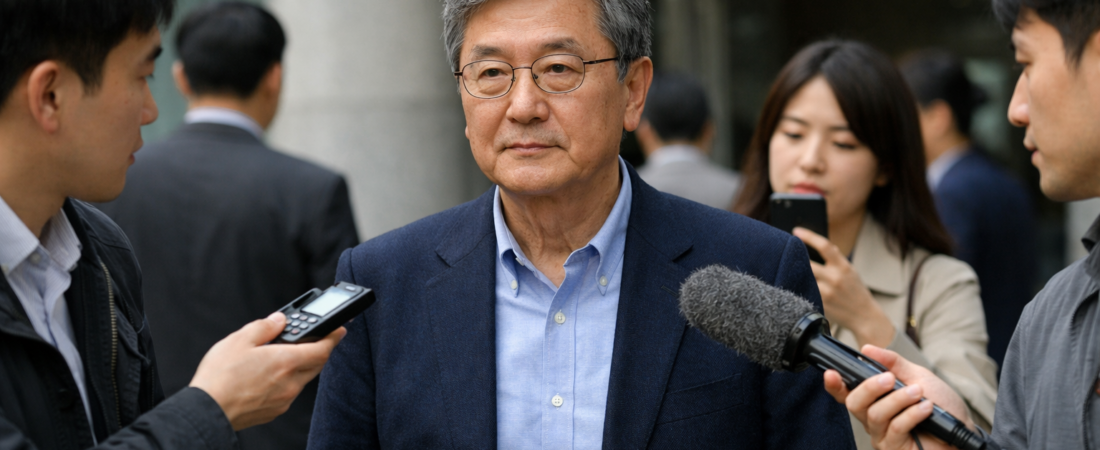
Is Yoo Si-min a fearless truth-teller, or a “cowardly intellectual” who only speaks up when it’s safe? That question exploded across South Korean airwaves this week, and it’s not going away quietly.
On an SBS news briefing, three commentators clashed hard over Yoo Si-min’s recent comments, the Democratic Party of Korea’s leadership race, and a strange new controversy involving the Shincheonji religious group. What started as routine political commentary turned into a heated debate about honesty, timing, and political courage.
Let’s break down what actually happened, why it matters, and what it tells us about Korean politics today.
What Happened: The SBS Briefing Showdown
The panel featured three sharply different voices. Seong Chi-hun, deputy spokesperson for the Democratic Party of Korea, sat across from Jeong Gwang-jae, a former spokesperson for the People Power Party. SBS editorial writer Yang Man-hee moderated and added his own analysis throughout.
Their main topic? The ongoing race for Democratic Party leadership, and specifically why candidate Jeong Chung-rae’s support has been climbing. Seong Chi-hun argued that Jeong Chung-rae’s rise connects to how voters are interpreting the Shincheonji-related allegations swirling around the race.
But the conversation didn’t stay on policy for long. It shifted quickly toward Yoo Si-min, a well-known progressive commentator and former government official, whose recent public statements had already stirred controversy before the broadcast even aired.
Why did Yoo Si-min become the center of attention? Because his comments touched a nerve that goes far beyond one election cycle. They raised questions about consistency, political courage, and who gets to criticize whom in Korean public life.
Seong Chi-hun didn’t hold back. He called Yoo Si-min a “cowardly intellectual” who stayed silent during the Moon Jae-in administration but now feels free to speak critically. That’s a serious accusation, and it set the tone for everything that followed.
Yoo Si-min’s Remarks and the “Cowardly Intellectual” Label
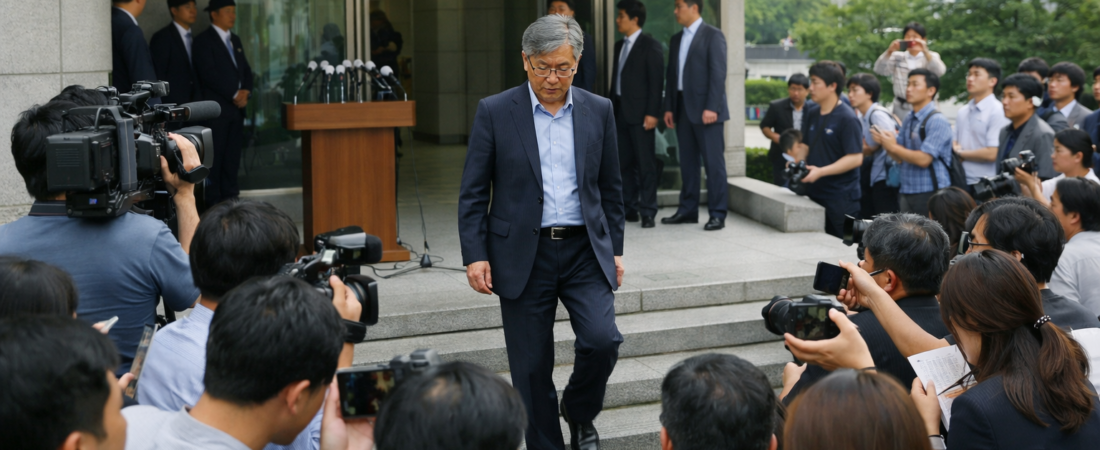
To understand this fight, you need to know who Yoo Si-min is. He’s one of South Korea’s most recognizable progressive intellectuals, a former Minister of Health and Welfare, and a prolific author and podcast host.
For years, Yoo Si-min built a reputation as a sharp, sometimes controversial voice within progressive circles. His opinions carry weight precisely because he’s been part of the political establishment, not an outside critic throwing stones from a distance.
That history is exactly why Seong Chi-hun’s criticism landed so hard. If Yoo Si-min really did stay quiet during the Moon Jae-in years, only to speak up now, doesn’t that raise fair questions about timing? Or is this simply how political commentary naturally evolves as circumstances change?
Jeong Gwang-jae pushed back against the harsh framing. He asked panel members to actually examine the substance of Yoo Si-min’s claims, rather than dismissing them based on when they were made.
That’s a crucial distinction, isn’t it? Attacking someone’s timing feels different from disproving what they actually said. Yang Man-hee seemed to agree, steering the discussion toward the actual content of Yoo Si-min’s argument rather than just the optics.
This tension, between judging the message and judging the messenger, sits at the heart of Korean political commentary culture. Public intellectuals like Yoo Si-min often face this exact dilemma. Speak out too early, and you risk your career; speak out later, and you risk being called opportunistic.
Political observers have long debated this pattern in Korean media, and outlets like SBS News regularly cover how public figures navigate these credibility questions in real time.
The Shincheonji Controversy and the Leadership Race
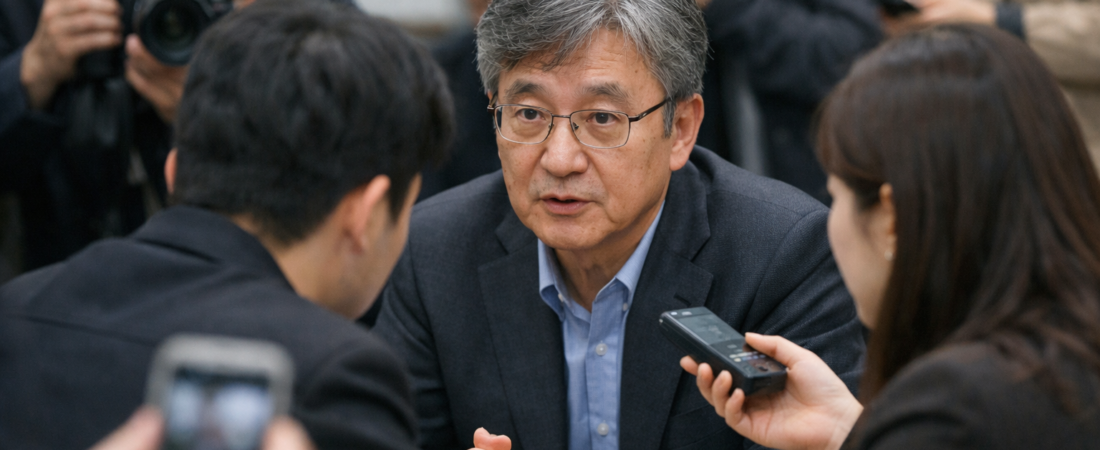
Now let’s talk about the other explosive element: Shincheonji. This religious group has a complicated history in Korean public life, especially after its connection to early COVID-19 outbreaks back in 2020.
According to Seong Chi-hun, allegations about Shincheonji’s involvement in the current Democratic Party leadership race are shaping how voters view candidates like Jeong Chung-rae. That’s a bold claim, and it demands careful scrutiny.
Jeong Gwang-jae and Yang Man-hee raised a different angle entirely. They focused on how these Shincheonji allegations might actually be influencing the race, and importantly, how candidate Kim Min-seok has responded, or failed to respond, to the controversy.
Here’s the real question: does responsibility fall on candidates to address these allegations directly? Or is it fair for opponents and commentators to raise suspicion without solid proof?
This is where Yoo Si-min re-enters the picture. His original comments apparently touched on this very issue, connecting religious group influence to the broader leadership contest.
Whether you view Yoo Si-min as courageous or opportunistic likely depends on your political leanings already. But the substance of his claim, that religious organizations might be quietly shaping internal party politics, deserves serious examination regardless of who’s making it.
South Korea has seen religious groups intersect with politics before, though rarely this openly discussed on national television. That alone makes this SBS briefing worth paying attention to.
Why This Debate Matters for Korean Politics
Step back for a moment. Why should anyone outside Korea care about a heated panel discussion involving Yoo Si-min and party spokespeople?
Because this debate reveals something deeper about how Korean democracy actually functions. Public intellectuals like Yoo Si-min hold real influence over voter opinion, sometimes more than elected officials themselves.
When someone with Yoo Si-min’s profile speaks, party insiders react immediately, and often defensively. That reaction, calling him a “cowardly intellectual,” tells you how seriously his words are taken within the Democratic Party.
This also highlights a recurring pattern in Korean political media. Panel discussions on outlets like SBS frequently become battlegrounds where party representatives fight proxy wars over public perception, rather than simple fact-based reporting.
Seong Chi-hun represents one side of this fight, defending the party’s current direction. Jeong Gwang-jae, despite coming from the opposing People Power Party, offered a more measured take, asking for evidence rather than character attacks.
Yang Man-hee, as the SBS editorial voice, tried to keep the discussion analytical rather than purely partisan. That balance matters in a media landscape where commentary can easily become one-sided shouting.
Looking forward, expect Yoo Si-min’s comments to keep echoing through this leadership race. Jeong Chung-rae’s rising support, Kim Min-seok’s response strategy, and the Shincheonji allegations will all likely intertwine as the Democratic Party moves toward selecting its next leader.
The bigger lesson here isn’t really about one commentator or one controversy. It’s about how quickly political credibility gets questioned in Korea’s fast-moving media environment, and how figures like Yoo Si-min become lightning rods precisely because they refuse to stay quiet.
So where does this leave us? Korean politics thrives on exactly this kind of public sparring, intellectuals versus party insiders, past silence versus present criticism, religious influence versus democratic transparency.
Yoo Si-min will likely keep speaking his mind, and party officials will likely keep pushing back. That tension isn’t a flaw in Korean democracy; it’s part of how it stays accountable.
What do you think? Should political commentators like Yoo Si-min face criticism for staying silent in the past, or does speaking up now still count as meaningful accountability?
AI-Generated Photorealistic Image — All people, scenes, and details in this image are entirely AI-generated and fictional. Not a real photograph of an actual person or event. 이 이미지는 AI로 생성된 가상 이미지입니다.
Leave a Reply