Table of Contents
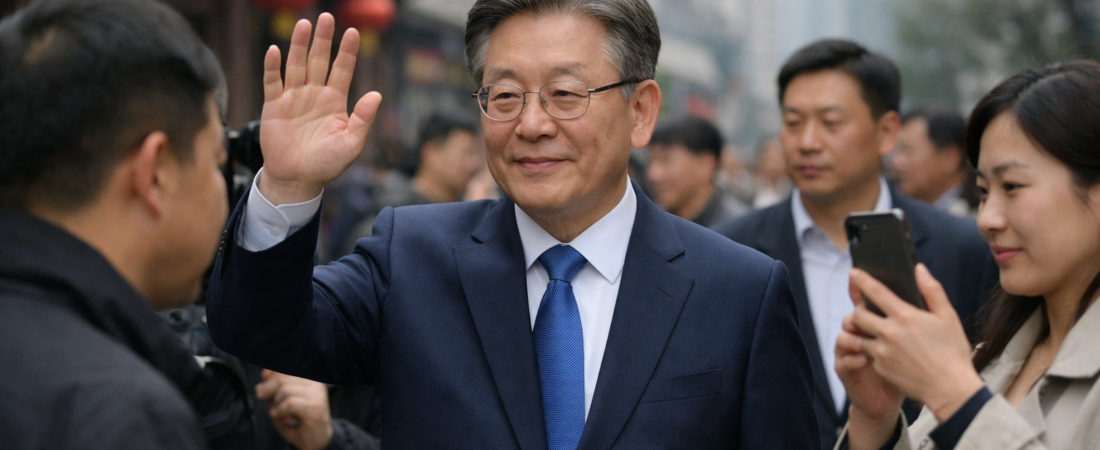
Can one trip reshape a country’s place in the world? Starting on the 24th, President Lee Jae-myung will find out. He begins a seven-night, eleven-day journey across San Francisco, South America, and Germany.
This is not a simple diplomatic tour. It is a calculated bet on technology, trade, and global influence. President Lee Jae-myung wants Korea to sit at the table where the future gets decided.
Why This 11-Day Trip Matters
Think about how much has changed in global politics over the past few years. Supply chains broke. Alliances shifted. Technology became a matter of national security, not just business.
Against this backdrop, President Lee Jae-myung’s schedule looks less like a courtesy visit and more like a strategic mission. He will touch three continents in less than two weeks. Few world leaders attempt a pace like this early in their term.
Why does the itinerary matter so much? Because each stop targets a different pillar of Korea’s national interest. San Francisco represents technology and innovation. Brazil, Chile, and Argentina represent trade diversification and resource security. Germany represents deep ties with a fellow manufacturing powerhouse.
Korean presidents have traditionally focused their diplomatic energy on the United States, China, and Japan. This trip breaks that pattern. President Lee Jae-myung is signaling that Korea’s foreign policy circle is expanding outward, not staying fixed on old routines.
Is this shift risky? Perhaps. But standing still in today’s global economy carries its own risks. Korea depends heavily on exports, semiconductors, and battery materials. Diversifying partners is not optional anymore — it is survival strategy.
President Lee Jae-myung and the San Francisco AI Summit
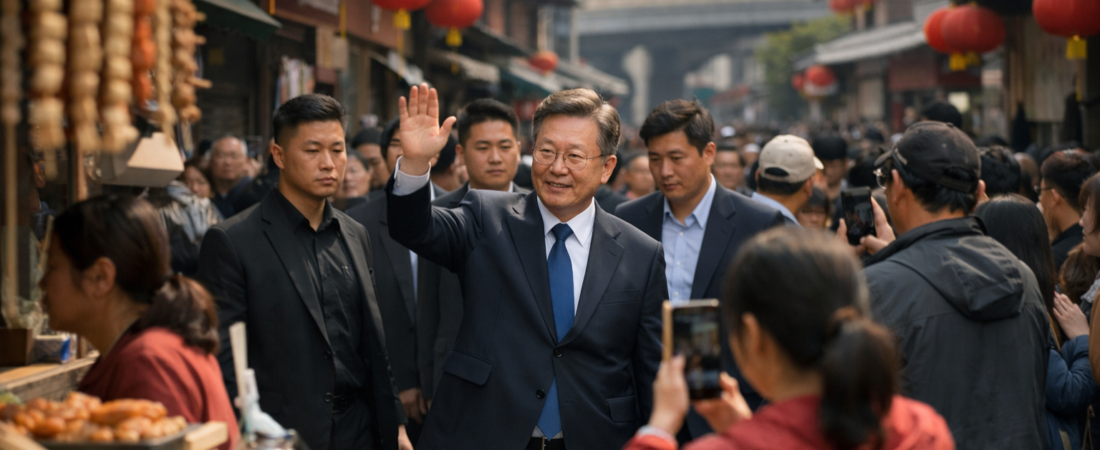
Silicon Valley does not usually roll out the red carpet for foreign heads of state. Yet President Lee Jae-myung’s first stop puts him directly among the world’s biggest tech leaders. The AI Summit in San Francisco brings together decision-makers who shape the future of artificial intelligence.
Why start there instead of a traditional political ally? Because AI has become the new currency of national power. Countries that control advanced chips, data infrastructure, and machine learning talent will lead the next global economy. President Lee Jae-myung clearly wants Korea in that leading group, not trailing behind.
Korea already holds a strong hand in semiconductor manufacturing. Companies like Samsung and SK Hynix supply memory chips that power AI systems worldwide. But manufacturing strength alone does not guarantee leadership in AI software, algorithms, or platform development.
This is where the summit becomes strategic for President Lee Jae-myung. Meeting global tech leaders face-to-face opens doors that formal government channels cannot always reach. Investment decisions, research partnerships, and joint ventures often start with these informal conversations.
Consider the stakes here. If Korea can attract more AI investment and research collaboration, it strengthens its entire tech ecosystem. If it falls behind, competitors like Taiwan, Japan, or even smaller Southeast Asian economies could capture that opportunity instead.
You might wonder — does one summit really change much? Not by itself, no. But summits like this plant seeds for deals that mature over months and years, and Korean officials view early positioning as essential.
President Lee Jae-myung’s presence also sends a symbolic message. It tells global investors that Korea’s government, not just its private companies, is actively courting the AI economy. That kind of top-level engagement matters when multinational firms decide where to build their next data center or research lab.
South America: Building Economic Security Partnerships
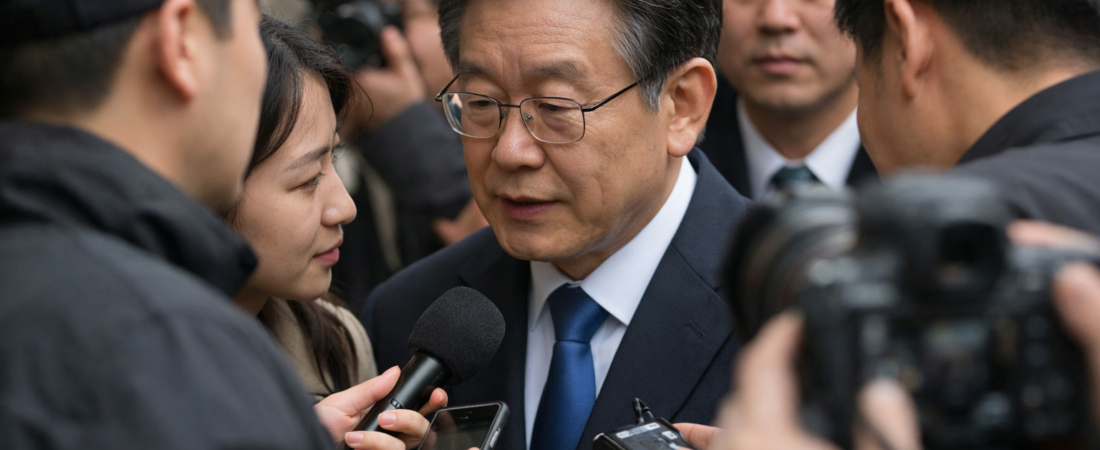
After Silicon Valley, President Lee Jae-myung heads to a region many Koreans rarely think about: South America. Brazil, Chile, and Argentina make up the next leg of this ambitious trip. Each country offers something Korea urgently needs.
Chile and Argentina sit on top of massive lithium reserves. Lithium powers the batteries inside electric vehicles, and Korean companies like LG Energy Solution and Samsung SDI depend on stable access to this resource. Securing direct government-to-government relationships reduces Korea’s exposure to price shocks and supply disruptions.
Brazil, meanwhile, represents Latin America’s largest economy and a growing market for Korean exports. Summit meetings there will likely cover trade agreements, infrastructure cooperation, and possibly defense industry ties. President Lee Jae-myung’s economic team hopes these conversations translate into concrete contracts, not just friendly photos.
Why does “economic security” keep coming up in Korean foreign policy discussions lately? Because the pandemic and recent geopolitical tensions exposed how fragile global supply chains really are. A single disruption in one country can halt factories thousands of miles away.
South America offers Korea a chance to build what experts call supply chain resilience. Rather than relying on one or two suppliers for critical materials, spreading partnerships across multiple friendly nations reduces risk. President Lee Jae-myung’s visit fits into this broader defensive strategy.
There is a historical angle worth noting too. Korea and several South American nations share a diplomatic history dating back decades, though economic ties have remained modest compared to Korea’s relationships with Asian or North American partners. This trip could mark a genuine turning point in that history.
According to Korean News Agency, government officials expect the South American leg to produce tangible outcomes in strategic investment and economic security cooperation. That expectation places real pressure on President Lee Jae-myung’s negotiating team to deliver results, not just goodwill statements.
Germany and Korea’s Global South Strategy
The final stop takes President Lee Jae-myung to Germany, a country that shares surprising similarities with Korea. Both nations built their modern economies on manufacturing excellence and export-driven growth. Both now face the challenge of adapting that model for an AI-driven, green-energy future.
Germany’s automotive and industrial sectors have struggled with the global shift toward electric vehicles and renewable energy. Korea’s battery and EV component makers could find new opportunities here. President Lee Jae-myung’s visit likely aims to strengthen these industrial ties even further.
But this trip carries meaning beyond individual country visits. Taken together, the itinerary reveals something larger: Korea’s growing “Global South” diplomacy. This term describes deeper engagement with developing and emerging economies across Asia, Africa, and Latin America.
Why does Global South diplomacy matter now more than ever? Traditional power centers like the United States, China, and the European Union no longer hold uncontested influence. Emerging economies increasingly set their own terms in trade and diplomacy.
President Lee Jae-myung’s government seems to understand this shift clearly. By combining a tech-focused stop in San Francisco with resource-focused stops in South America and an industrial partner in Germany, the trip touches nearly every major theme in today’s global economy.
Some critics might ask whether packing so much into eleven days risks spreading diplomatic attention too thin. That is a fair concern. Yet the alternative — staying passive while other nations lock in critical partnerships — carries a much higher long-term cost for Korea’s economy.
South Korea’s history offers useful perspective here. The country transformed from a war-torn nation into a global economic powerhouse within a few generations, largely by aggressively pursuing international trade and technology partnerships. President Lee Jae-myung’s current strategy echoes that same instinct: move fast, build relationships broadly, and never assume old alliances alone will secure future prosperity.
Looking ahead, the real test will not be the trip itself but what follows it. Will these meetings produce actual investment deals and signed agreements? Or will they remain diplomatic gestures without lasting economic impact?
President Lee Jae-myung’s team clearly hopes for the former. Korean businesses, especially in battery manufacturing, semiconductors, and AI infrastructure, will be watching closely for concrete outcomes. So will investors and policymakers in the countries he visits.
What do you think about President Lee Jae-myung’s strategy of linking AI diplomacy in San Francisco with resource security in South America and industrial cooperation in Germany? Does this kind of wide-ranging diplomatic push strengthen Korea’s global position, or does it risk overextending national attention at a critical moment?
AI-Generated Photorealistic Image — All people, scenes, and details in this image are entirely AI-generated and fictional. Not a real photograph of an actual person or event. 이 이미지는 AI로 생성된 가상 이미지입니다.
Leave a Reply