Table of Contents
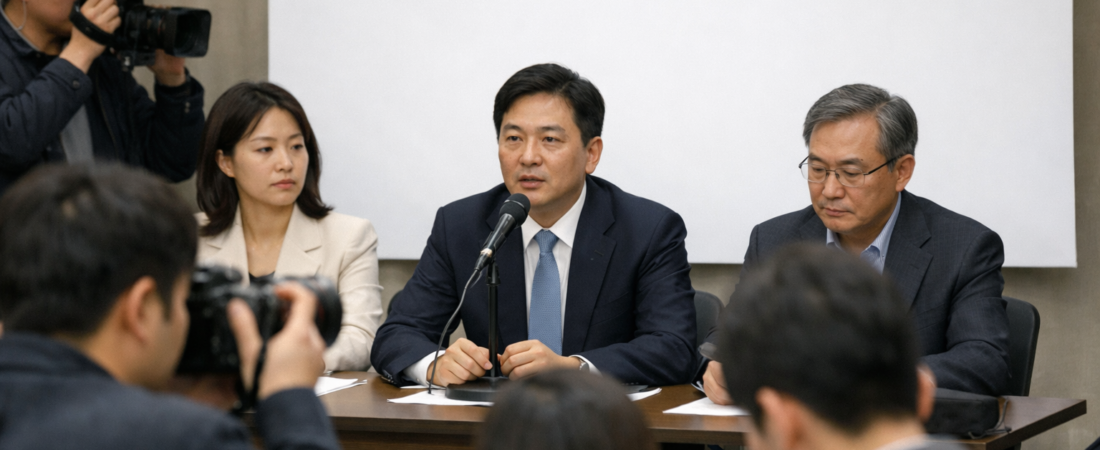
Can a party built around one man’s legal troubles survive without him at the helm? That’s the question hanging over the Rebuilding Korea Party this week. Members just elected a new leader, and the answer they gave was overwhelming.
The Rebuilding Korea Party held its national convention and chose Assembly Member Shin Jang-sik as its new chairman. He won with 96.7 percent support. Numbers like that don’t happen by accident.
A New Leader Takes the Stage
Shin Jang-sik didn’t just win. He won by a landslide that few party leaders in Korea ever see.
A 96.7 percent approval rate tells you something important. It shows a party united behind one direction, at least for now.
Shin used his acceptance speech to set the tone for his term. He promised a “clear path of reform” and emphasized “self-reliance” as the party’s guiding principle. Those two words will likely define his leadership going forward.
Why does self-reliance matter so much to this particular party? Because the Rebuilding Korea Party has always lived in the shadow of a bigger political force, the Democratic Party of Korea. Shin’s message signals a desire to stand on its own two feet.
The Rebuilding Korea Party’s Rapid Rise
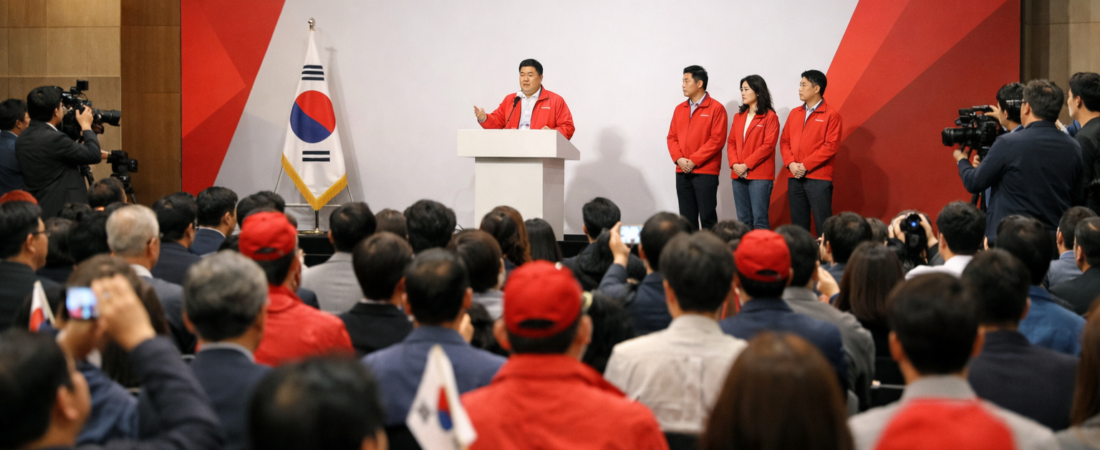
You might wonder how a party this young could already be holding leadership elections. The Rebuilding Korea Party is one of the newest major players in Korean politics. It formed around former Justice Minister Cho Kuk and his supporters.
Cho Kuk’s legal battles turned him into a symbol for many progressive voters. His supporters felt the prosecution targeted him unfairly. Out of that anger, a new political party was born.
The party quickly found its footing in the National Assembly. It positioned itself to the left of the Democratic Party, pushing harder on prosecutorial reform. That single issue became its founding identity.
But identity built around one leader carries risk. What happens when that leader steps back? This is exactly the challenge the Rebuilding Korea Party now faces, and Shin Jang-sik’s election answers part of that question.
The party needed to prove it could function and grow beyond its founder. A 96.7 percent leadership vote suggests internal unity remains strong. Whether that unity translates into broader public support is a separate matter entirely.
Korean political history offers useful comparisons here. Smaller parties often struggle once their founding figure exits the spotlight. The Rebuilding Korea Party will need to show it has staying power beyond its origin story.
Shin Jang-sik’s Vision for Reform
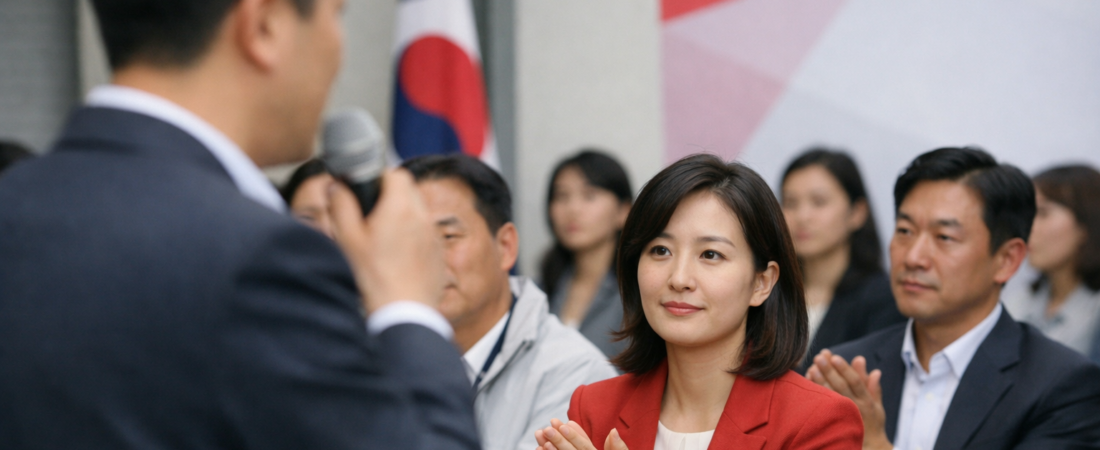
What does “self-reliance” actually mean in practice? For Shin Jang-sik, it likely means reducing the party’s dependence on the Democratic Party of Korea for legislative wins. That’s a bold ambition for a party still finding its national footing.
Shin has built his reputation on judicial and prosecutorial reform. He served as a lawyer before entering politics, giving him credibility on legal issues. This background matters, since prosecutorial reform remains the Rebuilding Korea Party’s signature cause.
His speech emphasized “clear” reform, not vague promises. That word choice matters in Korean political rhetoric. Voters have grown tired of parties that promise change but deliver compromise instead.
Can the Rebuilding Korea Party actually deliver on sharp, uncompromising reform? That depends on how much leverage it holds in the National Assembly. Smaller parties often need coalition partners to pass major legislation, which limits how “self-reliant” any strategy can truly be.
Still, Shin’s framing sends a message to both allies and rivals. The Rebuilding Korea Party wants to be seen as a principled force, not a junior partner. Readers following Korean politics can track this shift through outlets like Korea Herald, which regularly covers National Assembly developments.
This vision also carries risk for party unity. Pushing too hard for independence could alienate potential allies in future elections. Shin will need to balance ambition with pragmatism as his term unfolds.
A New Leadership Team and What Comes Next
Leadership races rarely happen in isolation. Alongside Shin Jang-sik, members elected two Supreme Council members: Assembly Member Cha Gyu-geun and former Secretary-General Hwang Hyun-sun. Together, they now form the party’s next leadership team.
Cha Gyu-geun brings legislative experience from his time in the National Assembly. Hwang Hyun-sun offers organizational knowledge from running party operations behind the scenes. This combination suggests a leadership team built for both public visibility and internal management.
Why does this leadership balance matter? Because the Rebuilding Korea Party needs both strong messaging and solid organization to grow. A charismatic leader alone can’t sustain a political party through election cycles.
The road ahead won’t be simple. The Rebuilding Korea Party must prove it can win seats beyond its core base of Cho Kuk supporters. It also needs to define itself clearly against the larger Democratic Party of Korea, without losing the progressive voters both parties compete for.
Shin Jang-sik’s 96.7 percent mandate gives him strong internal backing. But Korean voters, especially undecided ones, will judge the Rebuilding Korea Party on results, not vote percentages. The next major test will likely come at the ballot box, not the convention floor.
Political observers should watch how quickly this new leadership team moves on legislative priorities. Early actions often reveal whether campaign promises become policy. For the Rebuilding Korea Party, the coming months will show whether “self-reliance” is a strategy or simply a slogan.
Korean politics moves fast, and smaller parties rise and fall based on their ability to adapt. The Rebuilding Korea Party has survived its founding crisis and now enters a new chapter under Shin Jang-sik. Whether this chapter strengthens Korean democracy’s diversity of voices, or fades into a footnote, remains an open question worth watching closely.
What do you think about the Rebuilding Korea Party’s chances of standing independently from Korea’s larger progressive bloc?
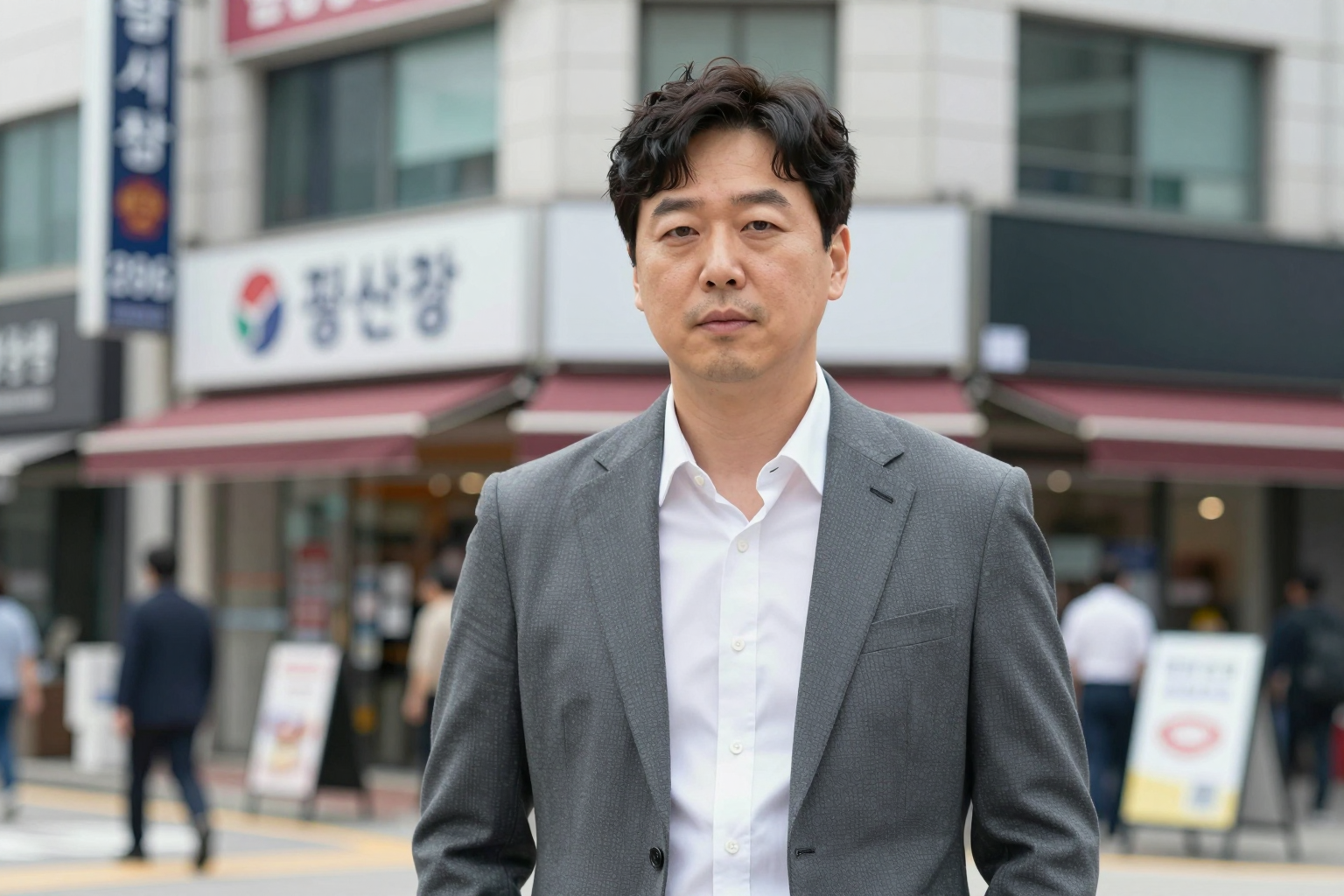
AI-Generated Photorealistic Image — All people, scenes, and details in this image are entirely AI-generated and fictional. Not a real photograph of an actual person or event. 이 이미지는 AI로 생성된 가상 이미지입니다.

Leave a Reply