Table of Contents
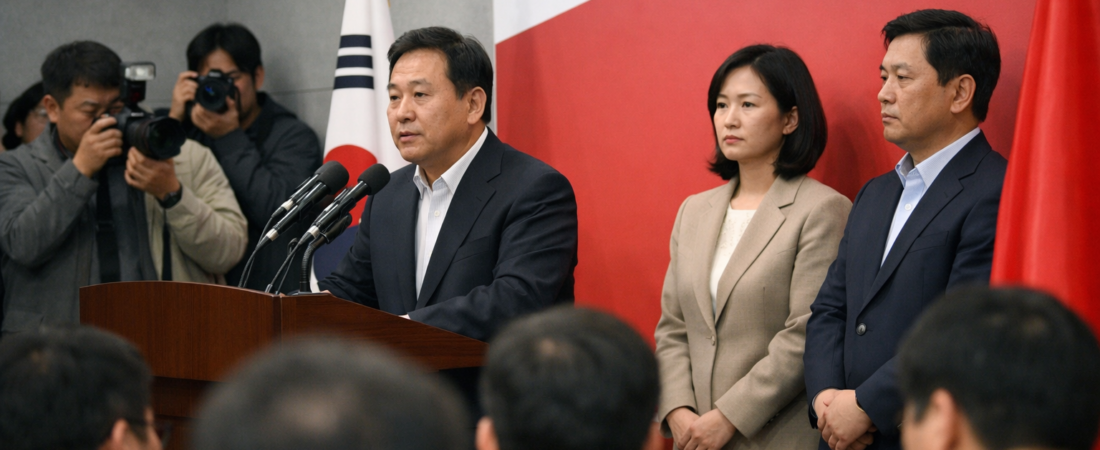
Can a single collar-grabbing moment shake an entire political party? That’s exactly what’s happening inside the People Power Party right now.
A physical altercation involving lawmaker Kwon Young-jin has triggered a wave of finger-pointing, factional analysis, and disciplinary threats. And the fallout tells us a lot about how power actually works inside the People Power Party.
What Happened: The People Power Party’s Collar-Grabbing Scandal
The incident sounds almost cinematic. Someone grabbed a collar, tempers flared, and suddenly the People Power Party had a full-blown internal crisis on its hands.
This wasn’t just a personal scuffle. It became a political flashpoint, discussed on SBS’s Ju Young-jin News Briefing as a case study in party discipline and factional rivalry.
Why does a single physical altercation matter so much in Korean politics? Because in a party like the People Power Party, every incident gets read through the lens of internal power struggles.
A collar grab isn’t just a collar grab. It becomes evidence, ammunition, or a warning sign, depending on who is telling the story.
Political commentator Seo Yong-ju offered one interpretation on the program. He argued that the party’s mainstream establishment faction is treating the Kwon Young-jin incident as a political opportunity, not a simple personal dispute.
That distinction matters. If the establishment faction frames this as political misconduct, it opens the door to formal disciplinary action.
If it stays a private matter, the consequences look very different. This is exactly why Korean political parties tend to escalate small incidents into bigger narratives.
Reading the Room: How Factions Interpret the Incident
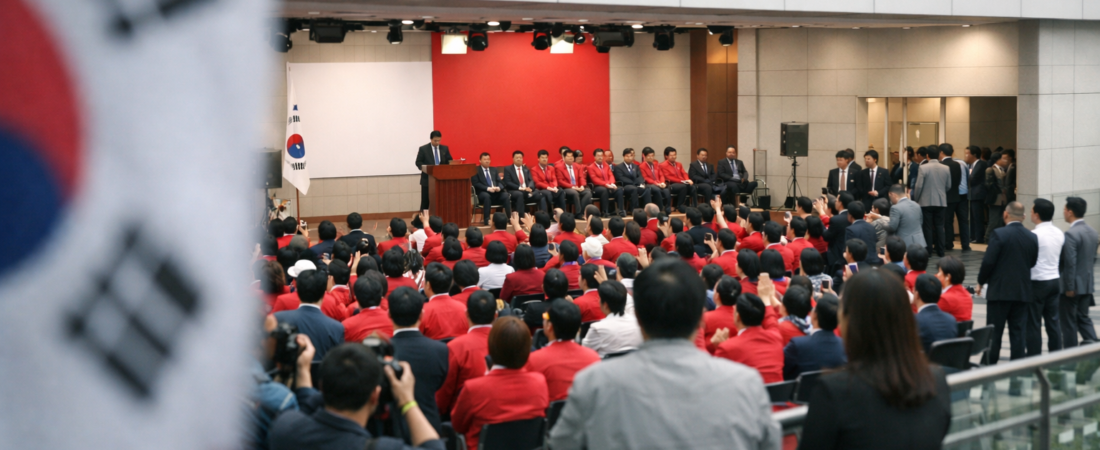
Korean political parties rarely see any incident through a single lens. The People Power Party is no exception here.
Different factions read the same event in completely different ways, shaped by their own interests and rivalries. Isn’t that true of politics almost everywhere?
Seo Yong-ju’s analysis pointed to something deeper than a simple scuffle. He suggested the party’s mainstream faction, often called the establishment or “party-power” bloc, sees a political opening in how it handles Kwon Young-jin.
By framing his actions as a discipline issue rather than a personal lapse, the establishment faction can consolidate control. This is a familiar pattern inside the People Power Party, where factional lines often run deeper than public statements suggest.
Political analyst Jang Sung-chul added another layer to this picture. According to his reading, the situation reflects a much larger fight for influence within the People Power Party’s leadership structure.
Every disciplinary conversation inside the party carries this subtext. Who benefits if Kwon Young-jin faces punishment?
Who benefits if he doesn’t? These questions rarely get answered directly, but they shape every decision made behind closed doors.
For readers outside Korea, this might look like typical partisan drama. But it reveals something important about how the People Power Party governs itself internally, often prioritizing factional balance over straightforward rule enforcement.
Jeong Jeom-sik’s Hardline Stance and the Threat of Discipline
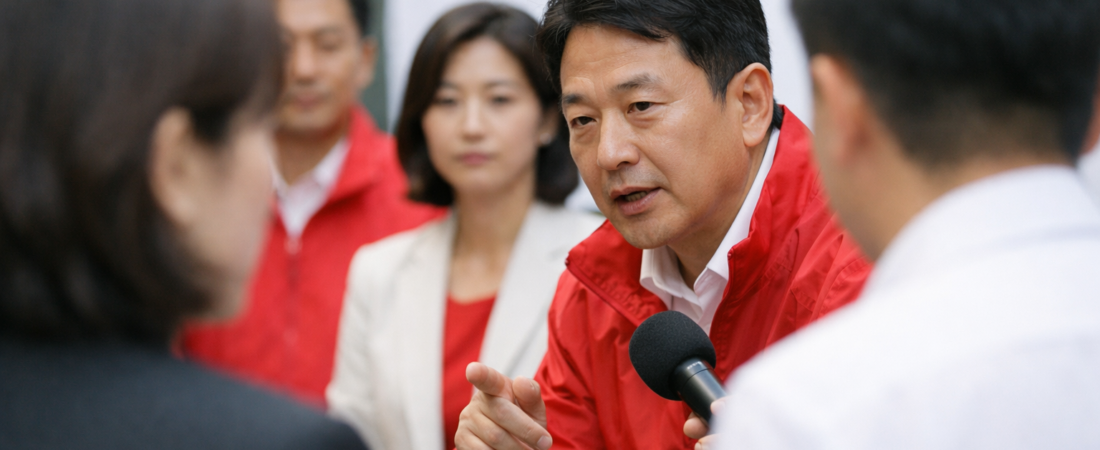
Enter Jeong Jeom-sik, a name that now sits at the center of this controversy. According to Jang Sung-chul’s analysis, Jeong Jeom-sik has taken an unusually firm position on the matter.
This hardline stance, Jang suggested, could lead directly to formal disciplinary measures against Kwon Young-jin. Why would one figure’s firmness matter so much?
Because in the People Power Party’s internal structure, key figures like Jeong Jeom-sik often set the tone for how the entire leadership responds. If he insists on strong action, other members find it harder to argue for leniency.
This is how Korean party discipline mechanisms tend to function in practice. It rarely comes down to a neutral, rules-based process alone.
Instead, individual influence and factional pressure shape the outcome just as much as any written code of conduct does. The People Power Party’s ethics and discipline committee holds formal authority here, but political pressure from figures like Jeong Jeom-sik can heavily influence its direction.
You might wonder: does this make Korean party discipline less fair? Or does it simply reflect how any political organization actually operates, once you look past the official rulebook?
For readers unfamiliar with Korean party structures, it helps to understand the historical context here. The People Power Party, like its predecessors, has faced repeated internal clashes over the years between reform-minded members and more traditional, hierarchy-focused figures.
This pattern isn’t new. It traces back through earlier conservative party iterations, each shaped by tension between centralized leadership control and individual lawmakers asserting independence.
The Kwon Young-jin incident, then, isn’t an isolated event. It’s another chapter in a long-running story about who really holds power inside the People Power Party.
Warning Shot or Real Punishment? What’s Next for the People Power Party
Here’s where the story gets more interesting. The People Power Party’s Supreme Council reportedly passed a resolution calling for heavy disciplinary action against Kwon Young-jin.
But according to analysis discussed on the program, this resolution may function more as a warning shot than an actual punishment. What does that even mean in practice?
Think of it like a yellow card in soccer. The referee shows it not necessarily to eject the player immediately, but to signal that further misconduct will bring harsher consequences.
The People Power Party’s Supreme Council resolution seems to work the same way. It sends a strong public message without necessarily triggering the most severe formal penalties right away.
This strategy makes sense if you consider the party’s broader political calculations. Harsh, immediate punishment risks deepening internal divisions at a sensitive moment.
A symbolic warning, on the other hand, lets the People Power Party project discipline and unity to the public. Meanwhile, it avoids alienating any particular faction too directly.
You can read more detailed coverage of this developing story through SBS Ju Young-jin News Briefing, which has followed the internal debate closely. The outlet’s political panel discussions offer valuable insight into how these disputes typically unfold inside Korean conservative politics.
So where does this leave the People Power Party going forward? If Jeong Jeom-sik’s hardline position wins out, expect formal disciplinary proceedings against Kwon Young-jin sometime soon.
If the establishment faction decides the political benefits of restraint outweigh the risks, the resolution may remain largely symbolic. Either path tells us something important about the party’s internal priorities right now.
This incident also reflects a broader trend across Korean political parties: internal discipline often serves political messaging as much as it serves actual accountability. The People Power Party isn’t unique in this regard, but this case offers a clear window into how the mechanism works.
Every disciplinary resolution, every factional interpretation, every hardline statement serves a dual purpose. It addresses the immediate controversy while simultaneously shaping the party’s internal power balance for the months ahead.
What should global observers take away from all this? Korean party politics often looks chaotic from the outside, filled with sudden scandals and shifting alliances.
But beneath the surface, there’s usually a clear logic at work, one built on factional interests, personal influence, and calculated public messaging. The People Power Party’s handling of the Kwon Young-jin incident fits neatly into this pattern.
Looking ahead, watch how the People Power Party’s disciplinary committee actually proceeds in the coming weeks. Does it follow through with real sanctions, or does the warning remain just that, a warning?
The answer will reveal a lot about which faction currently holds the upper hand inside the People Power Party. And it may set a precedent for how future internal disputes get handled.
What do you think about how the People Power Party manages internal conflict like this? Does symbolic discipline serve democracy well, or does it just protect those already in power?
AI-Generated Photorealistic Image — All people, scenes, and details in this image are entirely AI-generated and fictional. Not a real photograph of an actual person or event. 이 이미지는 AI로 생성된 가상 이미지입니다.


Leave a Reply