Table of Contents
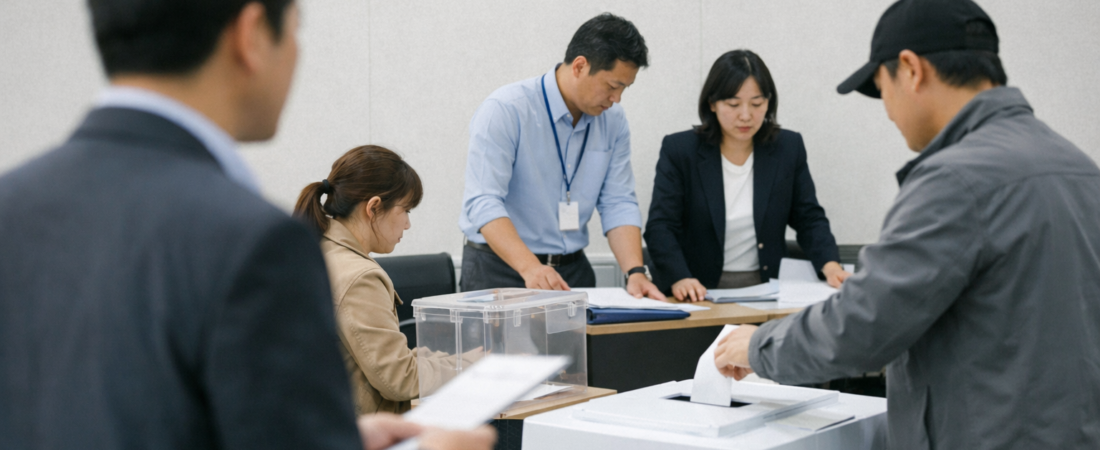
Can you trust a decision made by a committee that just lost half its members? That question is now facing the National Election Commission of South Korea. The agency held its first hearing on complaints tied to the June 3 local elections, and the timing could not be more awkward.
Three members of the Seoul Election Commission resigned in quick succession. Only a bare quorum remains. Yet the body is still expected to rule on disputes that could reshape local political power across the capital.
A Quiet Hearing With Big Consequences
Election disputes rarely make front-page news. They usually stay buried in legal filings and procedural language. But this case is different, because it touches the core question of institutional trust.
The National Election Commission opened deliberations on administrative appeals filed after the June 3 local elections. These appeals, known in Korean as “socheong,” allow candidates or parties to formally challenge election results. Think of them as Korea’s version of an election contest petition.
Normally, this process runs quietly in the background. This time, however, a staffing crisis at the Seoul Election Commission has thrown a spotlight on the entire system. Why does this matter to ordinary voters? Because the legitimacy of any election outcome depends on the credibility of the body reviewing it.
Inside the National Election Commission’s First Hearing
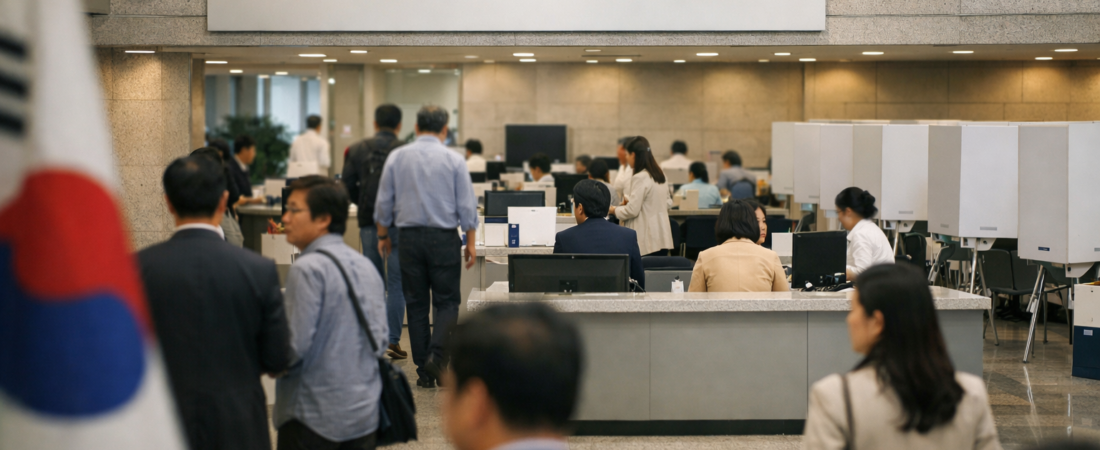
The National Election Commission serves as Korea’s top authority on election administration. It oversees everything from voter registration to ballot counting. It also handles appeals when candidates believe something went wrong.
This week’s hearing marked the first formal session on complaints from the June 3 local elections. Multiple appeals are reportedly under review, though details on specific races remain limited. The commission’s job is to determine whether irregularities affected the outcome enough to warrant a re-vote.
Here’s the tricky part. The Seoul Election Commission, a regional branch under the National Election Commission umbrella, is currently short-staffed. Deliberations there are proceeding only through written review, not in-person hearings. That distinction matters more than it might seem at first glance.
Written review means commissioners read documents and vote without direct debate. Some legal experts argue this format weakens the quality of scrutiny. Others say it still satisfies the legal minimum required for a valid decision.
Seoul Election Commission’s Staffing Crisis
Let’s look at the numbers. The Seoul Election Commission lost three members through a wave of resignations. That is not a small dent, it is a significant blow to institutional capacity.
Despite this, the commission technically still meets quorum requirements. Korean law sets a minimum number of members needed to make binding decisions. As long as that number is met, votes remain legally valid, even if the total roster has shrunk dramatically.
But legal validity and public confidence are two different things. Can three or four remaining members truly represent the diversity of judgment that a full committee would offer? That is the question critics are now raising.
The National Election Commission has not announced emergency measures to backfill the empty seats quickly. This silence has fueled speculation about deeper organizational problems. Some observers wonder whether the resignations reflect internal disagreement over how to handle the pending election appeals themselves.
Institutional memory matters here too. Korea’s election commission system was built after decades of hard-won democratic reform following the 1987 pro-democracy movement. A commission running on skeleton staff undercuts decades of effort to build independent, trustworthy election oversight.
Political Pressure: Calls for Re-Election
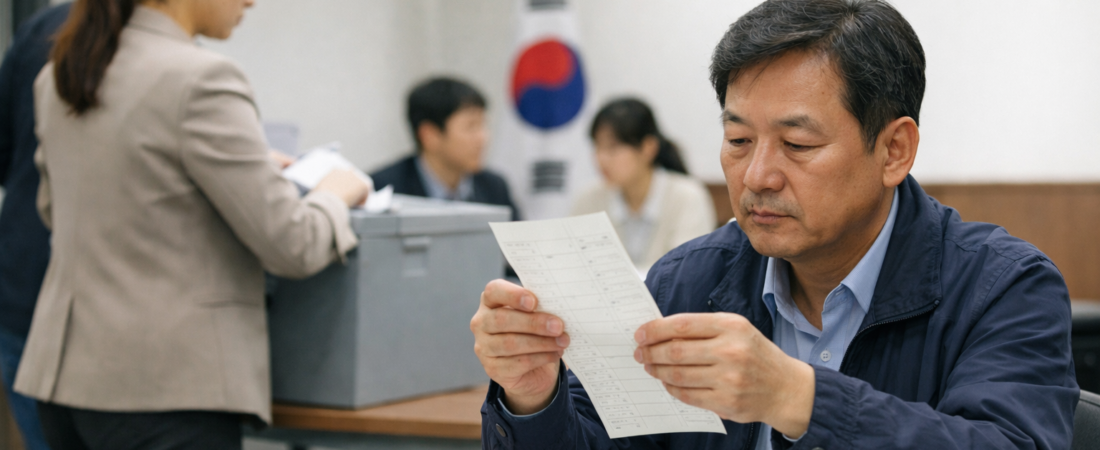
Politicians have not stayed quiet. Jang Dong-hyuk, leader of the People Power Party, publicly argued that a full re-election is necessary. His position suggests he sees the irregularities as serious enough to void results entirely.
Kim Jung-chul, a Supreme Council member of the Reform Party, took a more measured stance. He called for partial re-elections in specific districts rather than a sweeping do-over. This split reflects a broader pattern in Korean politics, where parties often disagree sharply on the scale of electoral fixes needed.
Why would one party want everything redone while another wants only certain races revisited? The answer usually comes down to political calculation. A full re-election creates more opportunity, and more risk, for every party involved.
The National Election Commission now sits between these competing demands. It must decide based on evidence and legal standards, not political convenience. That balancing act becomes harder when the reviewing body itself faces questions about its own staffing and reliability.
For readers unfamiliar with Korean party structures, the People Power Party is the current conservative ruling bloc, while the Reform Party positions itself as a newer, reform-minded alternative. Their differing responses here reflect their differing strategic interests, not necessarily differing views on democratic principle. You can find more background on Korea’s election appeal process through Yonhap News Agency, which has covered similar disputes in past election cycles.
What This Means for Korea’s Democracy Going Forward
Step back for a moment. Why should anyone outside Korea care about a staffing shortage at a regional election office? Because the underlying issue, institutional trust during political transition, is universal.
Democracies everywhere face this same tension. Rules can be technically satisfied while public confidence quietly erodes. Korea’s National Election Commission now has a chance to show how a mature democracy handles this gap between legality and legitimacy.
Looking ahead toward future election cycles, including the next major nationwide vote expected around 2026, this case could set an important precedent. If the commission moves to rebuild its ranks quickly and transparently, public trust may recover. If it does not, expect louder calls for structural reform of how commissioners are appointed and replaced.
South Korea has built one of Asia’s more resilient democratic systems since its transition from authoritarian rule in the late 1980s. That resilience was tested many times, through disputed elections, impeachment proceedings, and shifting party dynamics. This latest test at the National Election Commission is smaller in scale, but it still matters.
Small cracks, left unaddressed, tend to widen. Korea’s political class, and its voters, will be watching closely to see how this plays out. What do you think about Korea’s approach to keeping its election institutions accountable, even when short-staffed?
AI-Generated Photorealistic Image — All people, scenes, and details in this image are entirely AI-generated and fictional. Not a real photograph of an actual person or event. 이 이미지는 AI로 생성된 가상 이미지입니다.
Leave a Reply