Table of Contents
- Understanding Korea’s Criminal Procedure Act Reform
- Removing the Prosecution’s Supplementary Investigation Power
- New Grounds for Case Dismissal Under the Revised Criminal Procedure Act
- Political Showdown: Democratic Party vs. People Power Party
- What This Means for Korea’s Justice System Going Forward
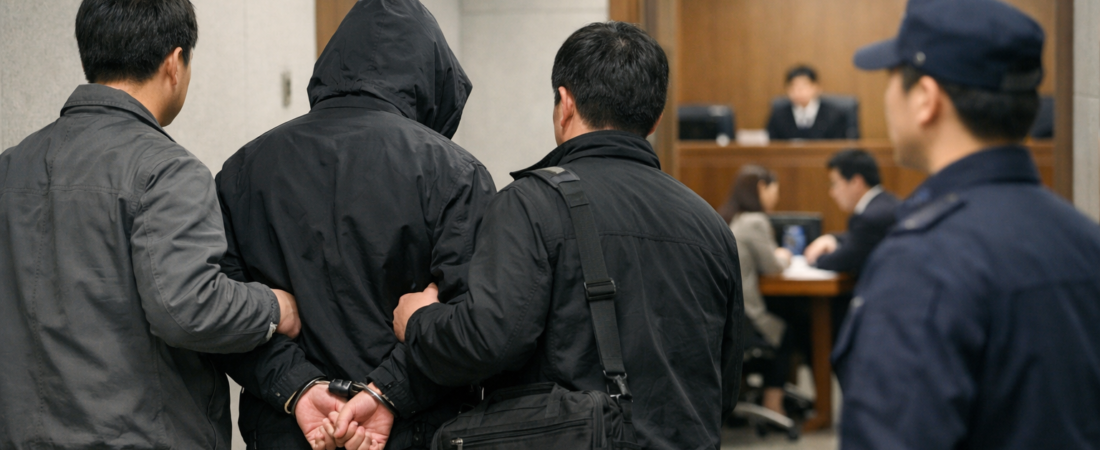
Who really decides whether a criminal case moves forward in Korea — the prosecutor or the law itself? That question sits at the heart of a major amendment to Korea’s Criminal Procedure Act now moving through the National Assembly. Lawmakers just pushed the bill through a subcommittee of the Legislation and Judiciary Committee, and the changes go far beyond what most headlines have reported so far.
Yes, the amendment ends the prosecution’s supplementary investigation power. But it also quietly rewrites the rules for when a court can throw out a case entirely.
Let’s break down what’s actually in this Criminal Procedure Act amendment, why it matters, and what happens next.
Understanding Korea’s Criminal Procedure Act Reform
The Criminal Procedure Act governs how criminal cases move from investigation to trial in Korea. Think of it as the rulebook that decides who investigates, who prosecutes, and under what conditions a case can be dismissed before it ever reaches a verdict.
This latest revision cleared a key subcommittee vote and now heads toward broader approval. Two changes stand out.
First, the bill eliminates the prosecution’s power to send cases back for supplementary investigation. Second, it expands the legal grounds for dismissing a prosecution outright, known in Korean law as “gongso gigak.”
Why does this second part matter so much? Because it hands courts a stronger tool to reject cases built on flawed investigations or overreaching prosecutorial decisions.
Under the current Criminal Procedure Act, dismissal grounds are fairly narrow. The revised version adds new categories, including cases built on “serious illegal investigation” or a “clear departure from prosecutorial discretion.”
In plain English, that means if prosecutors investigate improperly or stretch their charging authority too far, a judge can now dismiss the case before trial even begins. This is a structural shift, not a minor tweak.
For readers unfamiliar with Korean legal history, this debate traces back to long-running tension between prosecutors and police over investigative authority. Korea has spent nearly a decade rebalancing these powers, starting with reforms in 2020 and 2021 that first trimmed prosecutorial reach.
This new Criminal Procedure Act amendment continues that trajectory, but with a sharper edge aimed directly at prosecutorial accountability.
Removing the Prosecution’s Supplementary Investigation Power
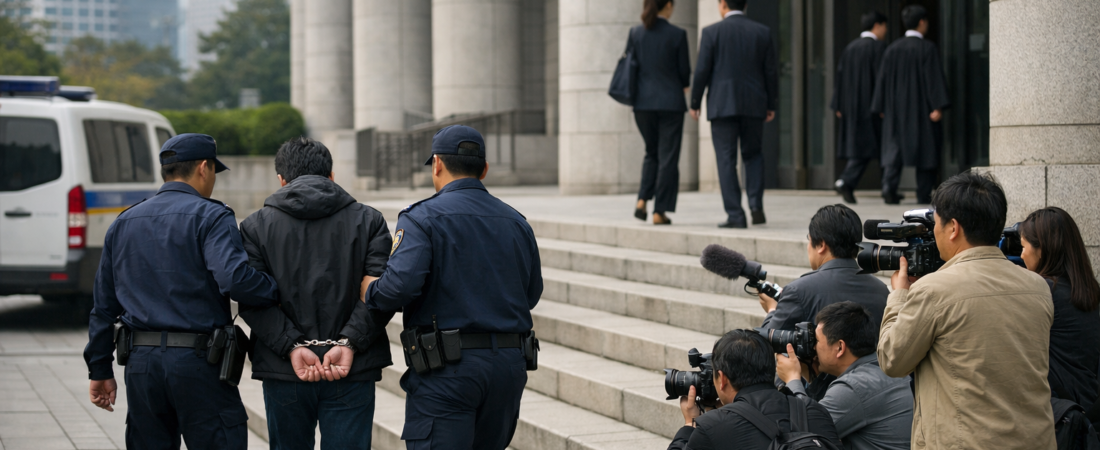
What exactly is “supplementary investigation power,” and why does removing it matter? In simple terms, it lets prosecutors send a case back to police for additional investigation after receiving it, rather than deciding immediately whether to charge or drop it.
Critics have long argued this power lets prosecutors delay cases indefinitely or pressure police investigations from behind the scenes. Supporters, meanwhile, say it helps ensure thorough fact-finding before charges are filed.
So which side is right? The answer depends on how much you trust prosecutorial discretion versus police-led investigation.
The Democratic Party of Korea, which controls the National Assembly, has framed this power as leftover prosecutorial overreach from an era before Korea’s investigative reforms. Removing it, they argue, completes the separation between investigation and prosecution that earlier reforms only partially achieved.
The People Power Party sees it differently. They warn that eliminating supplementary investigation removes a critical check that catches investigative errors before an innocent person faces trial.
Here’s the deeper context. Korea’s prosecution service has historically held both investigative and charging authority, an unusual concentration of power by global standards.
Most democracies split these functions between separate agencies. This Criminal Procedure Act amendment pushes Korea further toward that international norm, stripping away one of the last tools prosecutors used to influence investigations after police already completed their work.
You might wonder: does this leave gaps in fact-finding? Lawmakers addressed that concern by adding a new provision requiring prosecutors to uphold an “objective duty” and confirm facts independently, rather than relying on the old supplementary investigation process as a safety net.
New Grounds for Case Dismissal Under the Revised Criminal Procedure Act
This is the part of the story that got far less attention — and arguably matters more long-term. The revised Criminal Procedure Act expands when a court can dismiss a case entirely, before it ever reaches a full trial verdict.
Currently, dismissal grounds are narrow and technical, often limited to procedural defects like improper indictment filing. The new language adds two major categories: cases built on serious illegal investigation, and cases where prosecutors clearly departed from reasonable charging discretion.
What does “serious illegal investigation” actually cover? Think coerced confessions, unlawful searches, or evidence gathered through methods that violate a defendant’s basic rights.
Under the old framework, even if an investigation crossed legal lines, the case could often still proceed to trial, with the illegal conduct addressed separately. The new provision lets judges cut the case off entirely at the front end.
The second new ground — “clear departure from prosecutorial discretion” — targets a different problem. This addresses situations where prosecutors file charges that seem disproportionate, politically motivated, or wildly inconsistent with how similar cases are normally handled.
This has obvious political sensitivity in today’s Korea, where accusations of politically targeted prosecutions have shaped headlines for years. Should judges have this much power to second-guess a prosecutor’s charging decision? That’s exactly the question dividing lawmakers right now.
The bill also creates a new fact-confirmation obligation for prosecutors, formalizing what many legal scholars call an “objective duty.” This requires prosecutors to actively verify facts rather than simply build the strongest possible case against a defendant.
Legal analysts covering the debate note that this dual approach — removing supplementary investigation power while expanding dismissal grounds — represents one of the most significant rebalancing efforts in Korea’s modern legal history. For those wanting deeper background on the broader investigative reform debate, Korean Daily Life News Desk has tracked this issue closely over recent years.
Political Showdown: Democratic Party vs. People Power Party

Politics never sits far from Korean legal reform, and this Criminal Procedure Act fight is no exception. The Democratic Party of Korea, holding a commanding majority in the National Assembly, is moving fast.
Their plan calls for a full Legislation and Judiciary Committee vote on the 29th, followed by a plenary session vote on the 30th. That’s an aggressive timeline for legislation this consequential.
Why the urgency? The Democratic Party has treated prosecutorial reform as a signature policy priority since regaining legislative dominance, viewing it as unfinished business from earlier reform waves.
The People Power Party isn’t standing by quietly. Party lawmakers are preparing a filibuster, Korea’s parliamentary tool for delaying a vote through extended floor speeches.
If that filibuster materializes, the final vote likely slides to the 31st instead of the 30th. One extra day may sound small, but in Korean legislative politics, filibusters often signal deeper opposition than the delay itself suggests.
What’s really driving People Power Party resistance? Beyond substantive concerns about weakening investigative safeguards, there’s also institutional memory at play.
The party has consistently opposed reforms that reduce prosecutorial authority since the earlier 2020–2021 restructuring, arguing each round chips away at the checks needed to prevent wrongful prosecutions. Whether that argument persuades the public remains an open question, especially given how contentious prosecutorial power debates have become across recent Korean administrations.
What This Means for Korea’s Justice System Going Forward
Step back for a moment. What does this Criminal Procedure Act amendment actually change for ordinary Koreans facing the justice system?
If you’re ever investigated in Korea after this bill passes, your case faces a different set of checks than it would have a year ago. Prosecutors lose a tool that once let them extend investigations indefinitely.
Courts gain new power to dismiss cases when investigations crossed legal lines or when charges seem wildly disproportionate. That’s a meaningful shift in the balance between state power and individual rights.
Does this make Korea’s system more fair, or does it create new loopholes for cases to slip through? Reasonable people disagree, and that disagreement is exactly why this debate has become so heated in the National Assembly.
What’s clear is that this amendment continues a longer trend. Korea has spent years recalibrating the relationship between police, prosecutors, and courts, and this bill pushes that recalibration further than any single step since the original 2020–2021 reforms.
Watch what happens between the 29th and 31st. If the Democratic Party secures passage as planned, Korea’s Criminal Procedure Act will look meaningfully different by early next year, with real consequences for how investigations unfold and how quickly weak cases get dismissed.
For global readers watching Korea’s legal system evolve, this moment offers a clear lesson: reforming prosecutorial power is rarely simple, and every adjustment creates new questions about accountability. So, where do you stand — does expanding case dismissal grounds protect defendants, or does it risk letting genuinely guilty people escape justice on technical grounds?
AI-Generated Photorealistic Image — All people, scenes, and details in this image are entirely AI-generated and fictional. Not a real photograph of an actual person or event. 이 이미지는 AI로 생성된 가상 이미지입니다.


Leave a Reply