Table of Contents
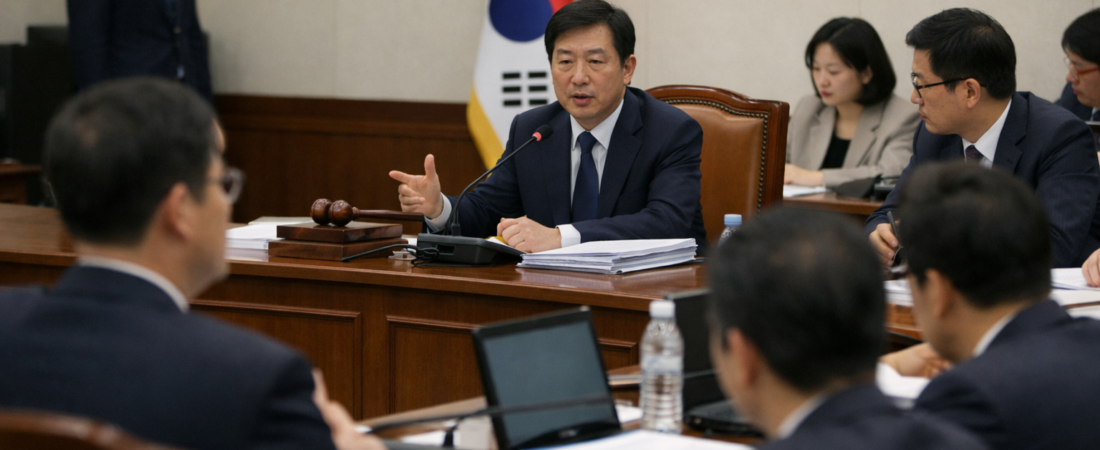
Can six people decide the fate of Korea’s criminal justice system? That’s essentially what’s happening right now inside the Legislation and Judiciary Committee. This powerful body just referred a major bill to a special adjustment panel, and the outcome could reshape how prosecutors operate in Korea.
The bill in question would abolish prosecutors’ supplementary investigation rights entirely. That’s a big deal, and you’ll want to understand why.
What Just Happened at the Legislation and Judiciary Committee
Let’s break down the basics first. The National Assembly’s Legislation and Judiciary Committee is reviewing an amendment to the Criminal Procedure Act.
This amendment would strip prosecutors of their power to request supplementary investigations. Think of it as the final piece in Korea’s long-running prosecutorial reform puzzle.
Members of the People Power Party, the main opposition, didn’t sit quietly. They submitted a formal request to send the bill to an adjustment committee instead of letting it pass through normal committee review.
Why does this move matter? Because it changes the entire timeline and dynamic of how this bill gets decided.
The Legislation and Judiciary Committee often gets called the “gatekeeper committee” of the National Assembly. Every bill passed by other standing committees must clear this committee before reaching the full assembly floor.
That gives it enormous influence over which laws actually become reality in Korea. When the Legislation and Judiciary Committee decides to route a bill through the adjustment process, everyone in Korean politics pays attention.
How Korea’s Agenda Adjustment System Actually Works
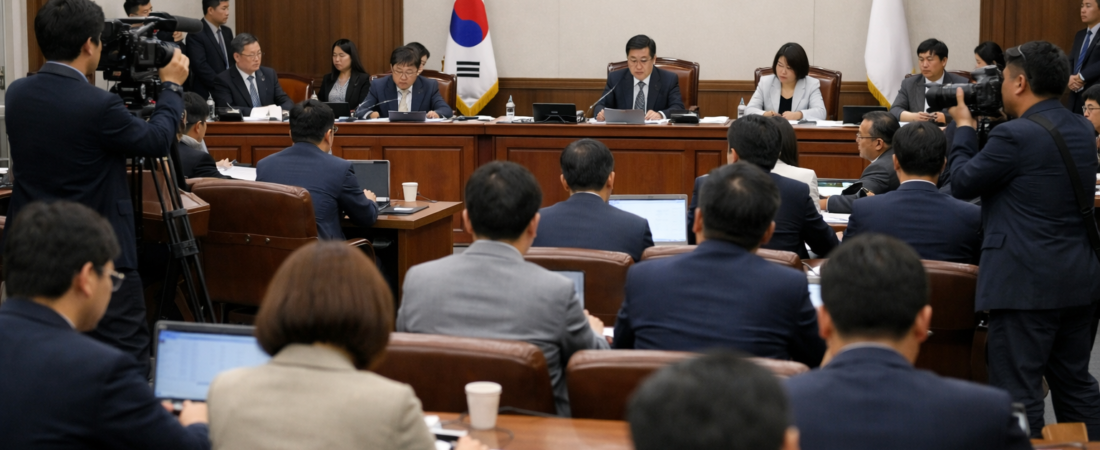
So what exactly is an “agenda adjustment committee”? Think of it as a pressure valve built into Korea’s legislative system.
Lawmakers created this mechanism back in 2012 to prevent any single party from railroading controversial bills through committee votes. It sounds fair in theory, but does it actually slow things down in practice?
Not necessarily. Here’s the key detail: an adjustment committee typically has six members.
If four or more of those six members vote in favor, the bill immediately returns to the standing committee for a final decision. That’s a much lower bar than people assume.
This creates an interesting math problem for the current situation at the Legislation and Judiciary Committee. If four members from the pro-government bloc agree, they can push this bill through remarkably fast.
The adjustment committee process was originally designed to force compromise between rival parties. Ironically, it can also become a tool for quick passage when one side controls enough seats within that six-member panel.
You might wonder: doesn’t this defeat the whole purpose of “adjustment”? That’s a fair question, and it’s one Korean political observers have debated for years.
The system assumes rough parity between parties on the adjustment committee. But when seat allocation favors one bloc, the “check” function weakens considerably.
This is exactly the scenario now unfolding at the Legislation and Judiciary Committee. Legal analysts following the National Assembly have noted this pattern repeatedly over the past several years, according to Yonhap News Agency.
Why Prosecutors’ Supplementary Investigation Rights Matter
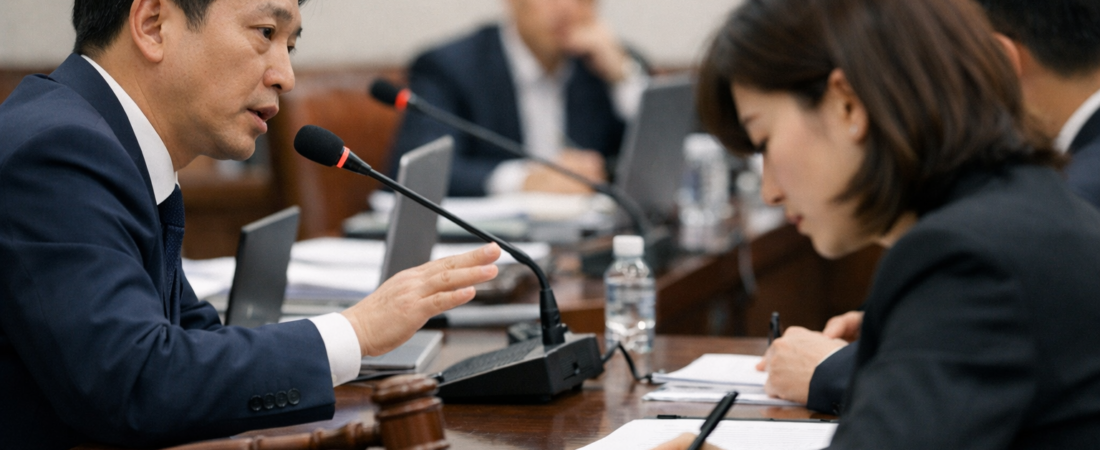
Now let’s talk about what’s actually at stake. Korea overhauled its investigation system between 2020 and 2022, shifting primary investigative power from prosecutors to police.
Under that reform, prosecutors kept one important tool: the right to request supplementary investigations. This let prosecutors send cases back to police when they felt evidence was incomplete.
Removing this right would mark the final step in separating investigation from prosecution. Supporters argue this fixes long-standing problems.
Korean prosecutors historically held both investigative and indictment powers simultaneously. Critics argued this concentration of power invited abuse and made independent oversight nearly impossible.
The reforms of recent years tried to fix that imbalance piece by piece. Abolishing supplementary investigation rights would be the last domino to fall in that process.
But opponents, mainly within the People Power Party, see real risks here. Without supplementary investigation rights, they argue, prosecutors lose an essential check on incomplete police work.
Could weak police investigations lead to more failed prosecutions? That’s the core worry driving opposition lawmakers to fight this bill at the Legislation and Judiciary Committee stage.
This debate isn’t just legal technicality. It touches something deeper in Korean society: who gets to hold power accountable, and how?
Korea’s prosecution service has occupied a uniquely powerful position since the country’s modern legal system took shape after 1945. Reform-minded lawmakers have spent nearly a decade trying to rebalance that power.
Each legislative session brings new attempts to finish what earlier reforms started. This bill represents the latest chapter in that ongoing story.
What Comes Next for the Legislation and Judiciary Committee
So where does this leave us? The adjustment committee now holds the bill, and all eyes are on those six members.
If four members from the pro-government side vote together, the bill returns to the Legislation and Judiciary Committee almost immediately. From there, a full committee vote could happen quickly.
This would be followed by a vote on the National Assembly floor, where the ruling bloc currently holds a majority. Fast passage seems entirely plausible given the current numbers.
What should you take away from all this? First, Korea’s legislative safeguards work differently depending on party seat distribution.
An adjustment committee designed for compromise can become a fast lane when one bloc controls enough votes. Second, this bill fits into a much larger narrative about prosecutorial power in Korea.
Every session, lawmakers debate how much authority prosecutors should retain. This latest move at the Legislation and Judiciary Committee shows that debate is far from settled.
For readers outside Korea, this might seem like a narrow procedural story. But it reflects something universal: how democracies balance investigative power against prosecutorial power.
Countries around the world wrestle with similar questions. Korea’s approach, shaped by its own history with concentrated prosecutorial authority, offers a distinct case study.
Watch what happens next at the Legislation and Judiciary Committee in the coming weeks. The adjustment committee’s decision will signal whether Korea’s prosecutorial reform era is truly reaching its conclusion, or whether more battles lie ahead.
What do you think about Korea’s approach to balancing investigative and prosecutorial power?
AI-Generated Photorealistic Image — All people, scenes, and details in this image are entirely AI-generated and fictional. Not a real photograph of an actual person or event. 이 이미지는 AI로 생성된 가상 이미지입니다.


Leave a Reply