Table of Contents
What does a president do on his first day back home? For Lee Jae-myung, there’s no time for jet lag.
He returns from an 11-day overseas trip tomorrow. And his very first stop isn’t his office desk — it’s an emergency meeting on real estate and the stock market.
That single decision tells you everything about the pressure building inside Korea’s economy right now. Lee Jae-myung isn’t waiting. He’s landing and going straight to work.
Lee Jae-myung’s Homecoming Agenda
Lee Jae-myung wrapped up a marathon diplomatic trip covering the United States, three South American nations, and finally Germany. Eleven days is a long stretch for any head of state to be away from domestic affairs.
According to SBS reporting, Lee Jae-myung will chair a “checkup meeting” on real estate and stocks immediately after touching down. Prime Minister Han Seong-sook is expected to attend, alongside officials from the Ministry of Land, Infrastructure and Transport and the Financial Services Commission.
Why rush into economic policy before even unpacking? Because two months’ worth of pressure has been building while he was abroad, and someone has to address it fast.
This isn’t just symbolic scheduling. Lee Jae-myung’s team wants to show that foreign travel doesn’t mean domestic neglect. The very next day, he’ll also start receiving work reports from 27 government ministries and agencies — everything from trade to defense to justice.
That’s an ambitious first week back. But it fits a pattern Lee Jae-myung has followed since taking office: move fast, and move visibly.
Why the Real Estate and Stock Market Crisis Matters
Let’s start with real estate. The government has been quietly preparing a major tax reform, and it’s expected to land soon.
The plan reportedly raises taxes on ultra-high-value homes and non-resident-owned properties. In plain terms, if you own an expensive house you don’t actually live in, expect a bigger tax bill.
A presidential aide told reporters the meeting will cover “the full scope of real estate measures.” That phrase suggests Lee Jae-myung wants more than a narrow tax tweak — he’s aiming for a broader policy reset.
Now add the stock market to the mix. Korea’s benchmark KOSPI index swung wildly last week, with sharp rises and falls that unsettled everyday investors.
For a country where retail investors — regular citizens, not just big firms — hold a massive share of stock trading, that kind of volatility hits close to home. Many Korean households treat the stock market almost like a national pastime; it’s less “Wall Street bets” and more “everyone’s uncle has an opinion on Samsung Electronics.”
Lee Jae-myung’s decision to tackle both real estate and stocks in one meeting shows he sees them as connected problems, not separate headaches. Housing wealth and stock wealth both shape how ordinary Koreans feel about their financial future. If both wobble at once, public confidence takes a real hit.
The Leverage ETF Controversy Heats Up
Here’s where things get politically sharp. One suspected cause of the recent market swings is something called single-stock leverage ETFs — investment products that amplify gains and losses on a single company’s stock.
These products can multiply returns, but they can also multiply losses just as fast. When markets get volatile, leverage ETFs tend to make the swings worse, not better.
The conservative opposition isn’t staying quiet about this. They’re demanding a formal parliamentary investigation into how these leverage products were approved in the first place.
They’re also calling for the resignation of Kim Yong-beom, the presidential policy chief, arguing he bears responsibility for the oversight gap. That’s a serious escalation — resignation demands rarely come lightly in Korean politics.
Will Lee Jae-myung address the leverage ETF issue directly in tomorrow’s meeting? That’s the question everyone in Yeouido’s financial district is asking right now.
If he does, it could signal tighter regulation ahead. If he sidesteps it, expect the opposition to grow louder. Either way, Lee Jae-myung can’t avoid this topic for long — not with a formal investigation demand already on the table.
You can follow the ongoing coverage of this story through SBS News, which broke the details of this exclusive meeting schedule.
What Lee Jae-myung’s Move Signals for Korea’s Economy
Step back for a moment. Why does a single meeting scheduled for the day after a president lands matter so much?
Because timing sends a message. Lee Jae-myung chose to prioritize economic firefighting over ceremonial rest, and that choice tells markets and voters where his attention sits.
It also reflects a real tension in how modern governments operate. Presidents travel constantly now — trade deals, alliances, diaspora outreach — yet domestic economies don’t pause while leaders are abroad.
That gap between global duties and local urgency is not unique to Korea. But how a leader closes that gap, quickly and transparently or slowly and defensively, says a lot about their governing style.
There’s something worth sitting with here, beyond the policy details. Real estate tax debates and stock market swings aren’t abstract numbers — they touch the retirement savings of an aging population, the housing dreams of young couples, and the trust ordinary citizens place in institutions they can’t fully control.
That trust is fragile, and it’s fair to say Korea’s financial system still has real gaps — the leverage ETF episode proves regulators didn’t foresee everything. Yet it’s also worth noticing the response itself: a government moving fast, opposition lawmakers pushing hard for accountability, and a public still willing to demand answers rather than simply absorb the loss. That push and pull, messy as it looks, is often how systems slowly get safer.
Lee Jae-myung’s in-basket is full, and it won’t empty quickly. Real estate tax reform needs careful calibration — too aggressive, and it punishes ordinary homeowners; too soft, and speculation continues unchecked.
The stock market issue needs its own balance — protecting retail investors without stifling legitimate innovation in financial products. Getting both right, at the same time, is no small task for any administration.
Still, there’s something reassuring about a leader who returns from a long diplomatic trip and heads straight into the hardest domestic questions. Lee Jae-myung seems to understand that economic anxiety doesn’t wait for a president’s travel schedule to clear.
Whether his checkup meeting produces concrete results or just talking points will become clear in the coming weeks. Watch how quickly the real estate tax plan actually gets announced, and watch whether the leverage ETF debate cools or escalates further under Lee Jae-myung’s watch.
What do you think — should presidents prioritize domestic economic firefighting immediately after foreign trips, or does that risk turning every homecoming into crisis management?
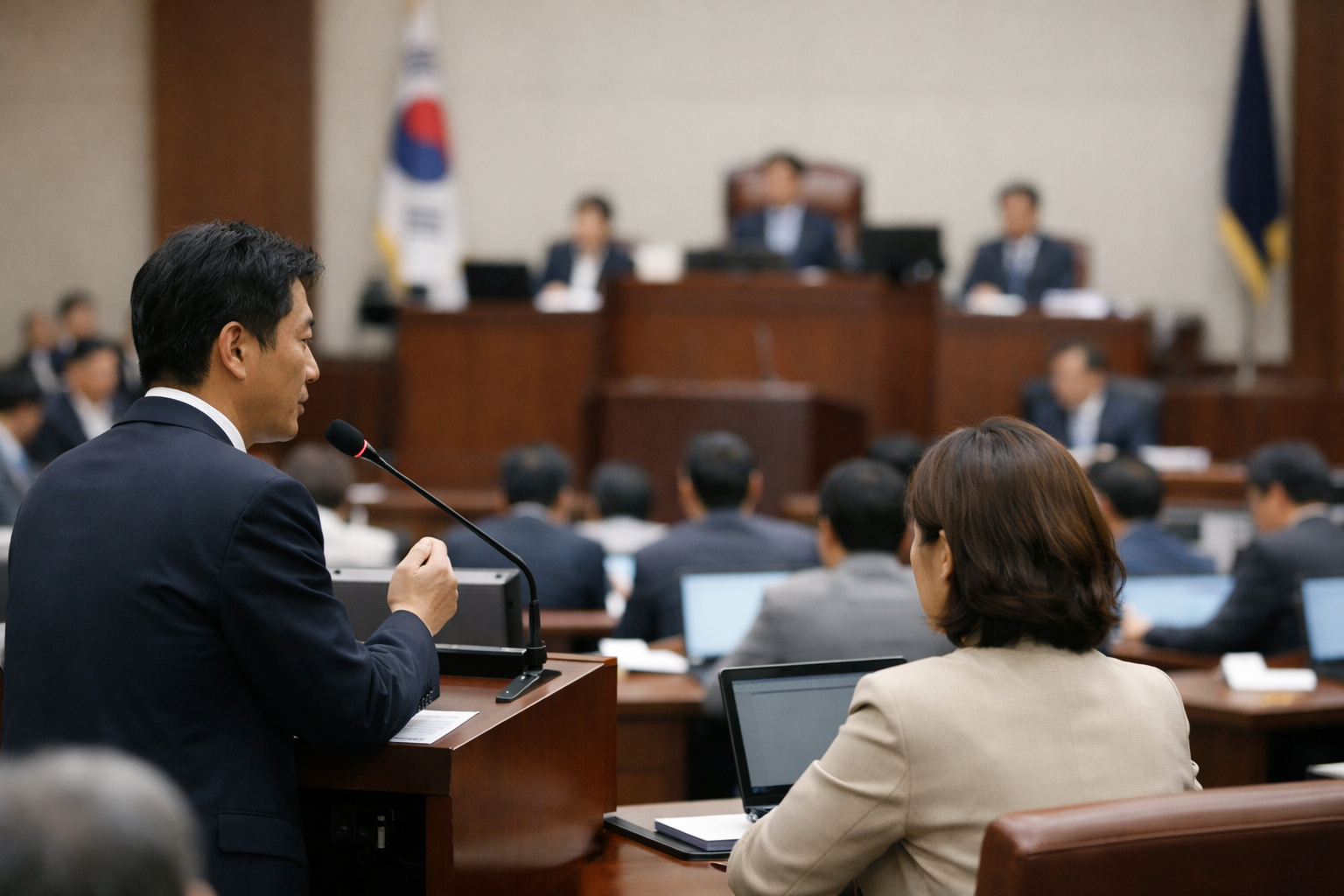
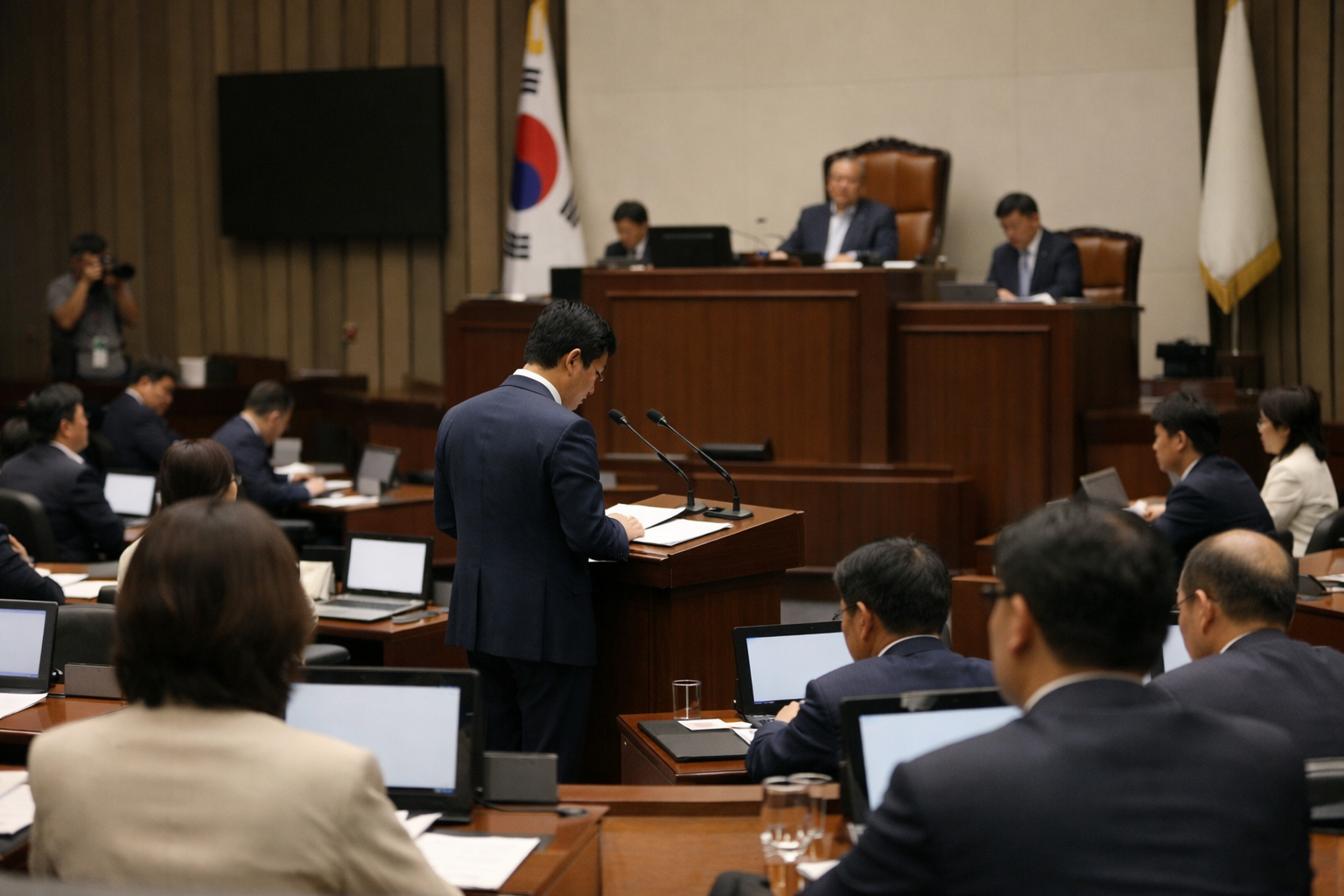
AI-Generated Photorealistic Image — All people, scenes, and details in this image are entirely AI-generated and fictional. Not a real photograph of an actual person or event. 이 이미지는 AI로 생성된 가상 이미지입니다.
Leave a Reply