Table of Contents
Korea’s Entertainment Industry Faces a Heat Wave Emergency
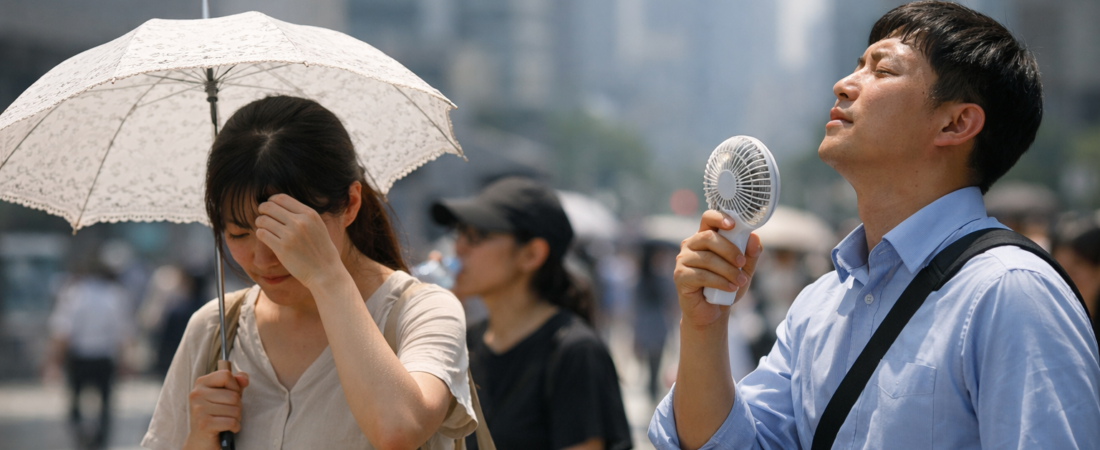
Have you ever tried standing in a crowd under a sun hot enough to melt asphalt? That’s the reality for thousands of concertgoers across Korea this summer. A brutal heat wave, with temperatures hovering near 40 degrees Celsius, has pushed the country’s music and broadcasting industries into emergency mode.
This isn’t just an inconvenience. Outdoor concerts, K-pop showcases, and TV filming schedules all depend on predictable weather. When a heat wave refuses to break for days at a time, that entire system starts to strain.
According to Yonhap News reporters Lee Tae-su, Kim Sun-woo, and Ko Ga-hye, entertainment companies and event organizers are now scrambling to protect performers and fans alike. Their reporting captured a rare moment: an industry built on spectacle suddenly forced to prioritize survival over showmanship.
Korea has faced hot summers before, but this year feels different. Weather authorities describe the current heat wave as one of the longest sustained stretches of extreme temperatures in recent memory.
And when the mercury climbs day after day with no relief, the people running outdoor events don’t get to wait it out. They have to act.
Fan Shelters and Re-Entry Rules: Concerts Respond to the Heat Wave
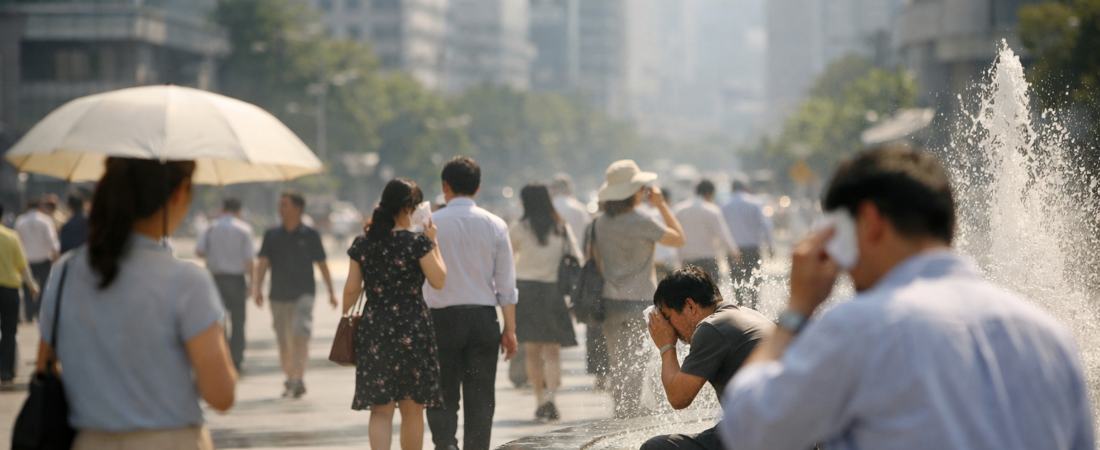
So what does a concert look like during a record-breaking heat wave? For starters, expect fan shelters. Major performances, including shows tied to the group BIGBANG, have added dedicated cooling zones where fans can escape the sun between sets.
These aren’t small tents with a fan running. Organizers are setting up misting stations, shaded rest areas, and medical check-points staffed with cooling supplies. Think of it as a small emergency room built right into the concert grounds — just in case.
Music festivals are rewriting their rules too. Water Bomb, the popular water-themed summer festival, announced it will allow re-entry this year, letting attendees leave the venue to cool off and return later without losing their spot.
That’s a notable policy shift for a festival that usually enforces strict one-time entry. But when a heat wave turns a fun day out into a genuine health risk, flexibility becomes the responsible choice, not just a nice gesture.
Broadcasting schedules are adjusting as well. Outdoor filming blocks are being shortened or moved to early morning and late evening hours, avoiding the punishing midday sun.
You can read more background on how Korean weather authorities are tracking this extended heat wave through Yonhap News Agency. It’s worth checking if you want the full meteorological picture behind these industry changes.
Why Extreme Heat Is Changing Outdoor Events in Korea

Why does a single heat wave force so many changes across an entire industry? The answer comes down to scale and exposure. K-pop culture thrives on outdoor spectacle — massive stages, open-air fan meetings, festival crowds numbering in the tens of thousands.
All of that depends on people staying outside, often for hours, under direct sun. When the heat wave pushes real-feel temperatures past dangerous thresholds, that model becomes a liability rather than a strength.
Consider the economics too. Cancelling a concert costs money, disappoints fans, and can dent an artist’s schedule for months. But pushing forward without safety measures risks something far worse: heat stroke, dehydration, or worse among performers and fans packed into tight spaces.
That’s why fan shelters and re-entry policies aren’t just customer service upgrades. They’re risk management tools born directly from this heat wave’s severity.
Is this pattern likely to continue? Korean summers have grown measurably hotter over the past decade, with the Korea Meteorological Administration recording more “extreme heat” days almost every year since 2016.
If that trend holds, this year’s emergency response might not be a one-time fix. It could become the new standard operating procedure for how Korea runs outdoor entertainment altogether.
What This Heat Wave Season Means for Korea’s Future
So where does this leave the industry going forward? Expect heat wave contingency planning to become a permanent line item in event budgets, right alongside sound systems and stage design.
Concert organizers are already talking about built-in shade structures, mandatory water stations, and flexible ticketing that assumes bad weather rather than hoping to avoid it. That’s a meaningful shift in how Korea’s entertainment world thinks about outdoor programming.
There’s something worth sitting with here beyond the logistics. A heat wave doesn’t just test infrastructure — it tests how quickly a community adjusts when the ground rules suddenly change.
The organizers scrambling to build fan shelters this week are showing something quietly admirable: a willingness to put people’s wellbeing ahead of a tightly planned schedule. That instinct to protect the vulnerable, even at real cost and inconvenience, deserves recognition rather than being taken for granted.
At the same time, it’s fair to ask why these protections often arrive only after conditions turn dangerous, rather than being built in from the start. Real care sometimes looks reactive before it looks thorough, and that gap between good intentions and early preparation is worth naming honestly.
The hopeful sign is that Water Bomb’s re-entry policy and BIGBANG’s fan shelters didn’t happen by accident. They happened because someone asked a simple question: what do people actually need to stay safe right now?
That question, repeated across enough concerts and festivals, has a way of quietly reshaping an entire industry’s habits for the better. Korea’s entertainment scene may look back on this heat wave not as a crisis it merely survived, but as the moment it learned to plan differently.
What do you think about how far Korea’s entertainment industry should go to protect fans during extreme heat wave conditions?
AI-Generated Photorealistic Image — All people, scenes, and details in this image are entirely AI-generated and fictional. Not a real photograph of an actual person or event. 이 이미지는 AI로 생성된 가상 이미지입니다.

Leave a Reply