Korea’s Summer Heat and a Small Act of Care
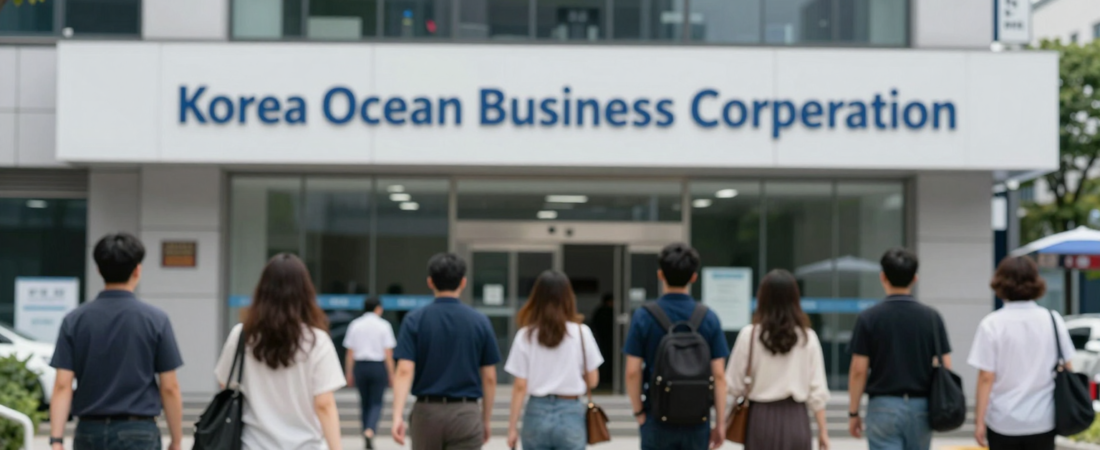
Can a pair of cooling vests really protect a worker from Korea’s brutal summer heat? It sounds simple, but for outdoor laborers, small gear like this can mean the difference between finishing the day safely or ending up in a hospital bed. That question sits at the heart of a recent gesture by the Korea Ocean Business Corporation, known officially in Korean as Hanguk Haeyang Jinheunggongsa.
On August 13, the Korea Ocean Business Corporation held a support event for outdoor workers near a tree nursery close to Busan Traditional Arts Center. The organization delivered cooling supplies worth 10 million won, roughly 7,500 US dollars. It’s a modest number in corporate terms, but for the workers receiving it, the impact is anything but small.
This event happened at the peak of Korea’s summer heat wave season, when temperatures regularly climb past 33 degrees Celsius with suffocating humidity. If you’ve never experienced a Korean summer, imagine a sauna that follows you outside. That’s the daily reality for people who work under the open sky for a living.
Why the Korea Ocean Business Corporation Got Involved
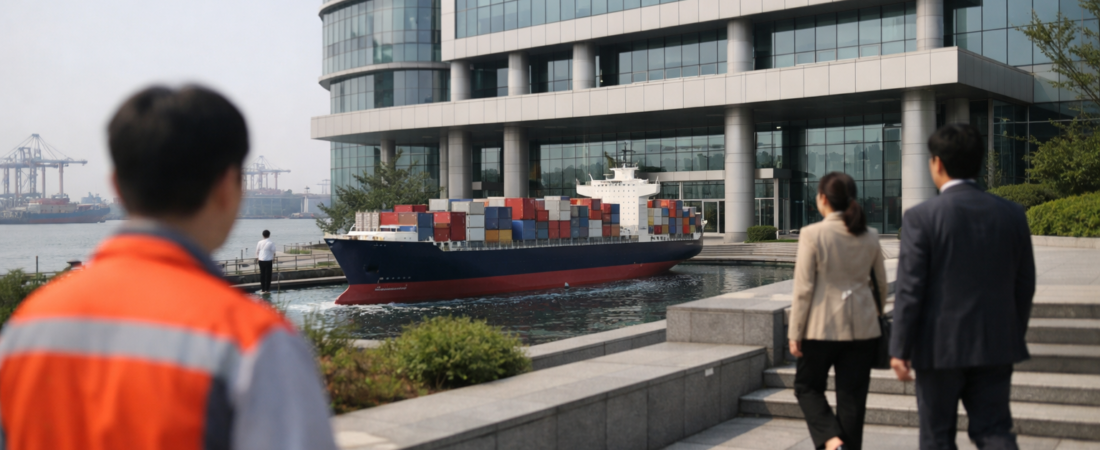
You might wonder why a maritime finance institution is handing out cooling vests instead of, say, ships or shipping contracts. The answer lies in how Korean public corporations increasingly see themselves. They aren’t just financial engines anymore — they’re expected to serve the communities around them too.
The Korea Ocean Business Corporation primarily supports Korea’s shipping and shipbuilding industries through financing and guarantees. But this event shows a broader mission taking shape. Corporate social responsibility has become a standard expectation for major Korean public institutions, and outdoor worker safety fits squarely into that framework.
Representatives from Suyeong-gu district office and the child welfare organization Green Umbrella also attended the event. Their presence signals something important: this wasn’t a solo public relations move. It was a coordinated local effort involving government, civil society, and a public corporation working toward one shared goal.
Why does that kind of coordination matter? Because heat-related illness prevention rarely succeeds through a single actor alone. It takes local government awareness, corporate resources, and community organizations paying attention to the people who are easy to overlook.
The Real Risk Behind Heat Waves for Outdoor Workers
Heat-related illness isn’t a minor inconvenience in Korea — it’s a genuine public health emergency every summer. According to Korea’s Ministry of Health and Welfare, hundreds of people are treated for heat illness annually, and outdoor laborers make up a disproportionate share of those cases. Construction workers, landscapers, delivery drivers, and nursery staff face direct sun exposure for hours without relief.
The Korea Ocean Business Corporation specifically targeted workers at a tree nursery, a job that demands physical labor in direct sunlight with little shade. Cooling vests, portable fans, and hydration supplies might sound like small conveniences. For someone bending over soil in 35-degree heat, though, they can prevent dizziness, heat exhaustion, or worse.
Doesn’t it seem strange that we often forget the people keeping our cities green and functioning? Nursery workers grow the trees lining our streets and parks, yet their working conditions rarely make headlines. This donation, while modest in dollar terms, puts a spotlight on a labor group that usually stays invisible.
You can read more about Korea’s approach to heat wave safety policy through Yonhap News Agency, which has tracked similar initiatives across the country this summer.
What This Says About Corporate Responsibility in Korea
Is one cooling-supply donation going to solve Korea’s outdoor labor safety crisis? Of course not. But it does reflect a shift in how Korean institutions think about their role beyond pure business functions.
The Korea Ocean Business Corporation didn’t need to organize this event. Its core mandate involves financing shipping companies, not distributing cooling vests to nursery workers. Yet the decision to step outside that narrow lane says something about evolving expectations for Korean public corporations in 2026.
There’s a real tension worth naming here, though. Corporate donations like this one are genuinely helpful, but they’re also temporary and small compared to the structural problem of heat exposure for outdoor laborers across Korea. A single event with 10 million won in supplies cannot replace stronger labor protections, mandatory rest breaks, or systemic heat wave policy reform that outdoor workers actually need long-term.
Still, something hopeful sits underneath this story. Local government offices, corporations, and child welfare groups showing up together suggests a growing cultural instinct in Korea — that vulnerable workers deserve visible, coordinated attention, not just quiet suffering during heat waves. Small gestures like this one won’t fix everything, but they can build momentum toward the larger safety net conversation that outdoor workers deserve.
Korea’s summers are only getting hotter, and outdoor labor isn’t disappearing anytime soon. The Korea Ocean Business Corporation’s gesture this month may be small, but it points toward a future where public institutions treat worker safety as core business, not an afterthought. What do you think — should more Korean public corporations take on this kind of community responsibility beyond their core industries?
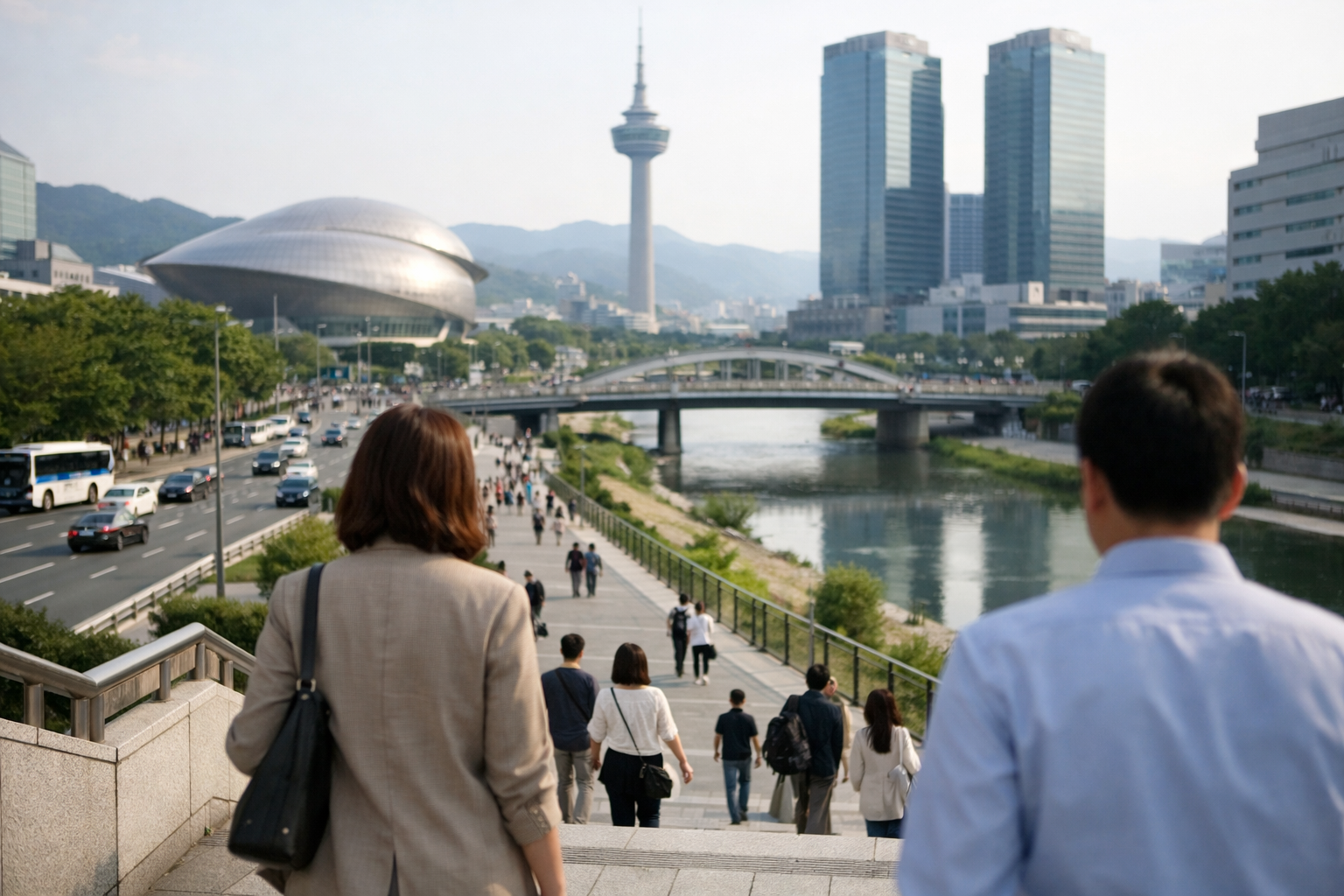
AI-Generated Photorealistic Image — All people, scenes, and details in this image are entirely AI-generated and fictional. Not a real photograph of an actual person or event. 이 이미지는 AI로 생성된 가상 이미지입니다.

Leave a Reply