
Table of Contents
Can a public broadcaster really change its whole culture from the inside? That’s the question hanging over MBC right now, as a longtime producer steps into the race for the network’s top job. His pitch is simple but bold: protect what makes public broadcasting valuable, but tear down the old ways of running things.
Lee Geun-haeng, former head of MBC’s content strategy division, announced his candidacy for the next MBC president on July 31. He posted his intentions on social media, promising “bold change” for the broadcaster. For anyone watching Korean media, this is a story worth following closely.
A New Face Steps Forward for MBC
Lee’s announcement wasn’t just another press release. He framed his campaign around a specific tension that MBC has struggled with for years. How do you keep public broadcasting’s core mission alive while also making the organization more flexible, creative, and open?
He wants a “creator-centered, flexible, and open organization.” That phrase sounds simple, but it carries real weight inside a company known for rigid hierarchies. MBC, like many legacy broadcasters, built its structure decades ago around a top-down chain of command.
Lee argues that structure now slows down the very people who make MBC’s content worth watching. You’ve probably noticed how streaming platforms move fast, launch shows quickly, and adjust based on audience feedback almost overnight. Traditional broadcasters, MBC included, often can’t move at that speed.
Who Is Lee Geun-haeng?

Understanding Lee’s candidacy means understanding his history at MBC. He joined the network in 1991 as a producer in current affairs and cultural programming. That’s not a small detail — it shapes how he sees the broadcaster’s mission today.
Over his career, Lee directed some of MBC’s most recognized programs. His credits include Human Age, the investigative series PD Notebook, Success Story, People of the Police Agency, and the documentary series Human Documentary Love. These weren’t light entertainment shows; they were programs meant to inform, question, and sometimes challenge power.
That last point matters for another reason. During the early years of the Lee Myung-bak administration, Lee Geun-haeng served as head of the MBC chapter of the Korean Journalists’ Union. In that role, he pushed back against government attempts to control the network’s editorial direction.
Media watchers in Korea still remember that period as a turning point for press independence. Journalists across multiple networks organized to resist political pressure on newsroom decisions. Lee’s involvement in that resistance gives him a track record that current MBC staff may weigh heavily when they think about who should lead next.
So why does this background matter for the current MBC presidential race? Because leadership credibility at a public broadcaster isn’t only about management skills. It’s also about whether staff trust you to protect editorial independence when political pressure returns — and in Korean media, it usually does.
Why This MBC Election Matters Now

Timing shapes how any candidacy gets read, and Lee’s timing is no accident. Korean broadcasting has been rattled recently by the financial troubles at JTBC, a private cable news channel that filed for court receivership. That news sent a chill through the entire industry.
If a well-funded cable network can hit a financial wall, what does that mean for public broadcasters like MBC? It’s a fair question, and Lee’s campaign seems built partly around answering it. He’s essentially arguing that MBC needs to modernize now, before financial or structural pressure forces sudden, less thoughtful change later.
You can read more background on Korea’s shifting broadcast media landscape through Ohmynews, which first reported on Lee’s candidacy. The interview format used in that report is telling — it repeatedly asks Lee to justify himself. Why run now? Why him? Why should MBC staff and viewers trust his vision?
Those aren’t softball questions, and that’s appropriate. MBC has a complicated recent history, including leadership disputes and accusations of political influence from multiple administrations. Anyone stepping forward to lead MBC should expect scrutiny, and Lee appears ready to meet it directly rather than avoid it.
What Change Could Look Like at MBC
What would a “flexible, open” MBC actually look like in practice? Lee hasn’t laid out every detail publicly yet, but his language points toward giving producers and creators more autonomy. Instead of ideas moving slowly up a management chain, decisions could happen closer to the people making the content.
This isn’t just a Korean broadcasting problem, either. Legacy media companies around the world are wrestling with the same puzzle: how do you keep institutional integrity while moving at a creator’s speed? Netflix, YouTube, and countless independent studios have already proven that audiences respond to nimble production models.
Public broadcasters carry an added responsibility, though. MBC isn’t just competing for ratings; it’s expected to serve a public interest mission that commercial platforms don’t share. Balancing speed with that mission is the real challenge Lee is proposing to solve.
There’s something worth sitting with here beyond the specifics of one election. Institutions like MBC often feel slow and bureaucratic precisely because they were built to resist quick, unaccountable change — a safeguard against political capture, not simply inefficiency. That safeguard has real value, even when it frustrates people who want faster results.
At the same time, an organization that only protects itself from bad change can end up blocking good change too. The people pushing hardest for reform at MBC today are often the same people who fought to protect its independence in the past. That continuity offers a quiet kind of hope — reform doesn’t have to mean abandoning what the institution stood for.
Whether Lee wins or not, MBC’s internal debate reflects something bigger happening across Korean public life. Institutions everywhere are being asked to justify why their old structures still make sense today. MBC’s answer, whatever it turns out to be, will likely shape how other Korean public organizations approach reform in the years ahead.
So where does this leave things for MBC’s future? The election itself will decide who leads, but the underlying question will outlast any single candidate. Can a public broadcaster modernize its structure without losing the independence that gives it public trust in the first place?
What do you think — should public broadcasters like MBC prioritize speed and flexibility, or does protecting institutional independence matter more, even if it means moving slower?
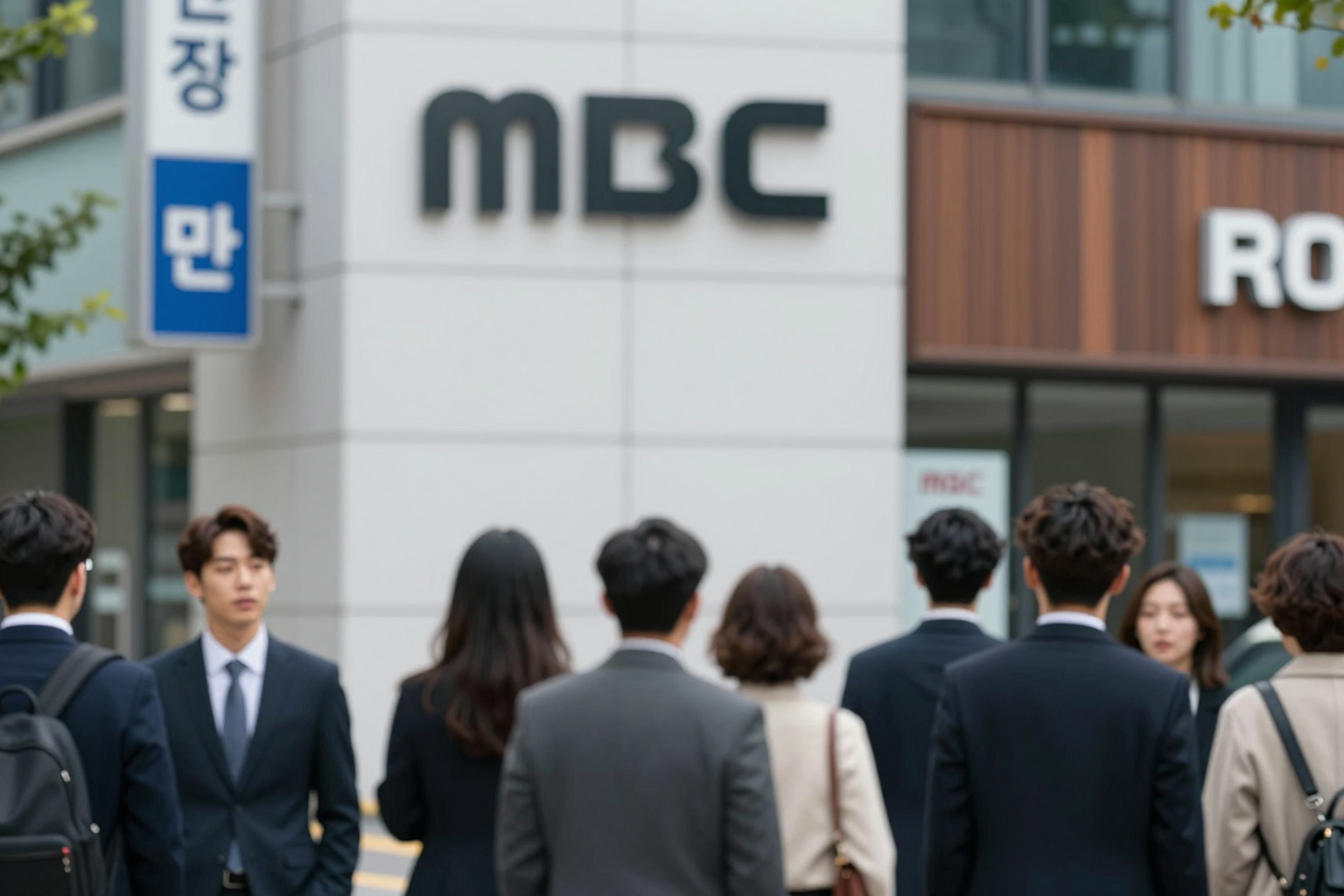
AI-Generated Photorealistic Image — All people, scenes, and details in this image are entirely AI-generated and fictional. Not a real photograph of an actual person or event. 이 이미지는 AI로 생성된 가상 이미지입니다.



Leave a Reply