Table of Contents
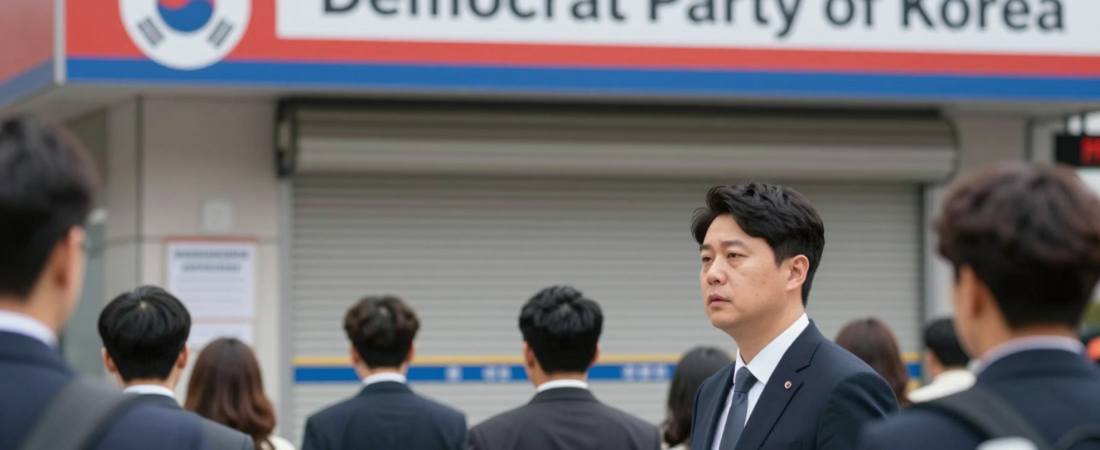
Ever wonder why Korean political parties hold huge, noisy conventions to pick a single leader? The Democratic Party of Korea offers a textbook example of how this works, and why it matters far beyond party headquarters.
Understanding these conventions helps you make sense of Korean politics more broadly. You start seeing patterns that repeat every time a major party chooses new leadership.
Why Party Leadership Races Matter in Korea
In Korea, the head of a ruling or major opposition party holds real power. This person sets legislative priorities, manages relations with the president, and often shapes the party’s next election strategy.
That’s why leadership races inside the Democratic Party of Korea draw national attention. A recent convention held in Daejeon showed this clearly, with candidates Kim Min-seok, Jung Chung-rae, and Song Young-gil making final appeals to thousands of party members.
Why does one internal party vote feel like a national event? Because the winner directly affects how smoothly the party works with the sitting president, in this case President Lee Jae-myung.
Kim Min-seok argued during his speech that the party, the government, and the president all needed stability. He framed his candidacy around fixing internal problems, especially what he called “fake party members” distorting primary results.
Inside a Democratic Party of Korea Convention
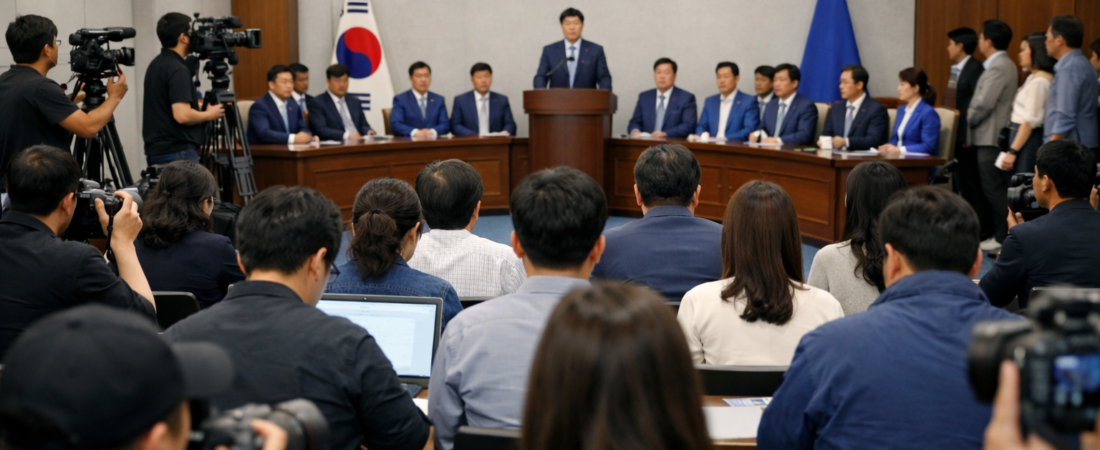
Korean party conventions combine formal speeches with something closer to a concert. Candidates walk onstage to chosen entrance music, supporters chant names, and the mood can feel more like a rally than a business meeting.
At this particular convention, Kim Min-seok entered to the song “Legends Never Die.” Jung Chung-rae chose Ha Hyun-woo’s “Rock.” Small details like these matter to Korean political culture — image and energy carry real weight (yes, campaign playlists are a genuine strategic decision).
The voting process itself blends several methods. Party members vote directly, delegates cast ballots on the convention floor, and a public opinion survey adds another layer to the final result.
This mixed system tries to balance loyal party members with broader public sentiment. It’s messy, but it reflects a deliberate effort to avoid one small group controlling the outcome.
You can learn more about how these party structures function through outlets like SBS News, which regularly covers Democratic Party of Korea events in detail.
Reading the Factional Lines
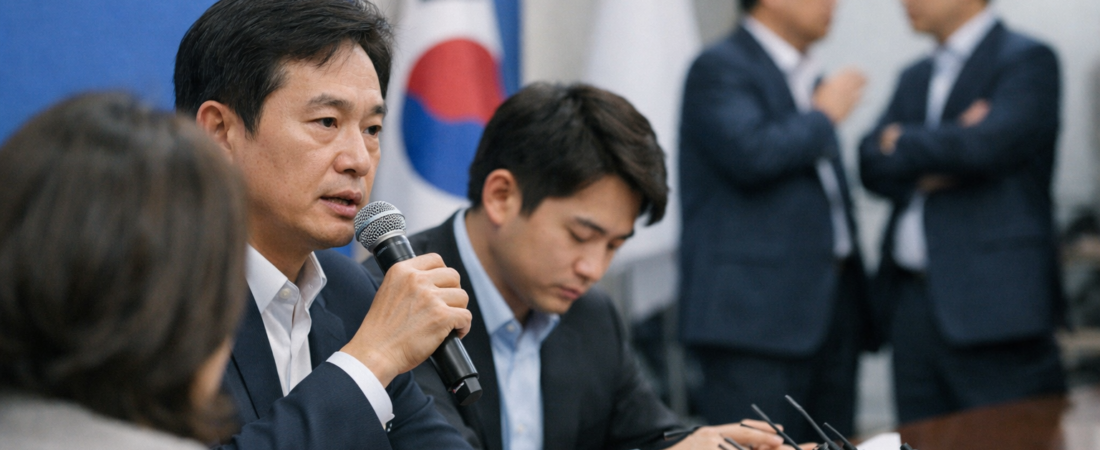
Every large Korean party splits into informal factions built around key figures. In this race, two clear camps emerged: supporters aligned with Jung Chung-rae and supporters aligned with President Lee Jae-myung.
Jung Chung-rae defended his record, pointing to over a thousand bills passed under his leadership and pushing back against critics who dismissed his reform agenda. He specifically named allies like Choi Min-hee, Lee Sung-yoon, and Han Min-soo, urging unity rather than division ahead of future elections.
Song Young-gil took a different angle, questioning whether prosecutorial reform needed to keep being relitigated. He asked why some candidates wanted another term to “reheat” issues he considered settled.
Down the ballot, the leadership council race turned equally competitive. Choi Min-hee, Lee Sung-yoon, and Han Min-soo represented the Jung Chung-rae-aligned camp, while Park Sun-won, Seo Mi-hwa, and Kim Yong represented candidates closer to President Lee.
Two candidates, Lim Mi-ae and Kim Young-ho, withdrew before the final vote and threw their support behind Kim Yong. That move sparked sharp exchanges, with rivals calling it “backroom politics” while Kim Yong framed it as carrying his colleagues’ shared burden forward.
Does this kind of last-minute maneuvering feel familiar? It happens in party conventions worldwide, but Korea’s tight factional networks make these moves especially visible and consequential.
What Outsiders Can Learn from These Contests
If you’re new to Korean politics, these conventions teach a useful lesson. Party unity is never guaranteed — it gets negotiated, argued over, and rebuilt after every leadership change.
The Democratic Party of Korea convention also revealed something about public engagement. Roughly ten thousand delegates and members reportedly gathered in Daejeon despite rainy weather, chanting candidate names with real enthusiasm.
That kind of turnout says something meaningful about grassroots investment in party direction. At the same time, large emotionally charged gatherings can create pressure to conform, making it harder for quieter dissenting voices inside the party to be heard.
A brief disruption during the event — a citizen climbing broadcast equipment before firefighters safely brought him down — reminded everyone that even highly organized political theater can turn unpredictable. It’s a small but telling detail about the unscripted energy inside these events.
So what should a global reader take away from all this? Watching how the Democratic Party of Korea manages leadership transitions gives you a window into Korean democracy’s daily mechanics, not just its headline moments.
These races are rarely just about one winner. They’re about whether a party can channel real disagreement into eventual cooperation, without pretending the disagreement never existed.
That balance — honest conflict paired with a path back to unity — isn’t unique to Korea, but Korean party politics displays it unusually openly. Next time you read about a party convention anywhere in the world, ask yourself: is this process building trust, or just performing it?
How do you think party conventions like this compare to leadership elections in your own country?
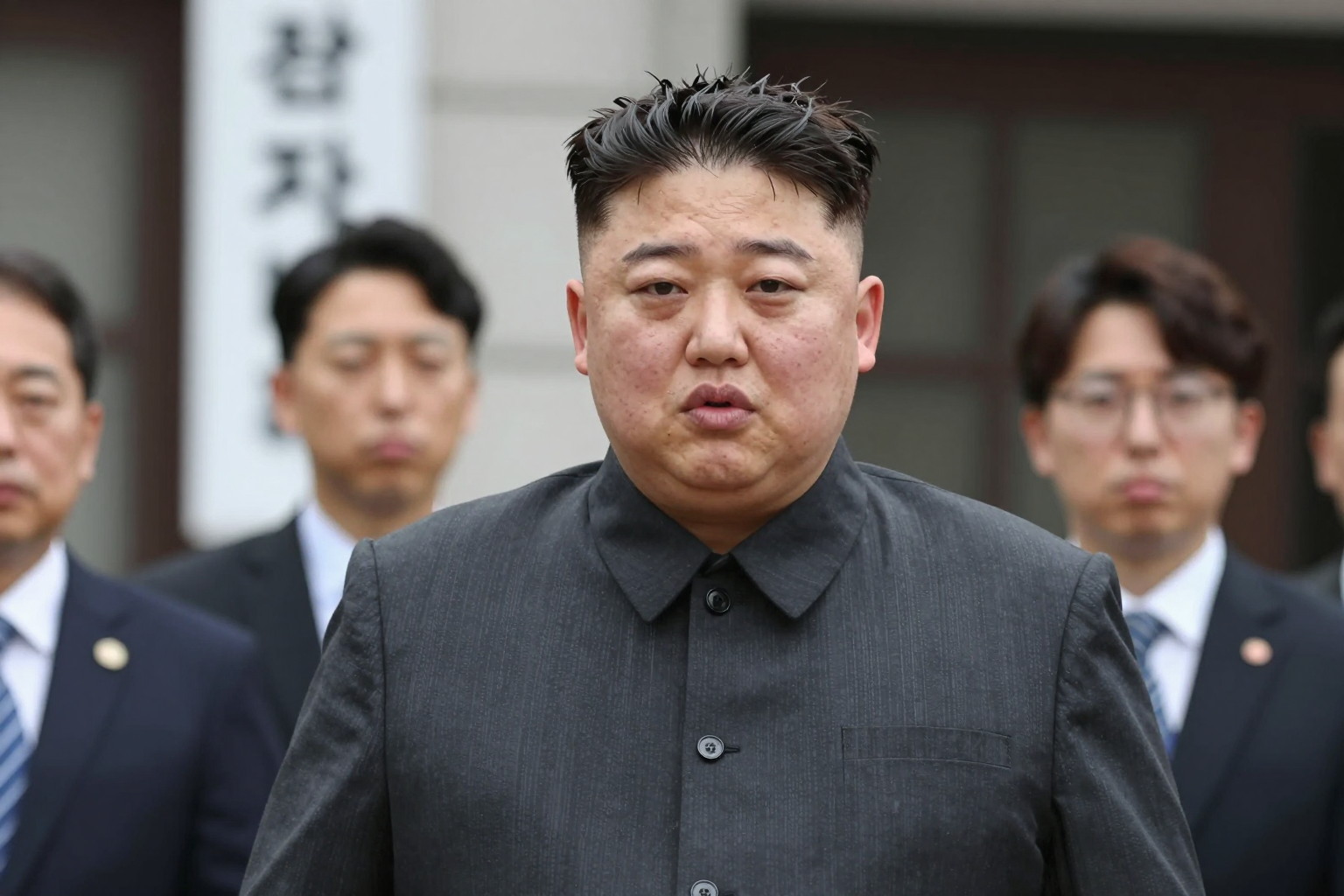
AI-Generated Photorealistic Image — All people, scenes, and details in this image are entirely AI-generated and fictional. Not a real photograph of an actual person or event. 이 이미지는 AI로 생성된 가상 이미지입니다.
Leave a Reply