Table of Contents
Would you feel safe sending your child to school on a road with no crosswalk, no signal, and no sidewalk barrier? For years, parents in Jincheon County asked exactly that question. Now their concerns are turning into real infrastructure changes.
This guide explains what’s happening around two schools in Jincheon County, why school zone safety is such a hot topic across Korea, and what any parent, resident, or visitor should understand about how these systems get built.
Why School Zone Safety Matters in Jincheon County
Jincheon County sits in North Chungcheong Province, a mostly rural area where small towns often lack the traffic infrastructure of bigger cities. Gwanghyewon-myeon, a township within Jincheon County, is one such place. Roads here were built for cars first, and pedestrians second.
Parents near Mansung Elementary School and Gwanghyewon Middle School had raised safety concerns for years. Missing crosswalks, poor lighting, and inadequate signage made the walk to school genuinely risky. Isn’t it strange how often safety upgrades only arrive after repeated complaints, rather than before an accident happens?
That’s not unique to Jincheon County. Across Korea, school zone safety often improves reactively rather than proactively. But this case in Jincheon County shows what sustained community pressure can accomplish over time.
What’s Changing Near Mansung Elementary and Gwanghyewon Middle School
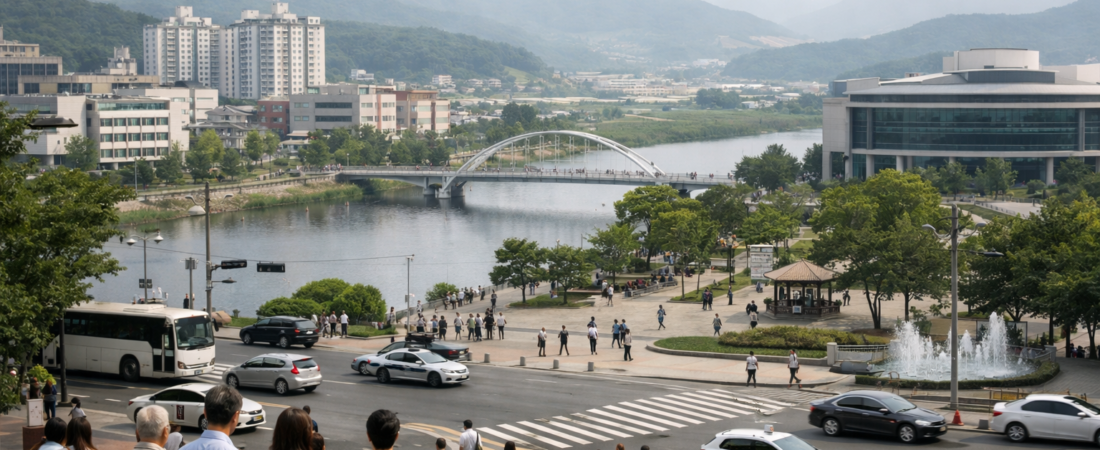
Jincheon County has moved forward with improvements to the school commute environment around both schools. The plan directly responds to years of parental concern about traffic accident risks in the area. Local officials in Jincheon County framed the project as a direct answer to community safety demands.
While the full engineering details are still being finalized, projects like this typically include new crosswalks, speed bumps, protective railings, and improved signage. Jincheon County’s approach reflects a broader national trend: local governments across Korea are under growing pressure to modernize school zones that were designed decades ago.
You might wonder why this took so long. Rural counties like Jincheon County often face tighter budgets and slower bureaucratic timelines than metropolitan areas like Seoul or Busan.
That reality makes this project in Jincheon County even more significant — it shows smaller local governments can still deliver meaningful safety upgrades when residents keep raising their voices.
How Korea’s School Zone Safety System Actually Works
Korea introduced its school zone system, known locally as “children protection zones,” back in 1995. These zones typically extend 300 meters around a school and mandate lower speed limits, usually 30 kilometers per hour. Since 2020, Korea has also required more CCTV cameras and stricter penalties for speeding drivers inside these zones.
Jincheon County’s improvements fit into this larger national framework. Local governments across the country are responsible for physically installing and maintaining safety infrastructure, even though national law sets the baseline rules. That means the quality of your local school zone often depends heavily on your specific county or district government, not just national policy.
This decentralized structure has strengths and weaknesses. It allows counties like Jincheon County to respond to local needs directly. But it also means safety standards can vary noticeably from one town to the next — something worth remembering if you’re comparing school environments across different Korean regions.
For readers curious about the national policy backdrop, you can review ongoing coverage from Yonhap News Agency, which regularly reports on local infrastructure developments like this one in Jincheon County.
What This Means for Families and Visitors
If you’re a parent living in or near Jincheon County, this project offers a useful case study. Community advocacy, sustained over years, can produce concrete results. That’s a hopeful pattern, even if the process moves slower than anyone would like.
Small rural communities like Gwanghyewon-myeon often lack the resources of major cities, yet they carry the same responsibility to protect children walking to school. That gap between resources and responsibility is real, and it’s not something one road improvement project fully solves. But projects like this one in Jincheon County suggest that persistent local voices, backed by responsive officials, can still close that gap step by step.
There’s something quietly encouraging in watching a small township fix a problem that outsiders might never notice. It’s easy to focus on Korea’s flashy cities and forget that daily safety, for most families, happens on ordinary streets in ordinary towns.
The children walking to Mansung Elementary and Gwanghyewon Middle School will benefit directly from this work. But so does anyone paying attention to how local governance actually functions in Korea, one crosswalk at a time. What does it take for your own community to finally listen to years of quiet, repeated concern?
Jincheon County’s project won’t make national headlines forever, but it offers a small, useful lesson. Real safety improvements often start with parents who simply refuse to stop asking. Do you think local governments do enough, early enough, to protect children before an accident forces their hand?
AI-Generated Photorealistic Image — All people, scenes, and details in this image are entirely AI-generated and fictional. Not a real photograph of an actual person or event. 이 이미지는 AI로 생성된 가상 이미지입니다.

Leave a Reply