Table of Contents
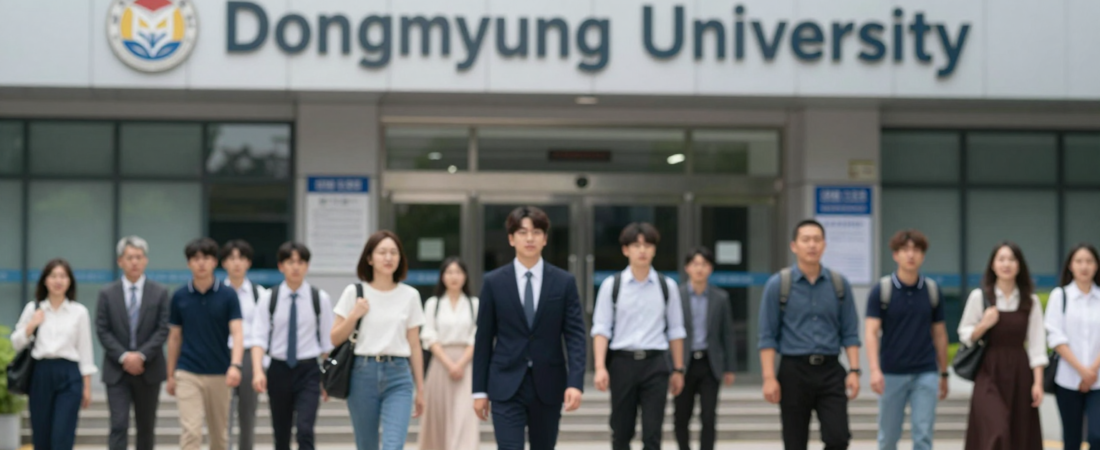
Dongmyung University will launch two new departments in the 2027 academic year: Ocean IT Engineering and Ocean Defense Industry Engineering. The Busan-based school will also open a Marine Tourism track under its Business Administration division. This move signals a bigger shift toward maritime-focused education.
Why would a university reshape its entire academic lineup around the sea? Well, if you know Busan, you already know the answer.
This port city has always leaned on ocean industries for jobs, trade, and identity. Dongmyung University is simply catching up to what its own backyard has been telling it for years.
Dongmyung University’s New Ocean-Focused Departments
Let’s break down what’s actually changing. Dongmyung University plans to create the Ocean IT Engineering department, which will likely combine software skills with marine technology applications.
Alongside it comes Ocean Defense Industry Engineering, a program tied to national defense and shipbuilding needs. Both departments target the 2027 intake, giving the university roughly a year to build curriculum and hire faculty.
The Marine Tourism major inside the Business Administration school rounds out this three-part expansion. Together, these additions show Dongmyung University betting heavily on the “blue economy” — a term used worldwide for ocean-based industries.
Is this just branding, or a real structural pivot? Given that all three programs launch in the same academic year, it looks like a coordinated institutional strategy rather than a single new class added to a course catalog.
Why Busan Needs Maritime Talent Now
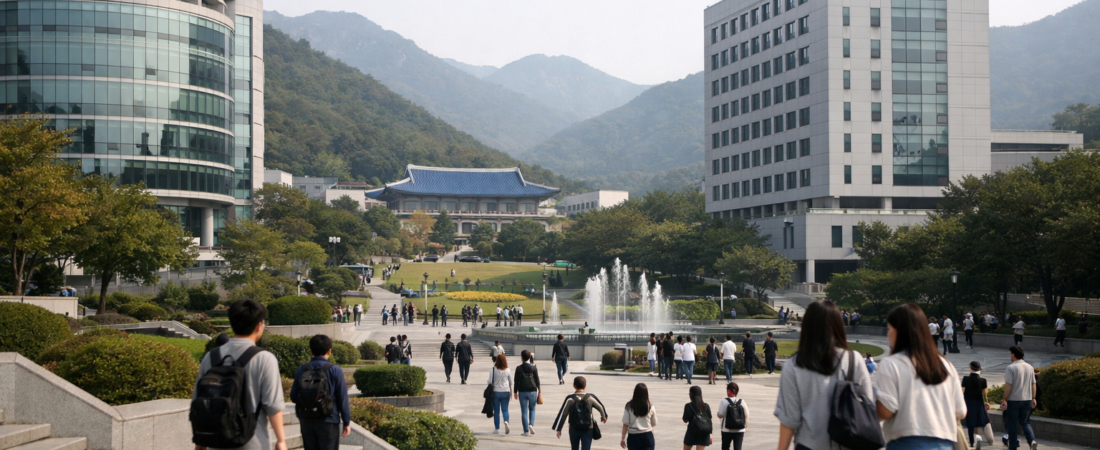
Busan is South Korea’s largest port city and a major hub for shipping, shipbuilding, and naval operations. For decades, this region has supplied engineers and technicians to companies working in these fields.
But industries change fast, and today’s maritime sector needs something different. Ships now run on smart navigation systems, and defense technology increasingly depends on digital infrastructure rather than just steel and welding.
That’s exactly the gap Dongmyung University seems to be targeting. Ocean IT Engineering speaks directly to this digital shift, while Ocean Defense Industry Engineering connects to South Korea’s growing defense export market.
You might wonder how big that market really is. According to Yonhap News Agency, South Korea has become one of the world’s fastest-growing arms exporters, with naval and shipbuilding technology playing a central role.
Local universities positioning themselves near this trend makes practical sense. Dongmyung University is not creating demand out of nowhere — it’s responding to demand that already exists along Korea’s southern coast.
What This Means for Students and Local Industry

For prospective students, these new departments open doors that didn’t exist a few years ago. A student interested in engineering no longer has to choose between “tech” and “ocean” — Dongmyung University now offers both in one degree path.
The Marine Tourism major adds another dimension entirely. Busan’s coastline already draws domestic and international tourists, and this program could train graduates to manage resorts, cruise operations, or coastal development projects.
Local companies stand to benefit too. Regional shipbuilders and IT firms have long complained about talent shortages, and a nearby university producing specialized graduates could ease some of that pressure.
Still, will three new departments alone solve a labor shortage decades in the making? Probably not by themselves, but they represent a meaningful first step toward aligning education with actual job openings in the region.
This kind of academic restructuring often reflects something bigger than one school’s decision. It shows how South Korean universities are gradually shifting from broad, generalist degrees toward highly specific, industry-linked programs — a response to years of criticism that graduates lacked practical skills employers actually needed.
Looking Ahead for Dongmyung University
Dongmyung University’s expansion arrives at a moment when many regional Korean universities face declining enrollment. Korea’s shrinking birth rate means fewer students overall, and schools outside Seoul often struggle hardest to fill seats.
Creating specialized, industry-relevant departments is one strategy to stand out. If Ocean IT Engineering and Ocean Defense Industry Engineering succeed in placing graduates into real jobs, other regional universities may follow a similar model.
There’s an honest tension worth naming here. Regional universities across Korea are genuinely struggling — some have already closed departments or merged programs just to survive, and that decline touches real communities and real futures.
Yet Dongmyung University’s response points toward something more hopeful than resignation. Instead of simply shrinking, it’s trying to grow smarter, tying its identity to what Busan actually needs, and that kind of adaptive thinking offers a real, if modest, path forward for other struggling institutions.
Education systems everywhere face this same balancing act between tradition and relevance. Dongmyung University’s choice to lean into its coastal location, rather than away from it, feels like a quietly practical answer to a very real problem.
What happens next depends on execution, not just announcements. Will Dongmyung University attract enough applicants to fill these new seats, and will local companies actually hire the graduates these programs produce?
Those questions will take a few years to answer fully. For now, Dongmyung University has placed a clear bet on Busan’s maritime future, and that bet is worth watching closely.
What do you think — can specialized programs like these help regional Korean universities survive a shrinking student population?
AI-Generated Photorealistic Image — All people, scenes, and details in this image are entirely AI-generated and fictional. Not a real photograph of an actual person or event. 이 이미지는 AI로 생성된 가상 이미지입니다.


Leave a Reply