
Table of Contents
Extreme heat and drought this summer have damaged persimmon crops in Sancheong and Hamyang, two counties famous for Jirisan gotgam, Korea’s prized dried persimmon. Farmers in both regions now face lower yields and shrinking quality. The outcome, though, looks different for each county.
Right now in Korea, farmers and local officials near Jirisan mountain are scrambling to respond. As of this week, the heat wave has become one of the most talked-about rural issues in Gyeongnam Province. Why does a dried fruit crisis matter so much here?
Because Jirisan gotgam is not just a snack. It is a regional identity, a seasonal ritual, and for many households, a major source of income.
This Summer’s Heat Wave Hits Jirisan Gotgam Country
Sancheong and Hamyang sit side by side at the foot of Jirisan, Korea’s tallest mainland mountain outside Jeju. Together, they form what locals call the “twin pillars” of Jirisan gotgam production. This year, both counties suffered record-breaking heat and prolonged dry spells through the summer growing season.
Persimmon trees need steady moisture and moderate temperatures to develop fruit properly. When drought stress hits, fruit can shrink, drop early, or develop uneven skin texture. Farmers reported exactly these symptoms, according to Yonhap News Agency.
Have you ever wondered how much weather really shapes the food on your table? This story shows the answer clearly. A few weeks of abnormal heat can ripple through an entire harvest season, threatening months of careful farm work.
Sancheong and Hamyang: Two Rivals, One Mountain
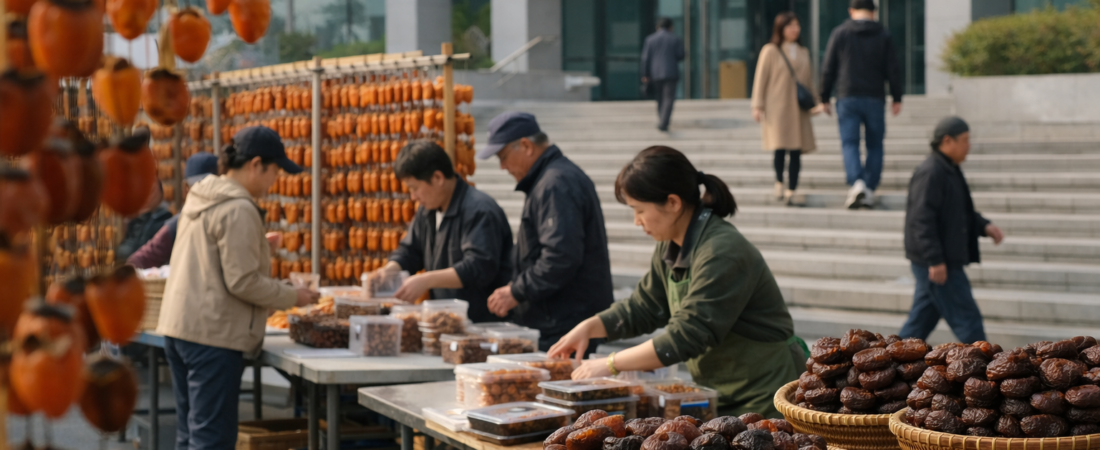
Sancheong and Hamyang share the same mountain, the same climate zone, and centuries of the same drying tradition. Yet this year’s damage has landed unevenly between them. Some orchards report sharper yield losses, while others managed better through irrigation or shading.
This gap reveals something important about modern farming. Local geography, soil drainage, and even the age of an orchard can determine how well trees withstand drought stress.
Farmers who invested earlier in water systems appear to be weathering the crisis with fewer losses. Those relying on traditional rain-fed methods faced steeper declines. It is a small but telling contrast between two neighboring towns that have long been friendly competitors in the Jirisan gotgam market.
Local cooperatives in both counties have started sharing information more actively this year. Farmers are comparing notes on which techniques worked and which did not. That kind of cooperation, born out of shared hardship, may end up strengthening the region’s long-term resilience.
Why Climate Change Threatens Korea’s Dried Persimmon Tradition
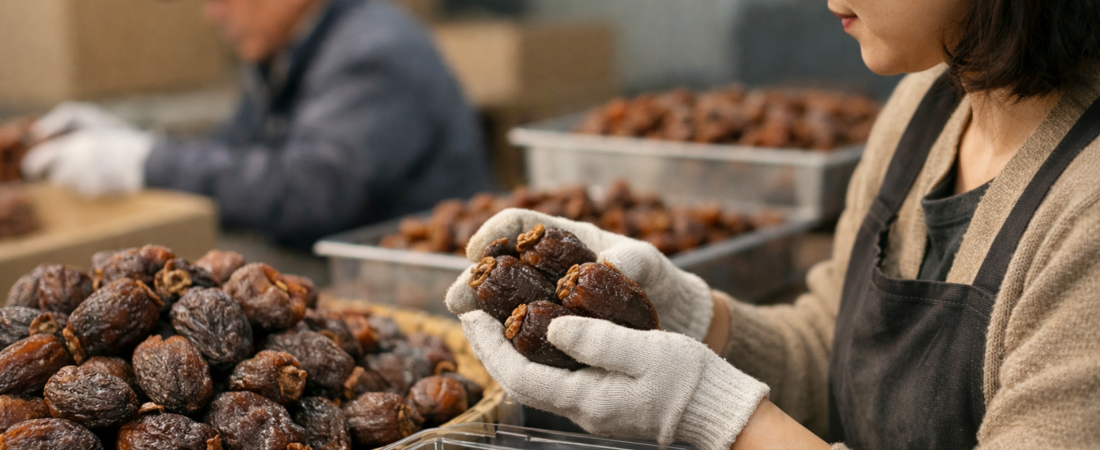
Jirisan gotgam production depends on a very specific seasonal rhythm. Persimmons ripen in autumn, then farmers peel and hang them to dry in cool, dry mountain air. This process, refined over generations, transforms tart fruit into a sweet, chewy delicacy prized across Korea and increasingly abroad.
But what happens when the climate itself stops cooperating? Rising summer temperatures and irregular rainfall patterns are no longer rare anomalies in Gyeongnam Province. They are becoming a recurring pattern that threatens the very conditions gotgam production has always relied on.
Farmers interviewed for this story voiced real anxiety about their future. That anxiety is understandable, and it deserves honest acknowledgment rather than easy reassurance.
At the same time, some growers are adapting with new irrigation technology, shade netting, and soil management techniques passed between neighboring farms. The challenge is real, and so is the quiet determination showing up in these small adjustments.
This tension between vulnerability and adaptation is not unique to Jirisan gotgam farmers. Communities everywhere are learning to hold both truths at once: things are genuinely harder now, and people are genuinely finding ways to keep going.
That balance, uncomfortable as it is, may be the most honest way to understand rural life under a changing climate. It does not erase the hardship, and it does not pretend the future is guaranteed. It simply recognizes that human effort and natural limits are learning to coexist, imperfectly, season after season.
What Comes Next for Jirisan Gotgam Farmers
Local governments in Sancheong and Hamyang have signaled support measures to help farmers recover from this year’s losses. These may include emergency funding, technical guidance, and long-term climate adaptation planning. Whether these steps arrive quickly enough remains an open question.
For readers outside Korea, this story might seem distant. But it reflects a challenge farmers everywhere now share, from California orchards to French vineyards.
Extreme weather no longer respects tradition, and Jirisan gotgam producers are learning that lesson firsthand this year. Their response, though, offers something worth watching closely.
So where does this leave the future of Jirisan gotgam? Probably somewhere between caution and quiet hope, much like the farmers themselves. What do you think Korean farming communities can teach the rest of the world about adapting to a hotter, less predictable climate?
AI-Generated Photorealistic Image — All people, scenes, and details in this image are entirely AI-generated and fictional. Not a real photograph of an actual person or event. 이 이미지는 AI로 생성된 가상 이미지입니다.

Leave a Reply