Table of Contents
Comedian Kim Ki-ri has blocked comments on his social media accounts after a wave of malicious messages linked him to the Park Wi controversy. Kim Ki-ri had introduced YouTuber Park Wi to former Secret member Song Ji-eun, a connection that later turned into a public relationship. Now, months later, that simple introduction has made him an unexpected target of online anger.
Why does one man’s decision to release a KTX security camera clip end up hurting someone who had nothing to do with it? That question sits at the center of this story. The Park Wi controversy started as a debate about privacy and public exposure, but it quickly spread far beyond its original boundaries.
What Happened to Park Wi and Kim Ki-ri
Park Wi, a well-known YouTuber, faced backlash after releasing CCTV footage from inside a KTX train. The footage sparked debate over consent, privacy, and the ethics of using surveillance material for content. As criticism grew louder online, the anger did not stay contained to Park Wi alone.
Commenters began targeting Kim Ki-ri, the comedian who had originally introduced Park Wi to Song Ji-eun. Some accused him of bearing responsibility simply for making that introduction years earlier. Faced with a flood of hostile messages, Kim Ki-ri ultimately disabled comments on his social media accounts.
This kind of secondary backlash is not new in Korean entertainment culture. Public figures connected to a controversy, even loosely, often become collateral targets. Kim Ki-ri’s situation shows how quickly that pattern can repeat itself.
How a Private Meeting Became a Public Storm

Kim Ki-ri’s role in this story began as something ordinary. He introduced two people who eventually became a couple in the public eye. That is hardly unusual in the entertainment industry, where mutual friends often set up meetings between colleagues.
But once Park Wi’s KTX footage controversy exploded, some netizens searched for someone to blame beyond Park Wi himself. Kim Ki-ri’s earlier introduction became fair game for criticism, even though he had no connection to the footage decision. Isn’t it strange how a single act of friendship years ago can resurface as a liability during an unrelated controversy?
This reflects a broader pattern in celebrity culture. When a public figure faces backlash, audiences sometimes trace connections outward, looking for anyone tied to the person involved. Kim Ki-ri became an easy target simply because his name appeared in the timeline of events surrounding Park Wi.
The Maeil Business Newspaper first reported the details of Kim Ki-ri’s comment shutdown, noting how quickly the backlash escalated. Within a short window, the criticism moved from Park Wi’s original conduct to questioning why Kim Ki-ri ever made the introduction at all. That escalation speed is part of what makes online controversies in Korea so unpredictable.
Korea’s Online Culture of Collective Blame
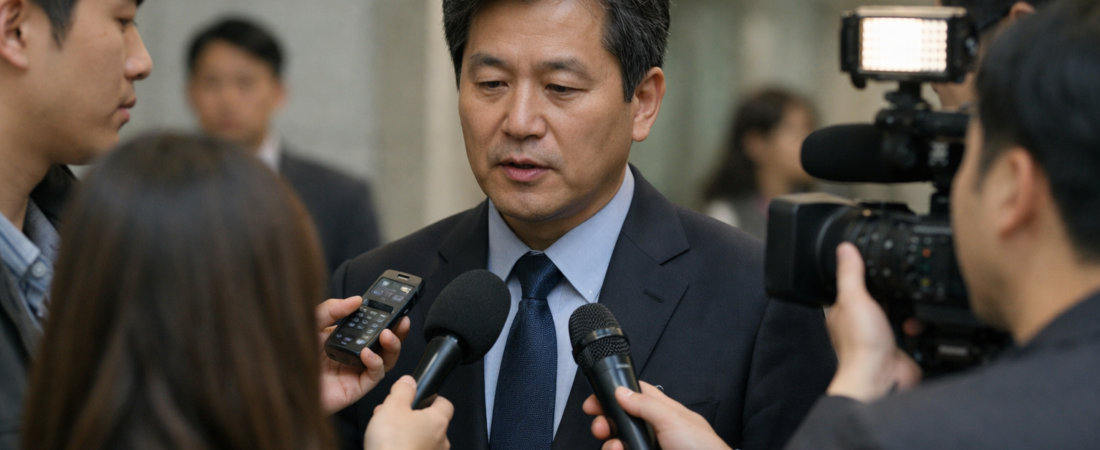
Korean online culture has long featured intense scrutiny of celebrity relationships and personal decisions. Comment sections can turn from casual discussion into coordinated criticism within hours. This is not unique to Korea, but the speed and volume here often surprise outside observers.
Think about it this way: imagine a dinner party host getting blamed for a fight between two guests who met at their table. That is roughly the logic driving some of the criticism aimed at Kim Ki-ri. It sounds absurd when framed that way, yet it happens regularly in Korean entertainment discourse.
Park Wi remains the central figure in this controversy, and rightly so, since the KTX footage decision was his alone. Still, the ripple effect onto Kim Ki-ri shows how personal privacy debates can spiral into unrelated territory. Public criticism, once it gains momentum, rarely stays neatly contained to its original target.
There is a real cost to this pattern, and it deserves honest acknowledgment. Public figures like Kim Ki-ri lose a sense of safety online through no fault of their own, and that pressure can quietly wear on anyone’s mental health. At the same time, more entertainers and platforms are now speaking openly about setting boundaries, turning off comments when needed, and treating that choice as self-care rather than defeat, which points toward a healthier way of coping with digital pile-ons.
What This Means for the Rest of Us, and for Park Wi’s Future
Where does this leave Park Wi going forward? His original controversy over the KTX footage remains unresolved in the public eye, and it will likely shape how audiences view his content choices for some time. Kim Ki-ri’s comment shutdown adds a quieter but important footnote to the story.
It reminds us that public controversies rarely stay isolated. Park Wi’s decision to release footage without full consideration of privacy has now touched someone entirely outside that decision. That spillover effect deserves attention from anyone who creates content involving other people.
For global readers watching Korean entertainment news, this case offers a useful lesson. Fame and connection carry real consequences, even for people standing at the edges of a controversy. What would you do if a simple favor from years ago suddenly made you the target of online anger today?
Moving forward, both Park Wi and Kim Ki-ri will need time to let this controversy settle. The bigger question is whether Korean online culture will develop better habits around separating direct responsibility from loose association. What do you think about how far online blame should extend when someone is only indirectly connected to a controversy like Park Wi’s?
AI-Generated Photorealistic Image — All people, scenes, and details in this image are entirely AI-generated and fictional. Not a real photograph of an actual person or event. 이 이미지는 AI로 생성된 가상 이미지입니다.
Leave a Reply