Table of Contents
Hansik lets diners at the same table eat completely different meals, thanks to shared side dishes, rice, soup, and wraps that adapt to each person’s needs. This flexibility, not simple sharing, is what makes Korean food culture stand out. A single table can quietly serve a vegetarian, a meat lover, and someone avoiding spice, all at once.
Why does that surprise so many visitors? Most people expect Korean dining to mean “everyone eats the same thing together.” But hansik actually works the opposite way, and that difference matters more than you’d expect.
Why Hansik Works Differently Than You Think
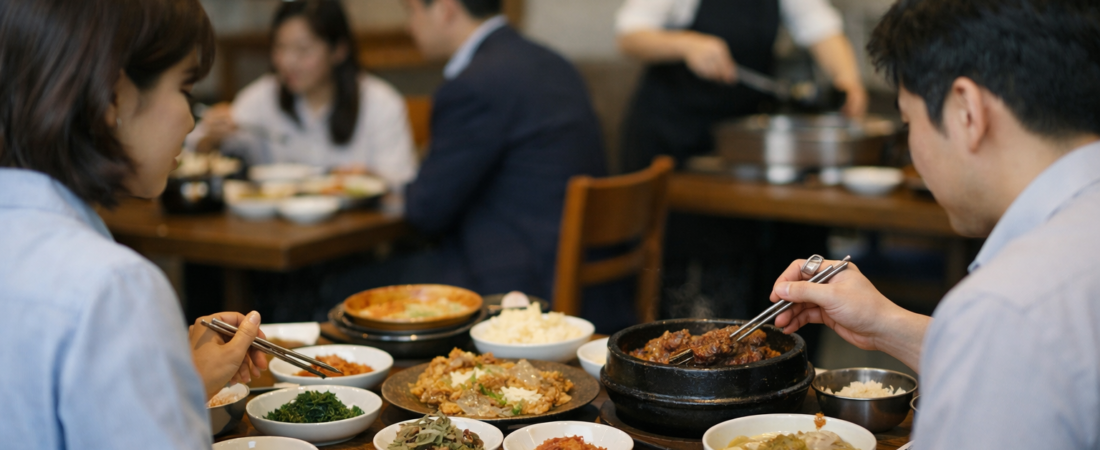
Picture this: you order one dish, and suddenly the table fills with kimchi, seasoned vegetables, and pickles. None of it was on your original order. It just appears, placed in the center, belonging to no one and everyone at once.
First-time visitors often assume this is simply Korea’s famous sharing culture. That’s part of the story, but not the whole truth. Have you ever eaten somewhere that felt custom-built for you without anyone asking your preferences first?
That’s the quiet magic of hansik. The side dishes, called banchan, are not extras. They form a flexible system where each diner builds their own plate, meal after meal, using the same shared spread.
Think of it less like a fixed menu and more like a buffet shrunk down to fit one table. Every guest picks what fits their appetite, their diet, even their mood that day. This is participation dining, and it’s central to what makes hansik unique in the world.
The Anatomy of a Hansik Table
A typical hansik table has four building blocks: rice, soup, banchan, and a main protein or vegetable dish. Each element stays somewhat separate, letting diners combine them freely. Rice grounds the meal, soup adds warmth, and banchan provides variety in texture and flavor.
Then there’s ssam, the wrap-style dish built around lettuce or perilla leaves. You place rice, a little protein, and whatever side dish you like inside the leaf, then fold and eat it in one bite. It’s a small ritual, but it turns every meal into a personal decision rather than a fixed order.
This structure has deep roots in Korean history. Historically, rural households served large families from shared pots, and side dishes stretched limited resources across many mouths. Fermented items like kimchi also solved a practical problem: preserving vegetables through harsh winters without refrigeration.
Over centuries, this practical necessity became a design philosophy. Modern hansik keeps that same logic, even in city restaurants far from any farm. That’s arguably a tradition worth fermenting over, given how well it still solves the very modern problem of feeding a table full of different eaters.
Today, restaurants across Seoul and beyond still follow this same basic format. Whether you’re at a formal hanjeongsik restaurant or a casual barbecue spot, the pattern repeats: shared center, personal plate. That consistency is part of what makes hansik so recognizable worldwide.
One Table, Many Diets: A Real Story
Consider a real scenario: a vegetarian journalist from Austria sits down at a Korean barbecue restaurant. On paper, that sounds like a mismatch. Barbecue restaurants exist to serve grilled meat, after all.
Yet the meal went smoothly, without any special menu or separate kitchen order. The table filled with rice, soup, leafy greens, and an array of side dishes, exactly as it would for any other guest. She learned to build her own ssam, choosing only the vegetarian elements around her, while others at the table added meat to theirs.
She asked whether any side dish should stay out of the wrap. The answer was simple: none should. That single exchange captures the whole philosophy of hansik in miniature.
This case, detailed in a report from Korea Times, shows how hansik naturally accommodates different diets without special requests. No one had to explain vegetarianism to the kitchen or negotiate a substitute dish. The system already had room built in.
How to Enjoy Hansik as a First-Time Visitor
If you’re planning your first hansik meal, start by expecting variety rather than a single fixed dish. Order one main item, then let the side dishes arrive and surprise you. Try a little of everything before deciding what to build into your ssam.
Don’t worry about eating “correctly.” There’s no single right combination, and locals mix and match constantly based on personal taste. Ask your server questions if you’re unsure, since most Korean restaurants are used to curious first-timers.
There’s something worth pausing on here. Hansik’s participation model reflects a deeper value: the belief that a shared table can still honor individual difference, without demanding everyone eat the same way.
That idea isn’t uniquely Korean, but Korean food culture expresses it with unusual clarity. At the same time, this same flexibility can create quiet pressure. Guests unfamiliar with the unspoken rules of banchan sharing may hesitate, worried about taking “too much” or offending a host, even when no one intended any such standard.
The best version of hansik hospitality solves this by explanation, not silence. When someone simply says, as in the story above, “none of it should stay out,” a stranger becomes a full participant at the table. That small act of welcome is worth noticing, wherever you eat it.
As hansik continues gaining global attention, its real appeal may not be spice levels or fermentation techniques. It might simply be this: a shared table where everyone still eats their own meal. What would it take for your own dining culture to build in that same kind of flexibility?
AI-Generated Photorealistic Image — All people, scenes, and details in this image are entirely AI-generated and fictional. Not a real photograph of an actual person or event. 이 이미지는 AI로 생성된 가상 이미지입니다.


Leave a Reply