Table of Contents
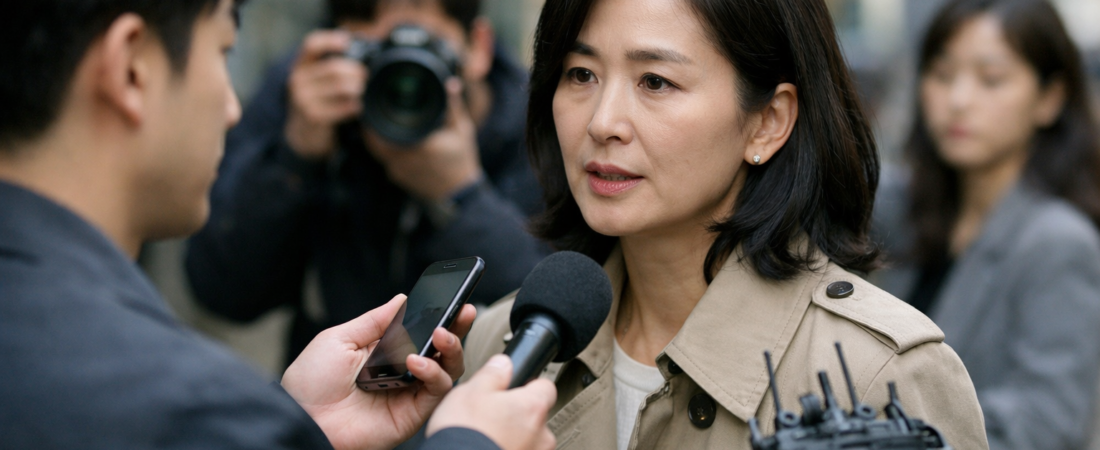
Screenwriter Park Hae-young says global streaming giants pay creators zero extra when their shows become global hits, even after record-breaking success. As copyright committee chair of the Korea Broadcasting Writers Association, she argues one-time buyout contracts leave writers locked out of future profits. Her comments, made at the association’s Seoul office, have reignited debate over streaming fairness in Korea’s entertainment industry.
Have you ever wondered why a hit Korean drama can dominate global charts for weeks, yet the writer behind it barely sees a bonus check? That question sits at the heart of Park Hae-young’s public complaint. She knows this world well, having built a reputation for sharp, emotionally rich scripts that audiences love.
Her warning matters beyond Korea’s borders too. As platforms like Netflix and Disney+ expand their Korean content libraries, the contract models used here could shape how creators get paid worldwide. That makes this story worth watching, even if you’ve never written a script in your life.
The Fight Over Fair Pay in Park Hae-young’s Industry
At the center of this debate is something called a “maejeol” contract, or buyout agreement. Writers receive a single upfront payment, then lose all claim to future earnings. Sounds simple, right? But simple is not always fair.
Under this system, a drama can break viewership records worldwide and the original writer still gets nothing extra. Park Hae-young calls this structure broken. She says it rewards platforms handsomely while leaving the people who actually create the stories empty-handed.
This is not a small technical issue buried in legal paperwork. It touches every writer working with Kyunghyang Shinmun reporting on Korea’s creative economy. Production budgets keep climbing, yet the people writing the words rarely see proportional rewards.
Think about it this way: imagine writing a novel, selling the rights for a flat fee, then watching it become a worldwide bestseller movie franchise. You would feel something was unfair, wouldn’t you? That is essentially the position Korean screenwriters find themselves in today.
Why Park Hae-young Is Speaking Out Now

Park Hae-young did not pick this fight randomly. She has watched the industry shift dramatically over the past decade. Korean dramas once aired mainly through domestic broadcasters, where informal side agreements often filled gaps in formal contracts.
Those broadcaster-era side deals, known as “teukyak,” sometimes gave writers a share of extra revenue when a show performed unusually well. It was not a perfect system, but it offered some flexibility. Now, with Netflix and Disney+ dominating production budgets, those informal arrangements have mostly disappeared.
Global platforms prefer clean, one-time buyouts with no lingering obligations. That makes financial sense for them. For writers like Park Hae-young, it means decades of built-up protections are quietly vanishing.
She frames this as a seventy-year pattern repeating itself, just with new, wealthier players. Korean content has become one of the country’s most successful cultural exports. Yet the people who write that content, she argues, are being squeezed out of its biggest financial rewards.
How Streaming Contracts Changed the Writer’s Reality
Let’s break down why streaming platforms behave this way. Traditional broadcasters needed writers to stay flexible because shows could run longer or shorter depending on ratings. That flexibility created natural moments to renegotiate pay.
Streaming platforms work differently. They commission fixed-length series, often eight to sixteen episodes, with everything locked in before filming starts. There is no ratings-driven extension, no natural renegotiation point, and often no appetite for one either.
Production costs have also skyrocketed under streaming competition (someone has to pay for all those cinematic drone shots). Studios justify tighter contracts partly by pointing to these rising budgets. But Park Hae-young counters that rising budgets should mean rising creator protections too, not less.
She is now calling for a legal requirement: proportional compensation written directly into law. Under her proposed model, writers would receive a guaranteed share tied to a show’s actual performance, not just a flat upfront sum. This would mirror protections already common in some film and music royalty systems internationally.
What Comes Next for Korean Content Creators
So where does this leave the next generation of Korean screenwriters? Right now, the system still favors buyers over creators, especially at the negotiating table. But pressure is building, and Park Hae-young is far from alone in raising it.
Writers’ guilds across multiple countries have pushed similar fights in recent years, including Hollywood’s own prolonged contract disputes. Korea’s creative community is watching those precedents closely. There is real momentum building toward legislative change here too.
This moment reveals something larger about how global success gets shared. When a story crosses borders and touches millions of viewers, who truly deserves credit, and who deserves payment, becomes a genuinely hard question. Korea’s entertainment boom has lifted the country’s global profile enormously, bringing pride and economic opportunity to many.
Yet that same boom has exposed uncomfortable gaps between the platforms profiting most and the individual creators whose imagination started it all. The path forward does not require villains or simple blame. It requires honest conversations, like the one Park Hae-young is forcing into public view, paired with practical steps like clearer compensation laws and stronger collective bargaining for writers.
Korean dramas have earned global love precisely because writers poured real craft and heart into them. Protecting that creative spark, while still allowing platforms to grow and invest, is possible if both sides negotiate honestly. The question is whether lawmakers and streaming giants will act before more writers feel forced out of an industry they helped build.
Korea’s entertainment industry stands at a turning point right now, shaped directly by voices like Park Hae-young’s. Global streaming platforms will likely keep expanding their Korean content slates for years to come. What do you think: should creators get a guaranteed share of a hit show’s success, no matter which platform airs it?
AI-Generated Photorealistic Image — All people, scenes, and details in this image are entirely AI-generated and fictional. Not a real photograph of an actual person or event. 이 이미지는 AI로 생성된 가상 이미지입니다.


Leave a Reply