
Table of Contents
A song made largely with generative AI, titled “Did You Become the Adult You Dreamed Of?” by the artist Meomuleu, recently reached third and fourth place on Melon, Korea’s top music chart. That ranking has sparked a wider debate about AI music and its place in Korean pop culture. The question now is not whether AI can make a hit song, but what that hit means for human creativity.
Have you ever cried during a song, then felt embarrassed when you found out a machine helped write it? That is exactly the dilemma facing many Korean listeners this month.
The track in question blends a wistful melody with lyrics about growing up and losing childhood dreams. It resonated with thousands of listeners who did not know, or did not care, that AI tools were part of its creation.
An AI Song Climbs the Korean Charts
Meomuleu’s track did not sneak onto the chart. It climbed into the top five on Melon, one of Korea’s most influential music platforms, beating out songs from established human artists.
That alone makes this a milestone moment for AI music in Korea. Chart position matters here more than almost anywhere else in the world.
Korean listeners check real-time rankings obsessively, and a high chart spot can make or break a song’s cultural relevance. So when an AI-assisted song breaks into that tight, competitive space, the industry pays attention.
Commentators have noted something striking about listener reactions. Many fans reported genuine emotional responses, including tears, before learning how the song was produced.
Does that emotional reaction become less valid once we know AI was involved? That is the uncomfortable question this chart success forces us to confront.
The source article from the Kyunghyang Shinmun, covered in detail by Kyunghyang Shinmun, frames this moment as a turning point for how Korea discusses AI music publicly, not just technically.
Why AI Music Hits So Hard, So Fast
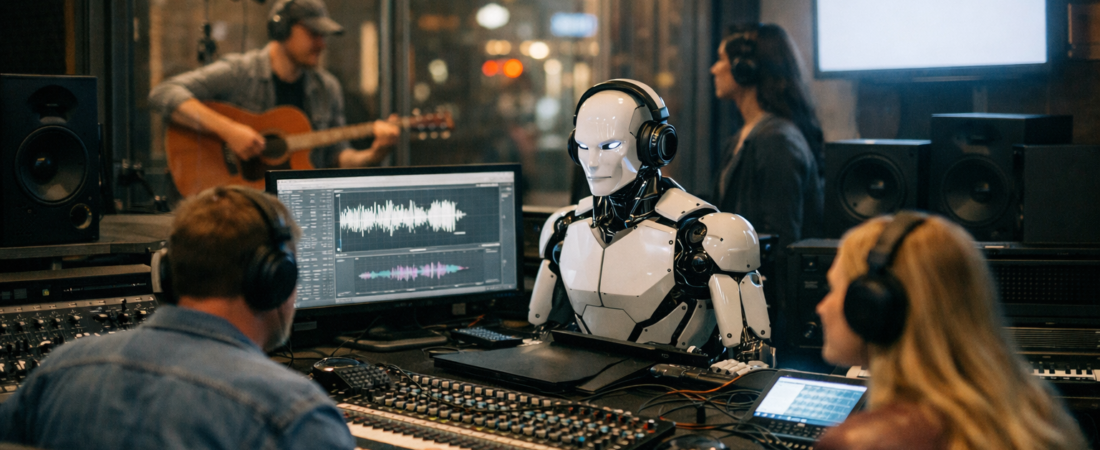
AI music tools have improved dramatically over the past two years. They can now generate convincing vocals, emotional melodies, and polished production in minutes rather than months.
For a music industry built on speed and trend cycles, that is a tempting shortcut. Korea’s entertainment sector already moves faster than almost any other country’s pop culture machine.
Idol groups debut, trends shift, and songs rise and fall within weeks. AI music fits neatly into that rapid rhythm, producing content at a pace human songwriters simply cannot match.
This is not limited to music, either. AI tools are increasingly used in Korean drama production too, from script assistance to visual effects, suggesting the entertainment industry is shifting across multiple fronts at once.
Think about how a drama studio might cut costs using AI-generated background scenes. Or imagine a songwriter using AI to draft ten melody options before lunch (your average human composer needs a full pot of coffee and several days for that).
The efficiency gains are real, and they explain why so many studios are experimenting with AI music despite public unease. But efficiency alone does not answer the deeper question of authorship.
Who actually created this song, the AI prompt engineer, the AI system itself, or the listeners who gave it emotional meaning? Korean cultural critics are now wrestling with that exact question in real time.
AI Music, Copyright Law, and the Blurry Line
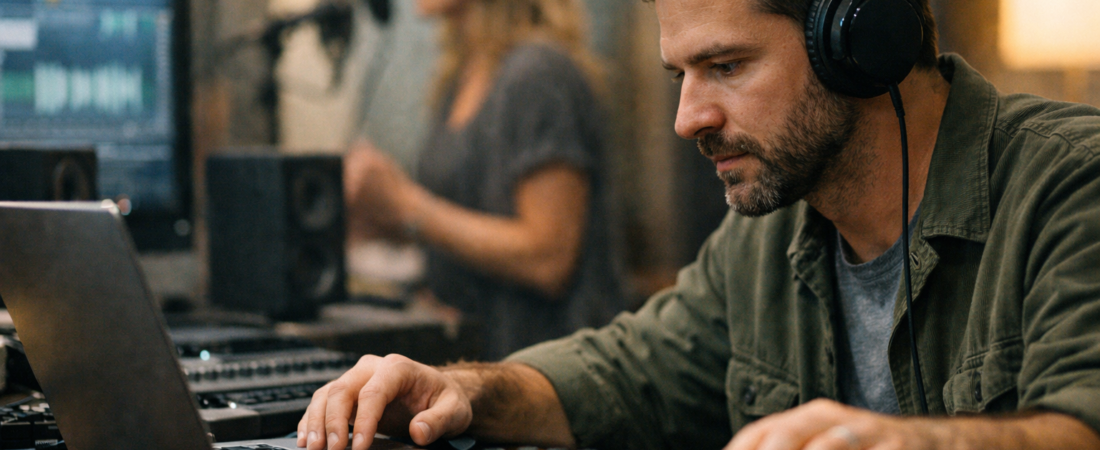
Korea’s copyright law was not built with AI music in mind. Current regulations generally require human authorship for copyright protection, which creates a legal gray zone for AI-generated songs.
If a human selects the prompt, edits the output, and releases the final track, how much human contribution is enough? Regulators in Korea, much like those in the United States and the European Union, have not settled on a clear standard.
This matters commercially too. Streaming royalties, licensing deals, and chart eligibility all depend on clear ownership, and AI music complicates every one of those systems.
Some industry voices argue Korea needs updated legislation specifically addressing AI-generated content. Others worry that overregulation could stifle a promising creative tool before it matures.
There is also a trust issue for everyday listeners. Should streaming platforms label AI music clearly, the way some countries now require labels on AI-generated images and video?
Transparency seems like a reasonable middle ground. Listeners could still choose to stream AI music, but they would do so with full knowledge of what they are supporting.
What AI Music Means for Creativity Going Forward
Here is where things get genuinely complicated, and worth sitting with for a moment. The rise of AI music does not erase human emotion, but it does change how that emotion gets manufactured and sold.
There is something honest we need to admit: creative industries have always used tools, templates, and shortcuts, from autotune to ghostwriters to sample libraries. AI is simply the newest and most powerful version of that long tradition, not an entirely new moral crisis.
At the same time, something does shift when a machine can mimic vulnerability convincingly enough to make strangers cry. That capability deserves honest scrutiny, not blind celebration or blind rejection.
The hopeful path forward likely involves collaboration rather than replacement. Songwriters who use AI as a drafting partner, while keeping human judgment and lived experience at the creative center, may produce work that feels both efficient and genuine.
Korea’s entertainment industry has navigated major technological shifts before, from the rise of digital downloads to the global explosion of K-pop streaming, and each time, human artistry adapted rather than disappeared. AI music may simply be the next adaptation, demanding new rules rather than new despair.
So where does Korea go from here? Likely toward clearer labeling, updated copyright standards, and an industry-wide conversation about what authorship really means in an AI-assisted era.
Global audiences watching K-pop and K-dramas should pay attention to this debate too, since Korea’s entertainment industry often sets trends that ripple outward internationally. What AI music rules Korea adopts now could shape global streaming norms within a few years.
What do you think, does it matter whether a song that moves you was written by a human or an AI?
AI-Generated Photorealistic Image — All people, scenes, and details in this image are entirely AI-generated and fictional. Not a real photograph of an actual person or event. 이 이미지는 AI로 생성된 가상 이미지입니다.



Leave a Reply