
Table of Contents
A major London exhibition titled “Korea: 2,000 years of creativity” is drawing record attention to Korean art this autumn. The show arrives as South Korea’s cultural exports remain deeply embedded in the UK consumer market. Younger British audiences, in particular, keep driving demand for everything Korean.
Why does Korean art suddenly command this kind of attention in Britain? The answer has been building for years, not months. You’ve probably noticed K-pop playlists, Korean skincare shelves, and Korean restaurants popping up across London already.
This exhibition simply puts a name and a timeline on something many people already feel. Korean art, it turns out, has quietly shaped British cultural life for longer than most realize.
London’s New Spotlight on Korean Art
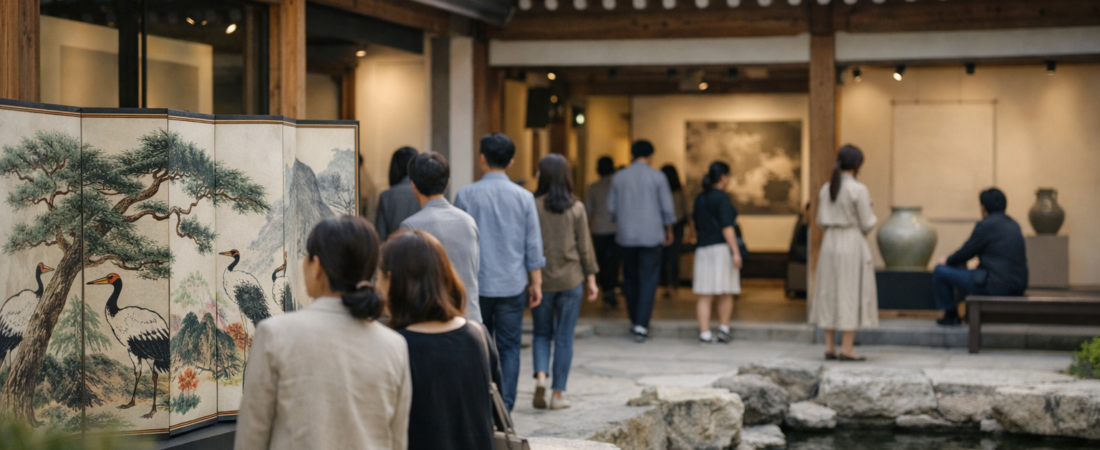
The exhibition “Korea: 2,000 years of creativity” presents Korean art as a continuous tradition, not a recent trend. It traces artistic achievement from ancient ceramics through contemporary installations. That framing matters, because it repositions Korean art as historical substance rather than a passing cultural wave.
London has hosted Korean cultural showcases before, but rarely at this scale. Major museums and galleries rarely dedicate entire exhibitions to a single country’s artistic heritage spanning two millennia. Doesn’t that scale alone tell you something about how seriously British institutions now take Korean art?
Journalist Ronan Thomas, writing for the Korea Herald, frames this moment as a turning point. Korean cultural and artistic exports, he notes, have never been more popular in Britain. That is a strong claim, and the exhibition gives it concrete, physical form.
Why Hallyu Outlasted Cool Britannia
Britain had its own cultural soft power moment in the 1990s, known as “Cool Britannia.” Britpop bands, fashion designers, and a confident national mood briefly made the UK the center of global cultural attention. That moment faded fast, though, lasting barely a decade before losing momentum.
Hallyu, South Korea’s cultural wave, has followed a different path. K-pop, Korean films, gaming, mobile phones, cars, food, and K-beauty are now permanent fixtures in the UK marketplace. None of these arrived as a single trend; they built steadily, year after year, across different industries.
What explains this staying power? Part of the answer lies in diversification. Korea never relied on just music or just film — it spread cultural influence across technology, beauty, cuisine, and now fine art, creating multiple entry points for curious audiences.
Think of it as cultural infrastructure rather than a single hit song. Cool Britannia was a spotlight; Hallyu built an entire stage, complete with scaffolding, lighting, and a long-running show schedule (one that, unlike most West End productions, never seems to close).
Two Thousand Years of Creativity on Display
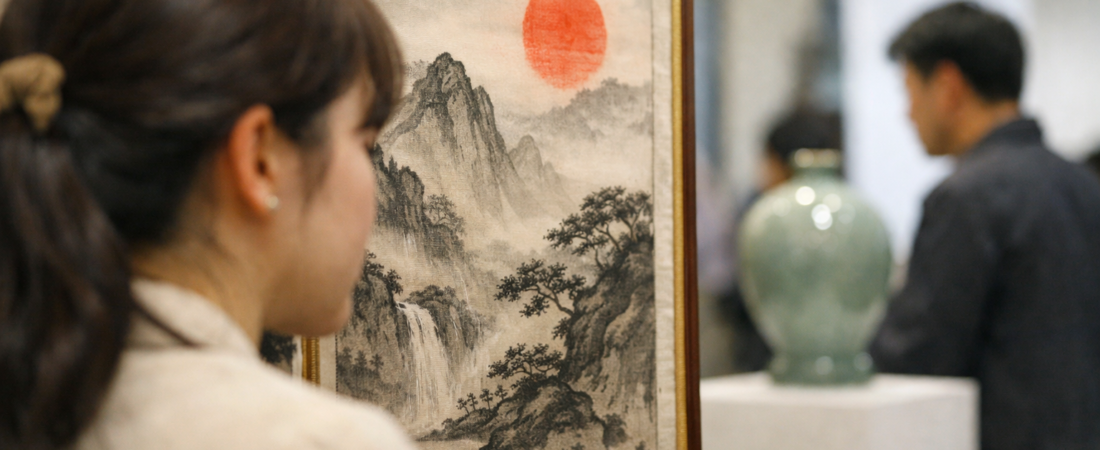
Korean art history stretches back through the Three Kingdoms period, the Goryeo dynasty’s celebrated celadon pottery, and the Joseon dynasty’s ink paintings and calligraphy. Each era produced distinct artistic languages shaped by Buddhism, Confucianism, and royal patronage. This long arc gives Korean art a depth that newer cultural exports like K-pop simply cannot claim on their own.
Contemporary Korean artists now build directly on this foundation. Galleries in Seoul and abroad increasingly showcase work that blends traditional techniques with digital media, installation art, and global contemporary themes. That blend is exactly what “Korea: 2,000 years of creativity” tries to capture for London audiences.
For Western visitors, the exhibition offers something rare: a single narrative connecting ancient craft to modern expression. Few countries can present an unbroken artistic lineage spanning two thousand years inside one exhibition hall. Doesn’t that kind of continuity deserve more attention than it usually gets?
Korean art, in this sense, becomes a bridge rather than a showcase. It links Korea’s ancient past to its hyper-modern present, giving British audiences a fuller picture than K-pop alone could ever provide.
What This Means for Korea’s Global Future
South Korea’s soft power strategy has clearly worked, but success like this carries its own quiet tensions. Cultural institutions sometimes worry that heavy state and corporate investment in “exportable” culture can crowd out smaller, less marketable artistic voices back home. That is a fair concern, and it deserves honest acknowledgment rather than dismissal.
At the same time, exhibitions like this one in London create real opportunities for lesser-known Korean artists to reach new audiences they could never access alone. Museums curating “Korea: 2,000 years of creativity” had to look beyond pop culture, pulling historical and experimental works into the spotlight alongside more commercial Korean exports. That curatorial choice itself pushes back against the worry that only flashy, market-friendly culture gets promoted abroad.
Human creativity rarely moves in a straight line, and Korea’s long artistic history proves that patiently. Dynasties fell, wars interrupted traditions, and foreign occupation once tried to suppress Korean cultural identity entirely. Yet pottery techniques survived, calligraphy traditions passed quietly between generations, and artistic memory endured even when official support disappeared.
That kind of resilience deserves genuine admiration, but it also came at real human cost, carried by artisans and families who had no guarantee their work would ever be seen again. Hallyu’s current global success stands on that quieter, harder foundation. It’s worth remembering that today’s confident cultural export once depended entirely on ordinary people refusing to let something meaningful disappear.
Korean art’s journey to a London gallery, then, is not simply a marketing win. It carries the weight of centuries, and that weight is exactly what gives it staying power beyond any single trend cycle. As Hallyu continues expanding into fine art exhibitions, fashion weeks, and literary translations, expect Korean art to remain a fixture in global conversations for years to come.
What do you think gives Korean art this kind of lasting global appeal?
AI-Generated Photorealistic Image — All people, scenes, and details in this image are entirely AI-generated and fictional. Not a real photograph of an actual person or event. 이 이미지는 AI로 생성된 가상 이미지입니다.

Leave a Reply