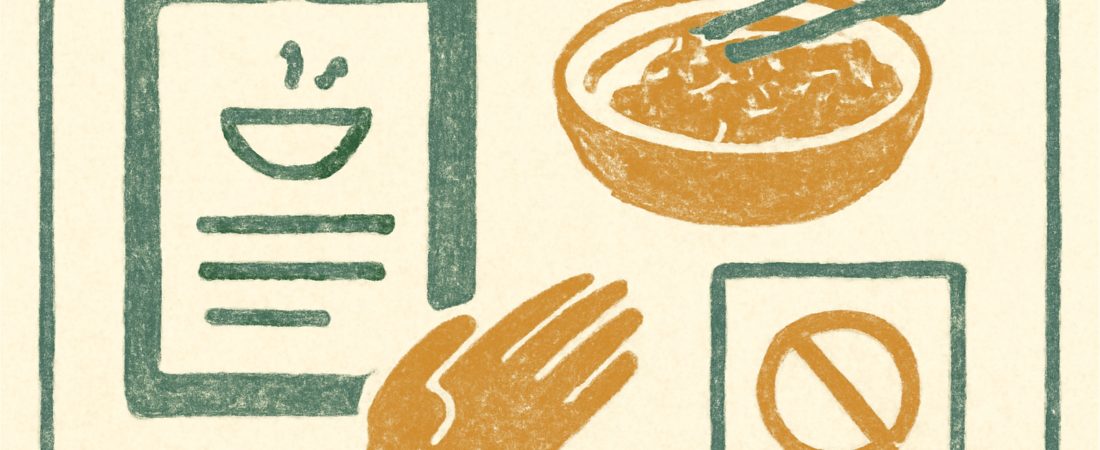
Korean restaurant staff use a small set of repeated phrases: welcome greetings, seating questions, order checks, and payment prompts. Most are polite, not rude. Learn about ten of them and the pattern becomes clear. This guide decodes each phrase by meaning, tone, and the reply that usually works.
Last checked: 2026-11-06
- Why it can sound blunt
- Phrases at the door
- Phrases while ordering
- Phrases during the meal
- Paying and leaving
- Quick comparison table
- FAQ
- Sources
- Related guides
Why it can sound blunt
Korean service speech is short on purpose. Staff are busy, and clear, quick words are seen as efficient.
English often adds softeners like “Would you like to…?” Korean often skips them. A short question is usually still polite, because the verb ending carries the respect.
Tone matters more than length. A warm voice and a small nod mean friendly. You do not need to answer in perfect Korean. A nod, a pointing finger, or a number of fingers works well.
This is a data-explainer, so one note on evidence. The phrases below are common spoken patterns, not a ranked list. For how often words appear in everyday speech, look at spoken-language corpora from the National Institute of Korean Language (see Sources). Check their current releases rather than trusting any single figure you read online.
Phrases at the door
어서 오세요 (eoseo oseyo) means “Welcome, come in.” It is a greeting, not a question. You do not need to reply, though a small smile is nice.
몇 분이세요? (myeot buniseyo?) means “How many people?” Answer with fingers or say the number. “Two people” is 두 명 (du myeong).
자리 안내해 드릴게요 (jari annae hae deurilgeyo) means “I’ll show you to a seat.” Just follow them.
잠시만 기다려 주세요 (jamsiman gidaryeo juseyo) means “Please wait a moment.” At busy places, this often means a queue. Some restaurants use a tablet or kiosk to take your name. Look for a screen near the entrance.
Phrases while ordering
주문하시겠어요? (jumun hasigesseoyo?) means “Would you like to order?” It is the standard polite order prompt.
뭐 드릴까요? (mwo deurilkkayo?) means “What can I get you?” Reply by pointing at the menu and saying the dish name.
매운 거 괜찮으세요? (maeun geo gwaenchanheuseyo?) means “Is spicy food okay?” Staff ask this often, especially of visitors. Say “안 매운 걸로 주세요” (an maeun geollo juseyo), meaning “Not spicy, please.”
최소 2인분부터 주문 가능해요 (choeso i-inbun buteo jumun ganeunghaeyo) means “Minimum two portions.” Many grilled-meat places set a two-portion minimum. If you are alone, ask whether a single portion is possible, or look for a solo-friendly set.
Rules vary by restaurant. Always confirm minimums on the menu or ask staff.
Phrases during the meal
나왔습니다 (nawassseumnida) means “Here is your food.” It is said as dishes arrive.
구워 드릴까요? (guwo deurilkkayo?) means “Shall I grill it for you?” At barbecue places, staff may cook for you. Say “네, 부탁드려요” (ne, butak deuryeoyo), “Yes, please,” or “저희가 할게요” (jeohuiga halgeyo), “We’ll do it ourselves.”
더 필요한 거 있으세요? (deo piryohan geo isseuseyo?) means “Do you need anything else?” Use it as your cue to ask for water, a side, or the bill.
셀프예요 (selfeuyeyo) means “It’s self-service.” You will see this at water stations, side-dish bars, and utensil drawers. Walk over and help yourself.
To call staff, say “저기요” (jeogiyo), “Excuse me.” Many restaurants also have a call button on the table. This is normal and not rude.
Paying and leaving
계산은 여기서 하세요 (gyesaneun yeogiseo haseyo) means “Please pay here.” In many places you pay at a counter near the door, not at the table. Wait until you stand up.
따로 계산하시나요? (ttaro gyesanhasinayo?) means “Paying separately?” Splitting is common to ask about. Tell staff before they ring up the total.
영수증 드릴까요? (yeongsujeung deurilkkayo?) means “Would you like a receipt?” Say yes or no.
안녕히 가세요 (annyeonghi gaseyo) means “Goodbye,” said to the person leaving. Staff say it to you. You can reply with a nod or “감사합니다” (gamsahamnida), “Thank you.”
Tipping is not customary in Korea, so you do not need to leave extra. Confirm the current norm for your situation through the official Korea tourism site.
Quick comparison table
| Phrase (romanized) | Meaning | Your easy reply | Typical cost context |
|---|---|---|---|
| Eoseo oseyo | Welcome | Nod or smile | None |
| Myeot buniseyo? | How many people? | Show fingers | None |
| Jumun hasigesseoyo? | Ready to order? | Point at menu | A bowl of noodles is often roughly $6-10 / 8,000-14,000 KRW (varies widely) |
| Maeun geo gwaenchanheuseyo? | Is spicy okay? | An maeun geollo juseyo | Same dish price |
| Choeso i-inbun | Two-portion minimum | Ask about solo options | Grilled meat is often roughly $12-20 / 16,000-28,000 KRW per portion (varies widely) |
| Selfeu | Self-service | Help yourself | Usually free refills |
| Gyesan yeogiseo | Pay at the counter | Walk to the counter | Card widely accepted |
Prices above are illustrative ranges only. Real prices differ by city, area, and restaurant. Check the menu and any recent price data from Statistics Korea (KOSTAT) before you budget.
FAQ
Is it rude when staff use short sentences?
Usually not. Short phrases with polite endings are standard in busy restaurants. Judge friendliness by tone and body language, not sentence length.
Do I have to speak Korean to order?
No. Pointing at the menu, holding up fingers, and saying “이거 주세요” (igeo juseyo), “This one, please,” works well. Many places also have photo menus or tablets.
Why do some restaurants refuse a single diner?
Some grill restaurants set a minimum of two portions per table. Policies vary. Ask politely, or choose a place that lists solo set meals.
Should I tip in Korean restaurants?
Tipping is generally not expected. Always verify current guidance on the official Korea tourism site, since practices can change.
Sources
- National Institute of Korean Language (spoken-language corpora and usage research): https://www.korean.go.kr/
- Statistics Korea, KOSTAT (consumer price and food-service data): https://kostat.go.kr/
- Korea Tourism Organization, VisitKorea (dining etiquette and traveler guidance): https://english.visitkorea.or.kr/
Check each site for the latest figures and guidance, as numbers and policies change.
Leave a Reply