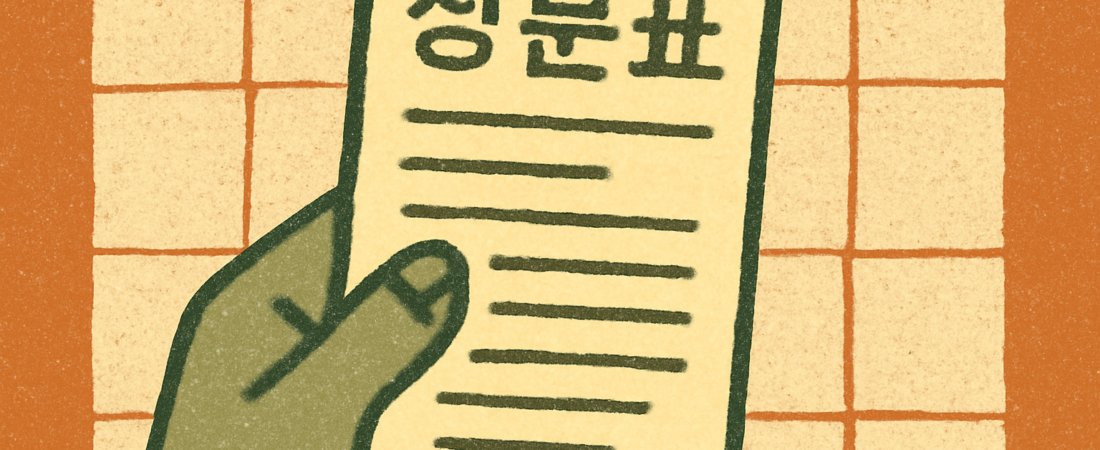
Korean skincare labels list ingredients in descending order of amount, in Korean script, usually with a separate “all ingredients” panel. Learn about thirty recurring words, such as 정제수 (purified water), 글리세린 (glycerin) and 병풀추출물 (centella extract), and you can decode most products. Always verify any claims on the brand’s official page.
Last checked: 2026-11-08
- Why Korean labels look different
- How to read the order and the layout
- Words you will see again and again
- Claims, certifications and what they mean
- Where Korean label and market data comes from
Why Korean labels look different
Many readers abroad first meet Korean skincare through an export version. These often carry an English sticker over the original packaging. The sticker is helpful, but it may not show everything the Korean label does.
Products sold inside Korea must follow Korean cosmetics rules. These rules require certain information on the package or in a leaflet. Typical items include the product name, the maker, the capacity, the expiry or manufacture date, and the full ingredient list. The exact requirements are set by Korean regulators, so check their site for the current text.
In practice, you will often see two zones on a box. One zone is marketing copy in big, friendly type. The other zone is a block of small, dense text with the ingredient list. The second zone is the one worth reading.
You do not need to read Korean fluently. You need a short word list and a calm approach. Think of it like reading a food label in a country whose language you are still learning. A dozen words go a very long way.
One honest caution applies throughout this guide. A label tells you what is in a product. It does not tell you whether the product is right for your skin. If you have a skin condition or a known allergy, ask a qualified professional. This guide is for reading, not for medical advice.
How to read the order and the layout
Start with the basic rule. Ingredients are generally listed from the highest amount to the lowest. That rule is common to many countries, including Korea. So the first few words tell you what the formula is mostly made of.
For most toners, essences and creams, the first word is 정제수 (jeongjesu), meaning purified water. Seeing water first is normal. It does not mean the product is weak.
Next, notice how the list changes partway down. Ingredients present at very low levels can often be listed in any order. So the tail end of a long list is less informative than the top. Do not over-read the last ten lines.
Here is a simple routine for a quick scan:
- Read the first five ingredients to understand the base.
- Look for the “star” ingredient named on the front. See roughly where it sits on the list.
- Scan for anything you already know bothers your skin.
- Check the capacity and the date information.
A claim like “contains 10,000 ppm of an ingredient” is a marketing statement. It may or may not be backed by testing you can see. If a number matters to you, look for the brand’s official explanation. Do not assume a big number means a better product.
Korean labels also use the terms 전성분 (jeonseongbun), meaning “all ingredients,” and 주요 성분 (juyo seongbun), meaning “key ingredients.” The key ingredients section is selective by design. The all-ingredients section is the full picture. Always go to the second one when you want the facts.
Words you will see again and again
Below is a starter vocabulary. Korean ingredient names often combine a plant or substance name with 추출물 (chuchulmul), which means “extract.” So 병풀추출물 is “centella asiatica extract.” Once you spot the ending, many long words become easier to break apart.
Spellings on packaging can vary slightly between brands. Treat the table as a guide for recognition, not a legal reference. The prices in the last column show typical example ranges for a basic product of that type. They are rough illustrations only. Real prices vary by brand, store and season, so check the retailer’s current listing.
| Korean on label | Romanized | Plain English | Often found in | Example price range (verify current) |
|---|---|---|---|---|
| 정제수 | jeongjesu | Purified water | Toners, essences, creams | $10-25 / 13,000-33,000 KRW |
| 글리세린 | geullisrin | Glycerin (a humectant) | Toners, moisturizers | $12-30 / 16,000-40,000 KRW |
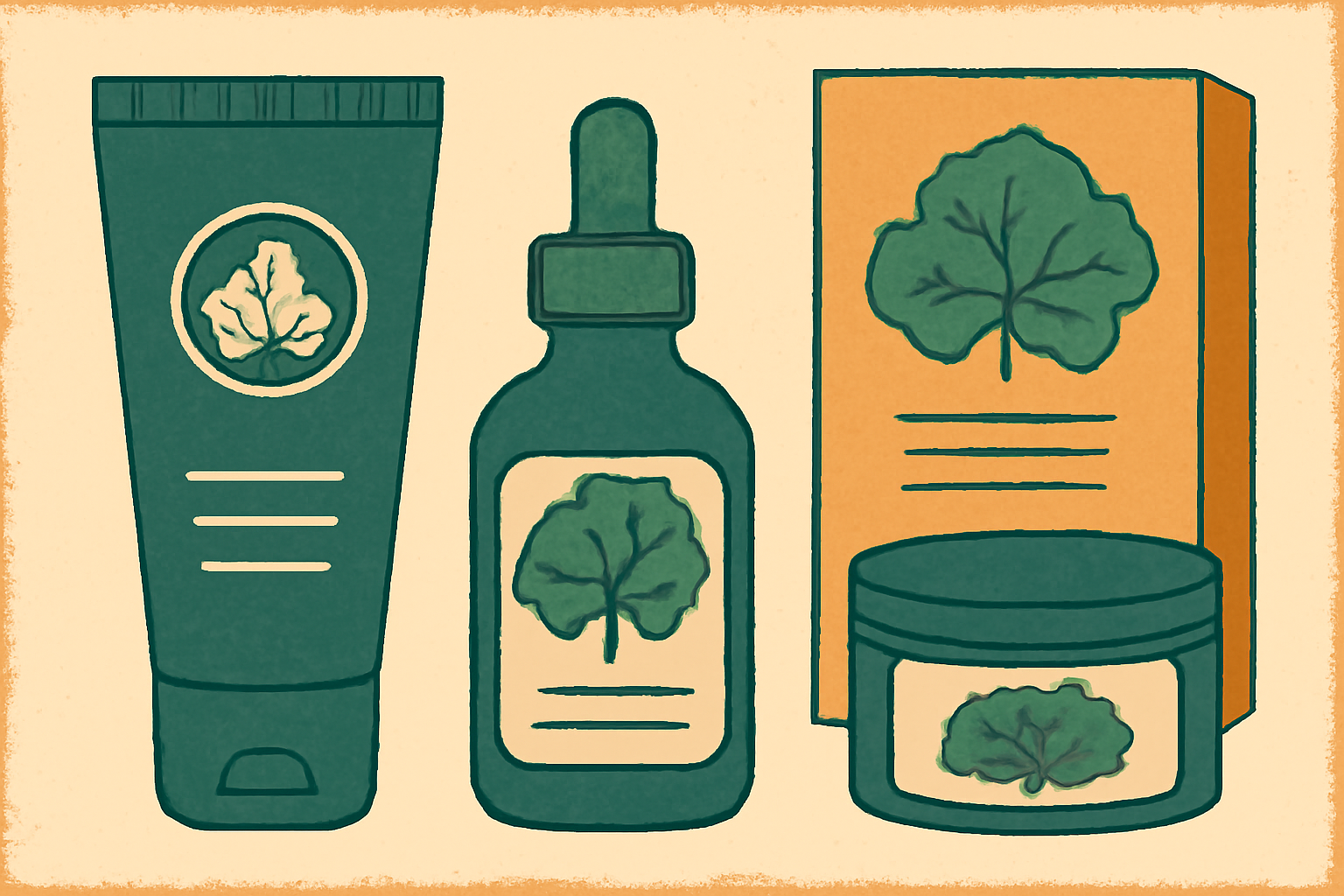
| 병풀추출물 | byeongpul chuchulmul | Centella asiatica extract | Soothing creams, ampoules | $15-35 / 20,000-46,000 KRW |
| 나이아신아마이드 | naiasinamaideu | Niacinamide | Serums, essences | $12-30 / 16,000-40,000 KRW |
| 히알루론산 / 소듐하이알루로네이트 | hialluron-san / sodyum haiallurone-iteu | Hyaluronic acid / sodium hyaluronate | Serums, sheet masks | $3-8 per mask / 4,000-10,500 KRW |
| 달팽이점액여과물 | dalpaengi jeommaek yeogwamul | Snail secretion filtrate | Essences, creams | $15-30 / 20,000-40,000 KRW |
| 어성초추출물 | eoseongcho chuchulmul | Houttuynia cordata extract | Toners, spot-care lines | $12-28 / 16,000-37,000 KRW |
| 세라마이드 | seramaideu | Ceramide | Barrier-focused creams | $20-40 / 26,000-53,000 KRW |
A few more recurring words are worth knowing on their own. 향료 (hyangryo) means fragrance or perfume. 에탄올 (etanol) is ethanol, a type of alcohol. 변성알코올 (byeonseong alkol) is denatured alcohol. People who avoid fragrance or alcohol often scan for these specifically.
You may also see 보존제 (bojonje), meaning preservative. Preservatives keep a water-based product safe over time. Their presence is normal in many formulas. If you want to understand a specific one, look it up on a trusted reference rather than relying on social media.
Another common term is 무향 (muhyang), which means “fragrance-free.” Be careful with this one. A product may be labeled fragrance-free yet still contain plant extracts with natural scent. If scent is a real issue for you, read the full list and consider a patch test.
Claims, certifications and what they mean
Korean packaging often carries small phrases and badges. These can be confusing, because some are legal categories and some are simply brand wording. Here is how to think about them.
First, 기능성 화장품 (gineungseong hwajangpum) means “functional cosmetics.” This is a regulated category in Korea. It covers certain products with claims such as skin brightening, anti-wrinkle support or sun protection. A product in this category goes through a review or notification process with the regulator. The exact rules and the list of allowed claims are published by the Ministry of Food and Drug Safety (MFDS). Check that site for the current definitions.
Second, 저자극 (jeojaggeuk) means “low-irritation.” Brands may use this as a marketing phrase. It is not a guarantee that a product will not irritate you. Some brands test for irritation and say so. If a brand cites a test, look for the details on its official page.
Third, you may see “dermatologist-tested” or “hypoallergenic” style wording. These phrases are used in many countries and their meaning can vary by brand. Treat them as a starting point for questions, not as proof of safety for your skin.
Fourth, you will sometimes spot 비건 (bigeon), meaning vegan, or 크루얼티프리 (keuruel-ti peuri), meaning cruelty-free. These can come from brand policy or from a third-party certification. Third-party schemes publish their own standards. If this matters to you, check the certifier’s official site to confirm that a product is actually listed.
Finally, watch the expiry information. Many Korean products show a period-after-opening symbol, often a small open-jar icon with a number of months. The symbol suggests how long the product is meant to be used once opened. Follow it, and store products away from heat and direct sun.
Where Korean label and market data comes from
This guide is about reading labels, but it helps to know where Korean data on cosmetics actually comes from. If you want current numbers, go to the primary source yourself. Numbers about sales, imports and consumer habits change quickly.
The main types of Korean data sources are these:
- Regulator publications. The Ministry of Food and Drug Safety (MFDS) publishes cosmetics rules, ingredient standards and notices. This is the right place to check what a label must contain and which ingredients are restricted.
- National statistics. Statistics Korea (KOSTAT) and its KOSIS database publish household spending and retail data. These can show broad trends in personal-care spending. Look for the category you want and read the notes on how it is defined.
- Customs and trade data. The Korea Customs Service publishes trade statistics, including cosmetics exports and imports. Use these to see how the export market moves over time.
- Industry bodies. The Korea Cosmetic Association is an industry organization that publishes information about the sector. It is useful context, though it speaks for the industry, so read it with that in mind.
- Retail and platform rankings. Large Korean beauty retailers and online marketplaces publish “best seller” lists. These show what shoppers are buying right now. They reflect that retailer’s customers only, and they change often, so always look at the live page and its date.
A practical tip for readers abroad: treat any ranking as a snapshot. A “top ten” list from one store tells you about that store in that week. It does not tell you what all of Korea buys. When a blog or video quotes a figure, ask where it came from and when.
If you want a quick sense of what people in Korea are choosing, a good habit is to open one or two major retailers’ category pages and read the reviews on the product itself. Reviews often mention texture, scent and how the product felt over several weeks. That gives you a human view that a list of ingredients cannot.
Remember that this site does not state specific sales rankings or market-share figures, because they cannot be verified here and they change. For any number you plan to rely on, open the official source and read the date.
FAQ
Do I need to read Korean to check an ingredient list?
No. A short word list helps a lot. Learn the endings like 추출물 (extract) and a few common names. For anything unclear, copy the word into a trusted ingredient reference and verify it there.
Are ingredients on Korean labels listed by amount?
Generally, yes. Ingredients are usually listed from most to least. Very low-level ingredients may appear in any order. For the exact rule, check the Ministry of Food and Drug Safety website.
Does “low-irritation” on the box mean it is safe for sensitive skin?
Not necessarily. It is often brand wording rather than a guarantee. If you have sensitive skin or a condition, speak to a qualified professional. A small patch test is also a common precaution.
Is the export version the same as the Korean version?
Not always. Formulas, sizes and labels can differ between markets. Compare the full ingredient list on the box you hold, and check the brand’s official site for your region.
Sources
- Ministry of Food and Drug Safety (MFDS), Republic of Korea: https://www.mfds.go.kr
- Statistics Korea (KOSTAT) and KOSIS national statistics database: https://kostat.go.kr
- Korea Customs Service, trade statistics: https://www.customs.go.kr
- Korea Cosmetic Association (industry body): https://www.kcia.or.kr

Leave a Reply