
To compare cica and centella products, read the ingredient list from the top. Check where Centella Asiatica Extract sits, then look for madecassoside, asiaticoside, or asiatic acid. Higher placement usually means more of it. Also watch for fragrance and alcohol. Names differ, but “cica” simply means centella. Verify each list on the brand’s official site.
Last checked: 2026-11-07
- What “cica” and “centella” actually mean
- How to read the ingredient list step by step
- Comparing common product types
- What to check beyond centella
- Buying tips and where to verify
- FAQ
- Sources
- Related guides
What “cica” and “centella” actually mean
Many shoppers ask the same thing. Is cica different from centella? The short answer is no.
“Cica” is a marketing nickname. It comes from “cicatrice,” the French word for scar. Brands use it on the front of the box.
“Centella” refers to the plant itself. Its botanical name is Centella asiatica. You may also see “gotu kola,” “tiger grass,” or “Asiatic pennywort.” In Korea, people often say byeongpul or call it “tiger grass” in product copy.
On an ingredient list, the plant appears under its INCI name. INCI is the standard naming system for cosmetics. You will see entries like these:
- Centella Asiatica Extract
- Centella Asiatica Leaf Extract
- Centella Asiatica Leaf Water
- Centella Asiatica Root Extract
- Madecassoside
- Asiaticoside
- Asiatic Acid
- Madecassic Acid
The last four are compounds found in the plant. Some brands add them as purified single ingredients. Others rely on the whole-plant extract. Both approaches exist, and neither is automatically better.
One caution matters here. A “cica” label does not guarantee a meaningful amount of the plant. The word on the front tells you the brand’s story. The back of the box tells you the formula.
How to read the ingredient list step by step
Follow these steps with any product in your hand or on your screen.
Step 1: Find the full ingredient list
Use the brand’s official product page, not a reseller listing. Resellers sometimes show outdated lists. Formulas change, and older stock may differ from new stock.
Step 2: Locate the centella ingredient
Scan for “Centella Asiatica” in any form. Note its position. Ingredients are listed in descending order of concentration, down to roughly the 1 percent mark. After that, the order can be mixed.
Step 3: Judge the position, cautiously
If centella is in the first five ingredients, it is likely a major part of the formula. If it sits near the end, the amount is probably small. This is a rough guide only. It does not prove how well a product works.
Step 4: Check for the active compounds
Look for madecassoside, asiaticoside, or asiatic acid. Their presence suggests the brand added concentrated components. Absence is not a flaw. Many good products use only the whole extract.
Step 5: Check the first ingredient
In many toners and essences, water is first. In some Korean products, a centella water is first instead. That means the base itself is plant-derived. Compare how many centella forms appear in total.
Step 6: Note the supporting cast
Look at what else is in the formula. Common partners include panthenol, ceramides, hyaluronic acid, glycerin, and allantoin. These are standard moisturizing or soothing ingredients. They are not unique to cica lines.
Step 7: Scan for personal triggers
Check for fragrance, essential oils, and drying alcohols. If you have reactive skin, this step matters more than the centella itself. Do a patch test before using any new product on your face.
If a brand does not publish a full ingredient list online, treat that as a reason to wait. The box in the store will always carry the legal list.
Comparing common product types
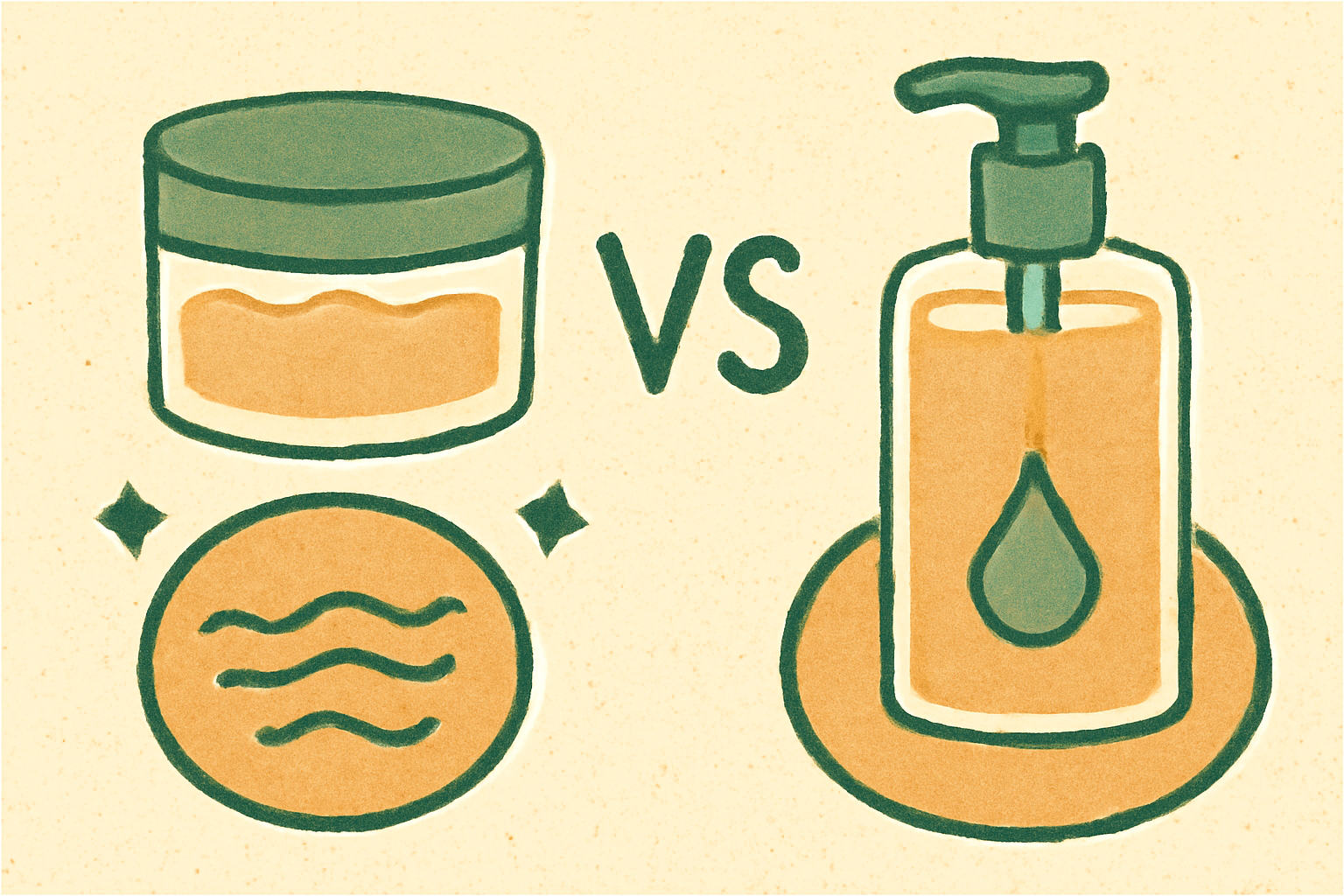
Cica comes in many formats. Each tends to have a different ingredient pattern. The table below describes general patterns, not specific named products. Prices are typical ranges seen in Korea at the time of checking. They vary by brand, size, and store, so verify current prices on official sites.
| Product type | Common centella forms | Typical texture | Often paired with | Rough price range (USD / KRW) |
|---|---|---|---|---|
| Toner | Centella extract, sometimes centella water | Watery | Panthenol, glycerin, betaine | $10-25 / 13,000-33,000 KRW |
| Ampoule or serum | Extract plus madecassoside or asiaticoside | Light gel or liquid | Hyaluronic acid, allantoin | $12-35 / 16,000-46,000 KRW |
| Cream | Extract, sometimes asiatic acid | Thicker, richer | Ceramides, squalane, shea butter | $12-35 / 16,000-46,000 KRW |
| Sheet mask | Extract, often low-mid position | Wet sheet with essence | Glycerin, plant extracts | $1-3 each / 1,300-4,000 KRW |
| Sleeping or overnight mask | Extract plus compounds | Gel-cream | Panthenol, ceramides | $15-30 / 20,000-40,000 KRW |
| Sunscreen | Extract, usually lower on list | Lotion or gel | UV filters, soothing extracts | $10-25 / 13,000-33,000 KRW |
Price conversions here use a rough rate of about 1,300 KRW per dollar. Exchange rates move, so check a live rate before you budget.
What the table shows
Toners and ampoules often put centella higher up the list. That is because water-based formulas have room for plant extracts. Sunscreens tend to place centella lower. The UV filters take up much of the formula.
Sheet masks are a special case. The extract is often present, but the product is used for minutes, then removed. That limits how much any ingredient can do.
What to check beyond centella
Centella is only one line on a long list. These other points often matter more for how a product feels on your skin.
Fragrance
Look for “Parfum” or “Fragrance” on the list. Also look for named scent compounds such as linalool or limonene. These are common in lightly scented cica creams. They bother some people and not others.
Drying alcohols
“Alcohol Denat.” or “Ethanol” high on the list can feel stinging on sensitive skin. Fatty alcohols like cetyl alcohol are different. They are gentle emollients, and the name just sounds similar.
Essential oils and plant extras
Some cica lines add tea tree, lavender, or citrus extracts. These can be pleasant. They can also irritate. Check each one against your own history.
Preservatives
Every water-based product needs a preservative system. Common ones include phenoxyethanol and various glycols. This is normal and necessary. Skip any brand that claims to need none.
Marketing claims
Phrases like “dermatologist tested” or “for sensitive skin” are not strict guarantees. Rules differ by country. If a claim matters to you, look for the exact wording and any test details on the brand’s official site.
This article does not give medical advice. If you have a skin condition, eczema, or a reaction that keeps returning, ask a qualified professional.
Buying tips and where to verify
Here is a simple routine for comparing two products side by side.
- Open both official product pages in two tabs.
- Copy each ingredient list into a notes app.
- Mark where centella appears in each.
- Mark fragrance, alcohol, and anything you react to.
- Compare the price per milliliter, not just the sticker price.
- Choose the one that fits your skin, not the louder label.
Buying in Korea
Korean drugstores and beauty shops often sell mini sizes and sample sets. These are useful for patch testing. Tourist-area stores may price differently from local shops. Tax-refund rules for visitors change, so confirm current rules on the official Korean tourism or tax sites before you rely on them.
Buying from abroad
Ingredient lists can differ by market. A product sold in Korea may have a slightly different formula from the export version. When you can, check the list on the package you actually receive. Counterfeits exist on some marketplaces. Buying from the brand’s official store or an authorized seller lowers that risk.
A note on expectations
Cica products are popular for a gentle, calming feel. That is a texture and comfort experience for many users. Do not expect a single ingredient to change your skin dramatically. Consistent, simple routines tend to matter more than any one trend.
FAQ
Is cica the same as centella?
Yes. “Cica” is a shortened marketing term, and “centella” is the plant. On the ingredient list, both appear as Centella Asiatica in some form.
Does a higher position on the list mean a better product?
Not necessarily. Higher position suggests a larger amount. It does not prove better results. Formula balance, your skin, and your routine all matter.
What are madecassoside and asiaticoside?
They are compounds found in the centella plant. Some brands add them as separate ingredients. Check the list to see whether a product includes them.
Can I use cica products if I have sensitive skin?
Many people do, but reactions vary. Check for fragrance and essential oils first. Patch test on a small area. If irritation continues, stop using it and consult a professional.
Where should I check the real ingredient list?
Use the brand’s official website or the package itself. Resellers can show outdated or incomplete lists. Always trust the physical label on the product you hold.
Sources
- Personal Care Products Council, INCI naming and ingredient dictionary: https://www.personalcarecouncil.org/
- Ministry of Food and Drug Safety, Republic of Korea (cosmetics regulation): https://www.mfds.go.kr/eng/index.do
- U.S. Food and Drug Administration, cosmetics labeling information: https://www.fda.gov/cosmetics
- Official Korea Tourism Organization (visitor shopping and tax refund information): https://english.visitkorea.or.kr/


Leave a Reply