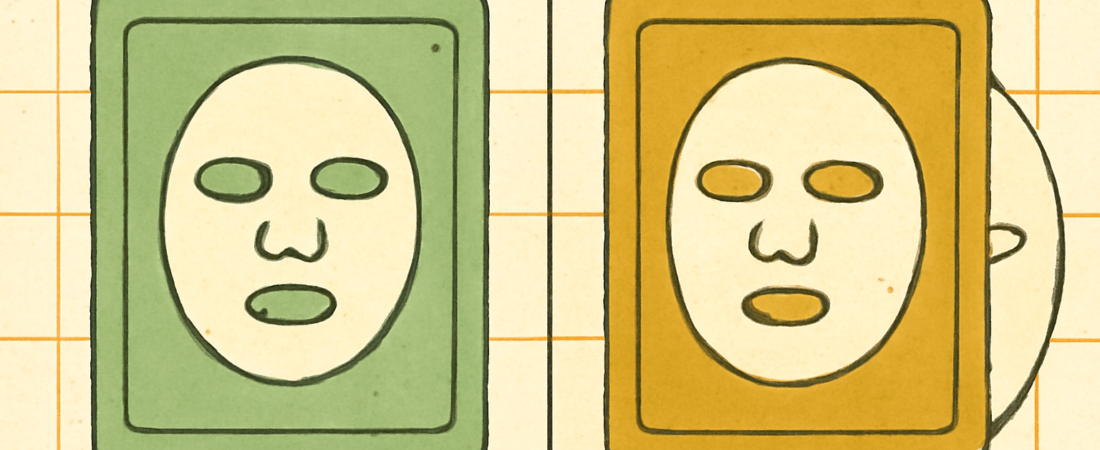
Cheap and premium Korean sheet masks differ mainly in the sheet material, the size of the formula dose, the ingredient list, and how well the mask fits your face. Price often reflects texture and packaging too. Neither tier is automatically better. Match the mask to your skin’s needs, and check each ingredient list yourself.
Last checked: 2026-11-08
- What you actually pay in Korea
- Step 1: Compare the sheet material
- Step 2: Read the essence and ingredients
- Side-by-side comparison
- Step 3: Choose and use the right mask
- FAQ
- Sources
- Related guides
What you actually pay in Korea
Start with the money, because that is where the question begins. Sheet masks in Korea cover a wide price range. Prices change by store, brand, promotion and exchange rate. Treat every number here as a rough range, not a quote.
Budget masks often sell in multi-packs of 10. Per sheet, they can cost roughly $0.50 to $1.50 (about 700 to 2,000 KRW). Convenience stores, drugstore chains and big discount shops stock many of these.
Mid-range masks usually cost somewhere around $2 to $4 per sheet (about 2,700 to 5,500 KRW). These are common at beauty chains and in department store basements.
Premium masks can run from roughly $5 to well above $15 per sheet (about 7,000 to 20,000 KRW or more). Some are sold singly, some in small boxes of four or five.
The exchange rate shifts. At roughly 1,350 KRW to $1, 6,500 KRW is about $5. Check a live rate before you shop, and confirm current prices on the brand’s official site or in store.
Expect promotions as well. Korean beauty retailers often run bundle deals, such as “buy one, get one” or multi-pack discounts. A mid-range mask on sale can cost less than a budget one at full price. So compare the price per sheet, not the sticker on the box.
Step 1: Compare the sheet material
The sheet is the first real difference you can feel. It holds the essence against your skin. Its material changes how the mask fits, feels and behaves.
Cotton or non-woven sheets. These are the classic choice, and many budget masks use them. They are thin, light and breathable. They can slip, especially around the nose and chin. They also tend to dry out faster, so keep the time short.
Hydrogel sheets. These are a gel-like material, often seen in premium and “special treatment” masks. They cling closely to the face. They often come in two pieces, one for the upper face and one for the lower. They can feel cooling. Some people find them heavier and slightly slippery.
Bio-cellulose and similar fermented-fiber sheets. These are made from a plant-derived fiber network. They are known for a close, smooth fit and a soft, jelly-like feel. They usually cost more. Brands describe them in marketing terms, so read claims with care.
Tencel and lyocell-type sheets. These are fabric-style fibers marketed as soft and eco-friendlier. You will see them across the mid-range and premium tiers.
Here is a simple test when you try masks at home. Notice three things:
- Does the sheet stay in place without you holding it?
- Does it cover your cheeks, jawline and around the nose evenly?
- Does it feel comfortable for the full wear time?
A mask that fits well makes better contact with your skin. That matters more than any single buzzword on the package.
Step 2: Read the essence and ingredients
The liquid inside is the second big difference. Here is where the label deserves a slow read.
How much essence is in the pack. Premium masks often hold more liquid, so the sheet feels wetter and you can pat the leftovers into your neck. Budget packs may hold less. Check the net volume on the back, usually in milliliters. Compare packs on that number, not on appearance.
Where ingredients sit on the list. Ingredient lists run from the highest concentration to the lowest. Water or a similar base usually comes first. If a star ingredient appears near the bottom, it is likely present in a small amount. Brands do not always disclose exact percentages, so you cannot know for sure.
Common ingredients across all tiers. Budget and premium masks both use humectants such as glycerin and hyaluronic acid. Both may include plant extracts, panthenol, or centella-derived ingredients. Price does not guarantee a unique or more effective ingredient.
Preservatives and fragrance. Sheet masks are wet products, so they need preservatives. Some masks also contain fragrance or essential oils. If your skin is sensitive, scan for those. A shorter list is not always gentler, but it is easier to check against your known triggers.
Marketing claims. Words like “intensive,” “ampoule” or “treatment” are not regulated terms you can compare across brands. They describe a style, not a measured result. This guide makes no skin-health claims. If you have a skin condition or allergy, ask a qualified professional before trying a new product.
A practical habit helps. Photograph the ingredient list before you throw the packet away. If your skin reacts, you will know what to avoid next time.
Side-by-side comparison
This table shows typical patterns, not rules. Brands vary, and prices are rough ranges you should verify at the point of sale.
| Feature | Budget | Mid-range | Premium |
|---|---|---|---|
| Typical price per sheet | $0.50 to $1.50 / 700 to 2,000 KRW | $2 to $4 / 2,700 to 5,500 KRW | $5 to $15+ / 7,000 to 20,000+ KRW |
| How it is sold | Multi-packs of about 10 | Boxes of about 5 to 10 | Single sheets or small boxes |
| Common sheet material | Cotton or non-woven | Non-woven, Tencel-type, some hydrogel | Hydrogel, bio-cellulose, two-piece designs |
| Fit on the face | Can slip at nose and chin | Usually decent | Often close and contoured |
| Essence amount | Often smaller | Moderate | Often larger |
| Ingredient focus | Basic hydration, simple extracts | Targeted themes, such as soothing or brightening | Longer lists, trendier or patented-sounding complexes |
| Packaging | Simple foil pouch | Nicer pouch or box | Gift-style or designed packaging |
| Best for | Frequent, easy routine use | Regular use with a specific goal | Occasional treat or special occasion |
Notice what the table does not say. It does not say premium works better for your skin. The differences are mostly about feel, fit, volume and presentation.
Step 3: Choose and use the right mask
Now turn the comparison into a decision. Follow these steps.
- Set your budget per week. Decide how often you plan to mask. Daily use points to budget or mid-range. A weekly treat can justify a premium sheet.
- Pick your priority. Is it comfort, fit, a calm feeling, or simple moisture? Write it down. This stops you from paying for features you will not use.
- Check the sheet type. If your face has strong contours, a hydrogel or two-piece mask may fit better. If you want light and easy, non-woven works well.
- Read the ingredient list. Look for anything you know irritates your skin. Check fragrance if you are sensitive.
- Do a patch test. Try a small area first, such as the jawline or inner arm. Wait a day before a full-face mask.
- Buy a single or small box first. Do not commit to a large pack until you like the feel.
Then use the mask well. Cleanse your face first. Unfold the sheet and place it carefully, smoothing it from the center outward. Follow the wear time printed on the pack. Longer is not better. A sheet that dries out on your face can pull moisture the wrong way. Remove it when the time is up.
After removing the sheet, pat in the leftover essence. Some people follow with their usual moisturizer to lock things in. Others skip it if the essence feels rich enough. Go by how your skin feels, and keep to the pack directions.
One more tip for visitors in Korea. You can find masks at beauty chains, convenience stores and department stores. Staff at larger shops can often point you to masks by skin concern, though language may be a barrier. Showing a photo of the product or a translation app helps. Prices and stock vary by shop, so compare before you buy.
Check labels on arrival at the airport, too, if you plan to fly home with a haul. Sheet masks are generally packed as sealed pouches, but liquid and cosmetic rules differ by airline and country. Verify the current rules with your airline and the relevant customs authority before you travel.
FAQ
Are expensive Korean sheet masks worth it?
It depends on what you value. Premium masks often offer a closer fit, more essence and nicer packaging. They do not guarantee better results for your skin. For many people, a mid-range mask used regularly gives the best value.
How often can I use a sheet mask?
Follow the directions on the pack, since they differ by product. Many people use them a few times a week or less. If your skin feels irritated, stop and consider asking a skincare professional. This guide does not offer medical advice.
Do I need to rinse my face after a sheet mask?
Most sheet masks are designed to be left on the skin without rinsing. Pat in the remaining essence. Always check the instructions on your specific mask, because a few products say otherwise.
Can I reuse leftover essence from the packet?
Many people pat leftover essence onto the neck, arms or hands right after the mask. Do not store opened essence for later. Wet products can spoil, so use it the same day.
Sources
- Ministry of Food and Drug Safety (Korea), official cosmetics information: https://www.mfds.go.kr/
- Korea Customs Service, travel and import rules: https://www.customs.go.kr/
- Korea Tourism Organization, official visitor information: https://english.visitkorea.or.kr/
Prices and exchange rates in this guide are rough ranges. Always confirm current prices on the brand’s official site or in store, and check the packaging for ingredients and usage directions.

Leave a Reply