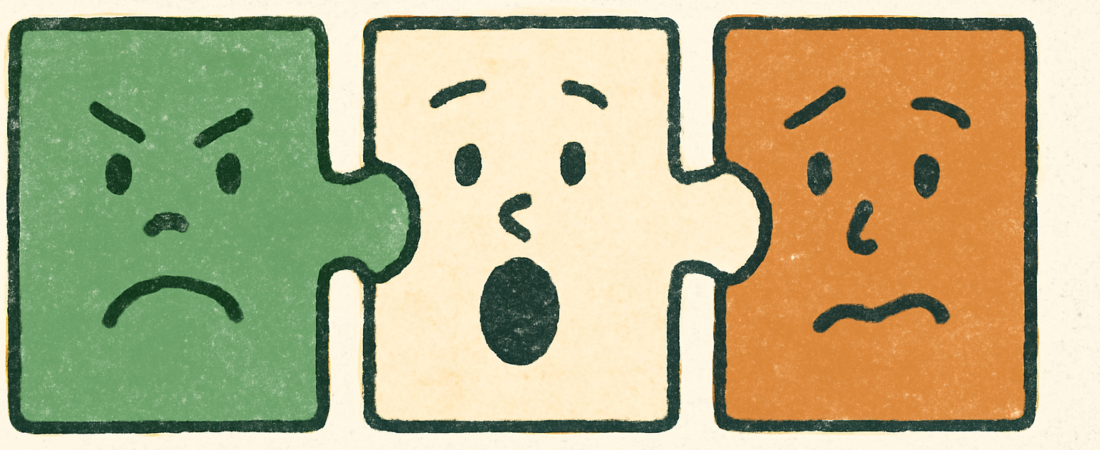
Jinjja means “really?” or “seriously?” Mwo means “what?” and can sound surprised or dismissive. Eotteokhae means “what do I do?” and is used when you panic or feel stuck. Tone and context matter, so listen first. Use polite endings with strangers and elders.
Last checked: 2026-11-09
- Jinjja: “Really?”
- Mwo: “What?”
- Eotteokhae: “What do I do?”
- Quick comparison
- Using them politely
- FAQ
- Sources
- Related guides
Jinjja: “Really?”
The Korean spelling is 진짜. The word literally means “real” or “genuine.” In daily talk it works like “really?” or “no way!”
Follow these steps to use it well:
- Hear a surprising piece of news from a friend.
- Raise your voice slightly at the end. Say “Jinjja?”
- Add a polite ending when needed. “Jinjja-yo?” is gentler.
It can also be positive. “Jinjja masisseo” means “this is really delicious.” Here jinjja simply boosts the next word.
Mwo: “What?”
Mwo (뭐) is short for mueot, meaning “what.” It is very common in casual speech.
Tone changes everything. A soft, curious “mwo?” asks a real question. A sharp, flat “mwo?” can sound annoyed or challenging.
Two common uses:
- Asking: “Mwo meogeoyo?” means “What are you eating?”
- Brushing off: “Mwo, geuge?” can mean “So what?” It sounds blunt.
With elders or strangers, avoid the clipped version. Try “Mwo-ra-go-yo?” or simply “Ne?” to politely ask someone to repeat.
Eotteokhae: “What do I do?”
Eotteokhae (어떡해) expresses worry or helplessness. It comes from “eotteoke hae,” meaning “how do I do it?”
Typical moments include missing a train, losing a phone, or hearing bad news. People say it almost as an exclamation: “Eotteokhae!”
Do not confuse it with eotteoke hae (어떻게 해), which is a plain question. Both can sound the same when spoken. Context tells you which one is meant. If you are writing, check the spelling carefully.
For a polite version, add yo: “Eotteokhaeyo?” It fits when you ask someone for help.
Quick comparison
| Word | Hangul | Rough meaning | Feeling | Cost to learn |
|---|---|---|---|---|
| Jinjja | 진짜 | Really? / Seriously? | Surprise, emphasis | $0 / 0 KRW |
| Mwo | 뭐 | What? | Curious or annoyed | $0 / 0 KRW |
| Eotteokhae | 어떡해 | What do I do? | Worry, panic | $0 / 0 KRW |
All three are free to use. Language classes and apps do cost money, but prices change. Check each provider’s official site for current fees.
Using them politely
Korean speech levels depend on who you talk to. These three words appear mostly in casual speech.
- Friends your age: use the short forms freely.
- Strangers, shop staff, elders: add -yo at the end.
- Workplace or formal settings: choose full polite sentences instead of reaction words.
When unsure, start polite. People usually forgive learners, and a gentle tone is always safe.
FAQ
Is jinjja rude?
No. It is casual, not rude. Add “-yo” for politeness. Sarcastic tone can still sound rude, so watch your voice.
Can mwo ever sound offensive?
Yes. A sharp or flat “mwo?” can sound confrontational. With strangers or elders, use “ne?” or “mwo-rago-yo?” instead.
What is the difference between eotteokhae and eotteoke hae?
Eotteokhae (어떡해) is an exclamation of worry. Eotteoke hae (어떻게 해) is a plain question: “How do I do it?” They sound nearly identical.
Can I use these words in text messages?
Yes. Friends often write them casually. Spelling varies in chat, so follow your friend’s style when unsure.
Sources
- National Institute of Korean Language, Standard Korean Dictionary: https://stdict.korean.go.kr/
- National Institute of Korean Language: https://www.korean.go.kr/
- King Sejong Institute Foundation: https://www.ksif.or.kr/
Dictionary entries and usage notes may change. Verify spellings and meanings on the official sites above.
Leave a Reply