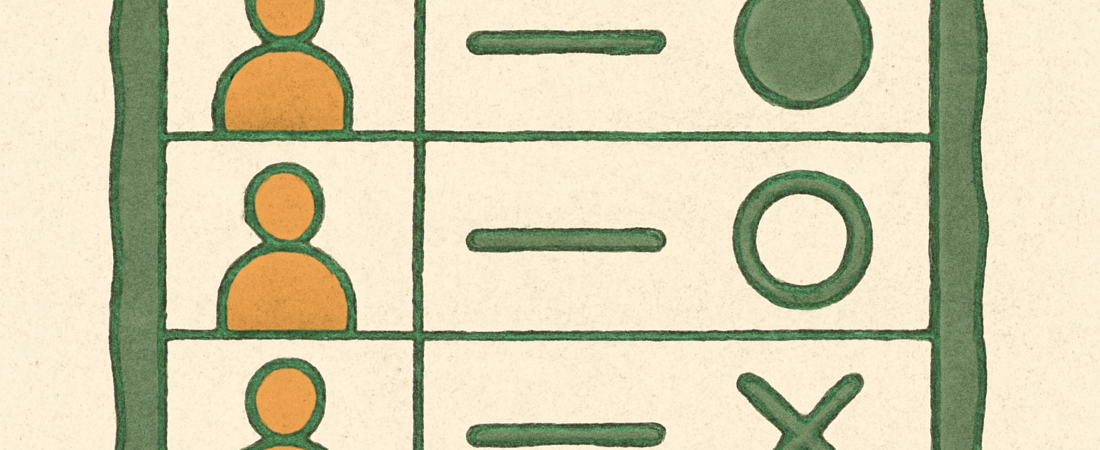
Use the polite -아요/-어요 ending (haeyo-che) for most strangers, shop staff and coworkers. Use -ㅂ니다/-습니다 (hapsyo-che) in formal settings like presentations, news and customer service. Use 반말 (banmal, casual speech) only with close friends or younger people who have agreed to it. When unsure, start with haeyo-che.
Last checked: 2026-11-08
- Why endings matter
- The three main levels
- Who uses what in daily life
- Comparison table
- How to check real usage today
- FAQ
- Sources
- Related guides
Why endings matter
Korean verbs change their endings to show respect. The same sentence can sound warm, formal or rude. The choice depends on who you talk to and where.
Age, job title and closeness all play a role. Learners often worry about getting it wrong. Native speakers are usually forgiving of foreigners. Still, a safe default saves stress.
The three main levels
Korean has more than three speech levels on paper. Textbooks often list six. In daily life, most people use three.
Hapsyo-che (formal polite)
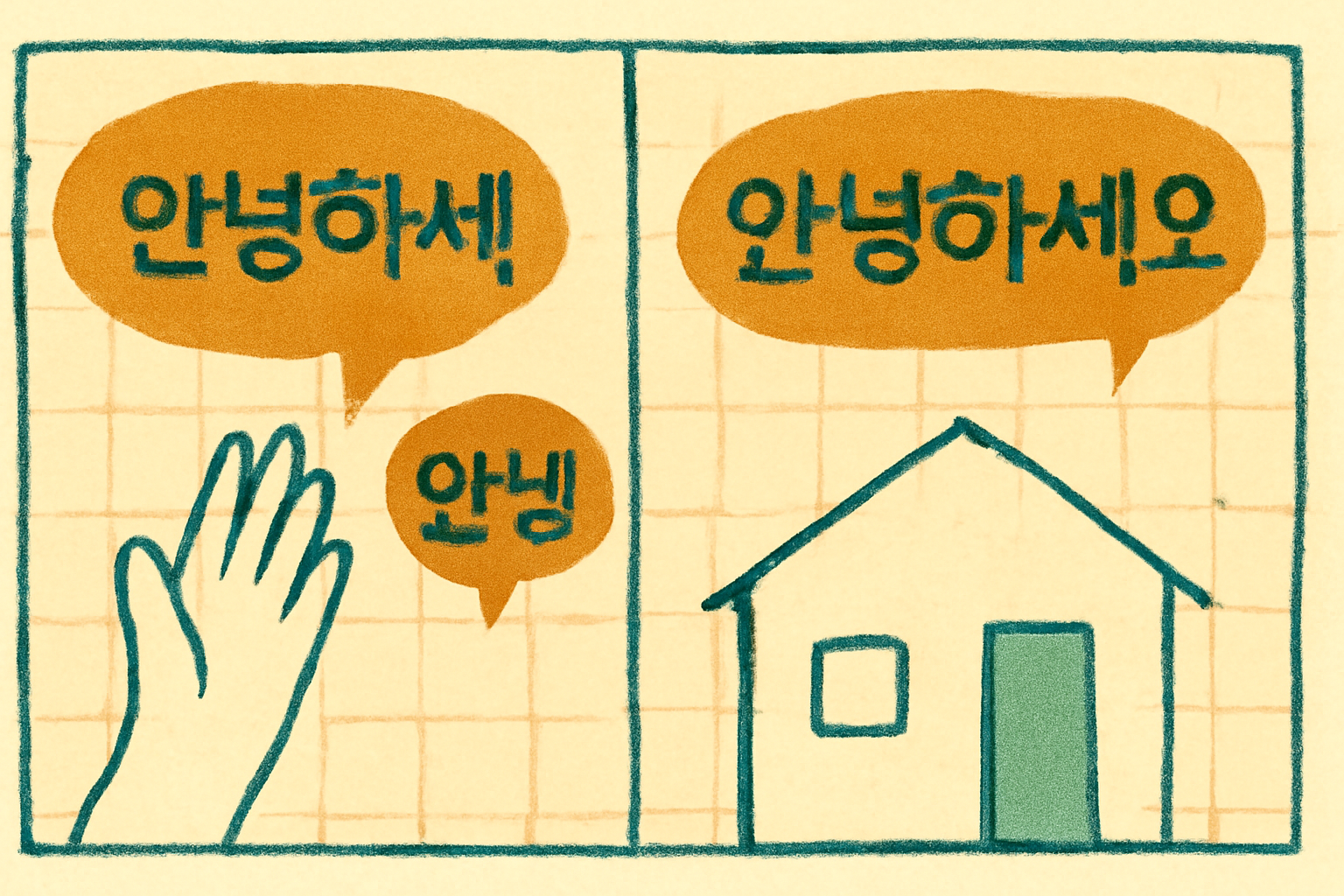
This ending uses -ㅂ니다 or -습니다. Example: 감사합니다 (gamsahamnida, “thank you”). You hear it in news broadcasts, speeches, announcements and service scripts. It sounds stiff in casual chat.
Haeyo-che (informal polite)
This ending uses -아요 or -어요. Example: 고마워요 (gomawoyo, “thanks”). It is the everyday workhorse. Use it with strangers, older acquaintances and most coworkers.
Banmal (casual)
This drops the polite ending. Example: 고마워 (gomawo). Close friends, family and younger people use it. Using it first with a stranger can cause offense.
Who uses what in daily life
Here is a simple guide for common situations.
- Cafe or shop staff: Staff often use hapsyo-che or haeyo-che. You can answer in haeyo-che.
- Taxi drivers and neighbors: Haeyo-che works well.
- Boss or professor: Use haeyo-che or hapsyo-che, plus honorific words.
- Friends your age: Banmal is common once you both agree. Many Koreans ask first, with something like “말 편하게 할까요?” (“Shall we speak casually?”).
- Someone younger: They may use banmal with you. You can still use haeyo-che until you know them well.
Honorifics also change words, not just endings. For example, 먹다 (to eat) becomes 드시다 when you honor the eater. Learn these as you go.
Comparison table
| Level | Ending | Example (“Are you going?”) | Best for |
|---|---|---|---|
| Hapsyo-che | -ㅂ니까 / -습니까 | 가십니까? | Presentations, news, formal service |
| Haeyo-che | -아요 / -어요 | 가요? | Strangers, coworkers, most daily talk |
| Banmal | -아 / -어 | 가? | Close friends, family, younger people |
No prices apply to this topic, so there are no USD or KRW figures here.
How to check real usage today
Speech habits shift over time. Younger speakers may drop formal endings sooner than older groups. Workplaces also differ. Some companies use flatter, friendlier speech than others.
To see current patterns, look at primary Korean language sources. The National Institute of Korean Language publishes dictionaries, language-use surveys and public reference materials. Check their site for the latest research rather than trusting old blog posts or social media claims. I have not cited specific survey numbers here, because they change and you should verify them yourself.
You can also listen. Compare a news broadcast with a variety show or a vlog. The gap in endings is easy to hear.
FAQ
Which ending should a beginner use first?
Start with haeyo-che (-아요/-어요). It is polite, common and safe in nearly every everyday situation. Learn hapsyo-che next for formal moments.
Is it rude to use banmal with Koreans?
It can be, if you use it with strangers or people older than you. Wait until the other person invites you to speak casually. Close friends your age usually switch together.
Do I need honorifics if I only travel for a short time?
Not many. Haeyo-che plus a polite tone is enough for restaurants, shops and transit. Staff will not expect perfect honorific grammar from visitors.
Why do drama characters switch levels so often?
Switching can show closeness, anger or changing status. Scriptwriters use it on purpose. Real life is usually more stable, so do not copy drama speech exactly.
Sources
- National Institute of Korean Language (국립국어원): https://www.korean.go.kr
- King Sejong Institute Foundation: https://www.ksif.or.kr
Leave a Reply