Table of Contents
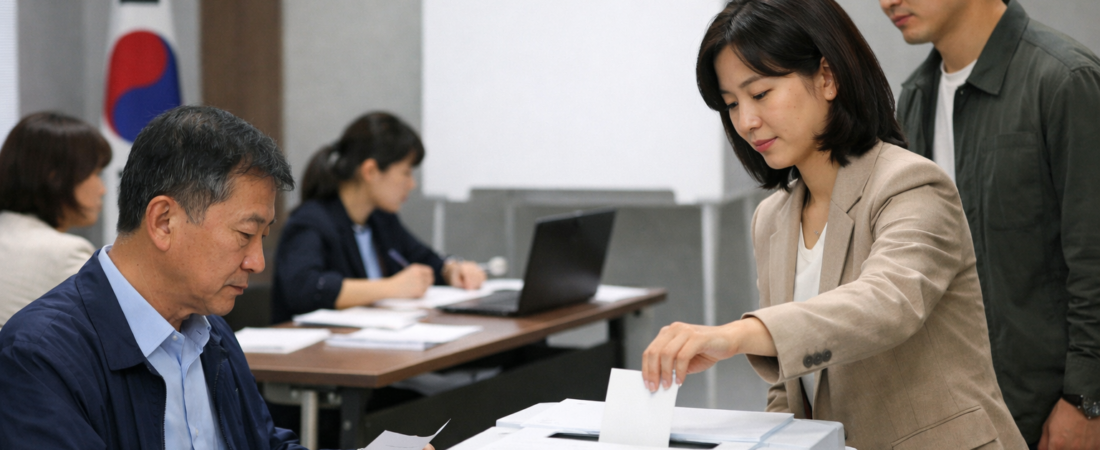
Can you imagine an election where ballots simply run out? That is exactly what triggered a fierce showdown at Korea’s National Assembly this week. Lawmakers grilled officials from the National Election Commission over a ballot shortage scandal, and the criticism came from both sides of the aisle.
This was not a quiet, procedural hearing. It was a rare moment of bipartisan anger. When both the ruling and opposition parties agree on something in Korean politics, you know the issue runs deep.
What Happened at the National Assembly Hearing
The National Assembly convened a special investigative committee hearing this week. Its focus? A troubling ballot shortage incident that raised serious questions about election management.
Lawmakers from both the Democratic Party of Korea and the People Power Party took turns questioning officials. Their target was clear: the National Election Commission’s handling of basic election logistics.
Why does a ballot shortage matter so much? Because voting is the foundation of democratic legitimacy.
If citizens cannot trust that enough ballots exist at every polling station, the entire system loses credibility. This is not a small clerical error. It touches the core promise every democracy makes to its people: your vote will count, and it will be counted fairly.
The hearing revealed more than just the ballot problem itself. It exposed deeper cracks in how the National Election Commission operates behind the scenes.
Lawmakers pointed to patterns of behavior that, taken together, painted a troubling picture. You might ask: was this one mistake, or a symptom of something larger? The evidence presented suggests the latter.
Why the National Election Commission Is Under Fire
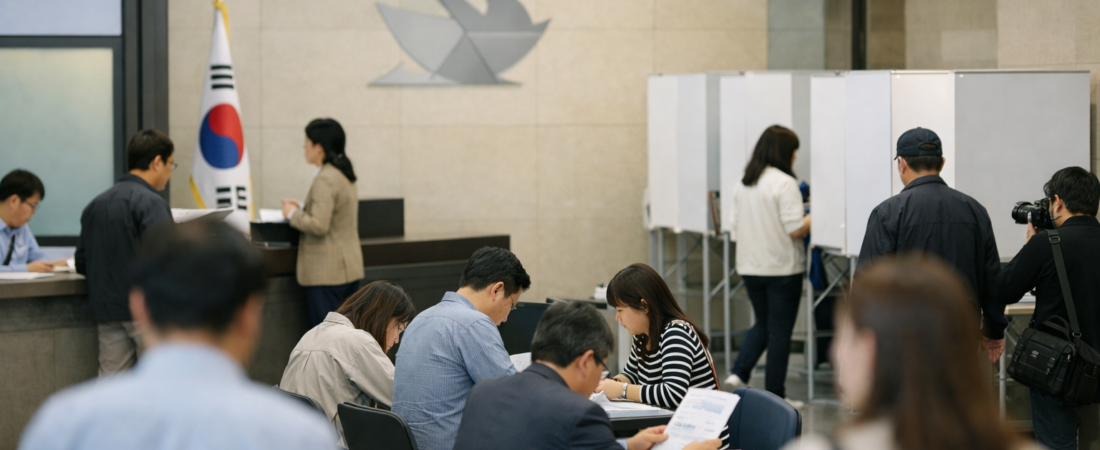
Three specific issues dominated the hearing’s criticism of the National Election Commission. Each one, on its own, might seem minor. Together, they suggest a pattern worth watching closely.
First, lawmakers highlighted the commission’s heavy reliance on no-bid contracts, known in Korea as private or negotiated contracts. Rather than opening major purchases and services to competitive bidding, the National Election Commission concentrated many contracts through direct negotiation.
Why does this matter? Competitive bidding exists precisely to prevent favoritism and ensure transparency in public spending.
Second, the hearing exposed a rising trend in disciplinary leniency within the organization. Internal misconduct cases that should have led to serious penalties were increasingly reduced or softened. For an institution whose entire purpose is fairness, a culture of light punishment sends the wrong signal.
If your own employees face few consequences for mistakes, how can the public trust the institution’s judgment on election disputes?
Third, and perhaps most damaging, lawmakers raised concerns about the National Election Commission providing reference materials related to election appeal cases, known as seonguk sochung in Korean legal terms. These are the formal complaints citizens or candidates file when they believe an election result was flawed. Critics argued that the commission’s involvement in supplying background materials for these very appeals creates a troubling conflict of interest.
Think about it this way: can a referee fairly judge a game they helped officiate? That is essentially the question lawmakers posed to the National Election Commission during the hearing.
Independence and fairness are not just nice ideals for an election body. They are the entire job description.
When an institution designed to be neutral starts blurring those lines, even small administrative choices take on much larger meaning. For readers unfamiliar with Korean electoral law, this concern echoes debates happening in democracies worldwide. Independent election bodies everywhere face the same core challenge: staying above political influence while still functioning efficiently. For more background on how electoral oversight bodies operate globally, you can explore related reporting from Korea Herald.
A Divided Political Response

Here is where Korean politics shows its familiar split. The Democratic Party of Korea and the People Power Party agreed the National Election Commission failed. But they disagreed sharply on what should happen next.
The Democratic Party of Korea pushed for immediate ballot recounts. Their argument is straightforward: if ballot management was flawed, recounting affected votes is the fastest way to restore public confidence.
Recounts are concrete, visible, and relatively quick compared to lengthy investigations. For a party wanting fast resolution, this makes political sense.
The People Power Party, on the other hand, called for a special prosecutor investigation first. Their reasoning centers on accountability. A recount alone, they argue, only fixes the numbers.
It does not answer the deeper question of who made these decisions and why. A special prosecutor could dig into contracting practices, disciplinary records, and the appeal-related concerns raised during the hearing.
Which approach is right? That depends on what you believe the priority should be.
Do you want speed and immediate reassurance, or do you want a thorough accounting of institutional failure? This is not just a Korean political football. It reflects a genuine tension found in election oversight debates worldwide.
Fast fixes restore short-term trust. Deep investigations restore long-term structural confidence. Korea now has to choose, or perhaps pursue both paths at once.
The National Election Commission, meanwhile, sits at the center of this tug-of-war, facing pressure from every direction. Its next moves will likely shape how much trust the Korean public places in future elections.
What This Means for Korean Democracy
Step back for a moment. Why should anyone outside Korea care about a ballot shortage hearing?
Because the questions raised here are universal. Every democracy depends on citizens believing their election system is fair, transparent, and competently managed.
Korea has built an impressive democratic system since its transition from authoritarian rule in the late 1980s. Voter turnout remains relatively strong, and election day itself runs with remarkable efficiency by global standards. That reputation is precisely why this scandal stings so much.
When an institution known for competence stumbles this visibly, the fall from grace feels sharper. The National Election Commission has long been viewed as a technically skilled, politically neutral body. This hearing challenges that image directly.
Consider the broader stakes here. Contract transparency, internal discipline, and clear separation between election management and legal appeals are not abstract bureaucratic details.
They are the load-bearing walls of institutional trust. Remove enough of them, and the whole structure starts to wobble, even if it does not collapse immediately.
What happens next matters enormously. Will the National Election Commission implement real reforms, or will this fade into another forgotten hearing?
Korean civil society, media, and opposing political parties will likely keep pressure high in the coming months. Given how rare bipartisan criticism is in Korea’s polarized political climate, this issue is unlikely to disappear quietly.
For global readers, this story offers a useful lesson. Election integrity concerns are not unique to any one country or political system.
Whether you live in Seoul, Sydney, or San Francisco, the underlying question remains the same. Can citizens trust that the people managing their elections are truly independent, truly careful, and truly accountable?
Korea is now publicly wrestling with that question in real time, and the world should pay attention. The National Election Commission’s response over the coming weeks will reveal whether Korea’s democratic institutions can self-correct under pressure.
Reform, if it comes, will need to address contracting practices, disciplinary consistency, and clearer boundaries around election appeals. Anything less risks leaving public trust only partially repaired.
So where does this leave you, the reader watching from outside Korea? Perhaps it leaves you thinking about your own country’s election institutions, and whether similar questions could arise there too.
Korea’s experience with the National Election Commission is a reminder that even mature democracies must stay vigilant. Trust, once shaken, takes real work to rebuild.
What do you think Korea should prioritize first: fast ballot recounts, or a deeper special prosecutor investigation into the National Election Commission?
AI-Generated Photorealistic Image — All people, scenes, and details in this image are entirely AI-generated and fictional. Not a real photograph of an actual person or event. 이 이미지는 AI로 생성된 가상 이미지입니다.

Leave a Reply