Table of Contents
Can a political party silence its own candidates before voters even get a say? That’s the question swirling around Song Young-gil right now. He’s a candidate for the leadership of South Korea’s Democratic Party of Korea, and he just compared his own party’s internal tactics to prosecutorial pressure.
That’s a striking accusation. Song Young-gil didn’t hold back in a recent radio interview, and his words are sending ripples through party circles.
Let’s break down what happened, why it matters, and what it tells us about the state of Korean party politics today.
Song Young-gil’s Bold Pushback Against His Own Party
Song Young-gil sat down for a radio interview this week, and he didn’t mince words. He criticized a growing movement inside his own party that questions whether he should even be allowed to run for party leader.
Think about that for a second. A veteran politician, facing pushback not from opponents, but from members of his own team.
Song Young-gil went further, too. He said the logic being used against him mirrors the kind of reasoning prosecutors use to build a case—guilt by suspicion, not by proven fact.
That’s a heavy comparison in Korean politics, where prosecutorial overreach has long been a sensitive topic. Song Young-gil knows this history well, and he’s using it deliberately to frame his argument.
Is he right to draw that parallel? Or is this just clever political framing? Either way, the comparison struck a nerve, and it’s forcing the party to confront an uncomfortable question about fairness.
The Eligibility Dispute Explained
So what exactly is being questioned here? Some figures within the Democratic Party of Korea argue that Song Young-gil shouldn’t qualify to run for the party chairmanship at all.
The details are procedural, but the stakes are political. Song Young-gil sees this as an attempt to eliminate him before the race even begins, rather than let party members decide through a fair vote.
Song Young-gil pointed directly at Supreme Council members aligned with Jung Chung-rae, suggesting their opposition isn’t really about rules. Instead, he framed it as a factional maneuver disguised as procedure.
Why does this matter to everyday party members? Because if leadership figures can disqualify candidates through internal pressure, then the party’s promise of “member sovereignty” starts to look hollow.
Song Young-gil made this exact point in his interview. He argued that blocking his candidacy contradicts the very principle the party claims to uphold—that ordinary members, not factional leaders, should decide who runs the party.
This tension between rules and rhetoric isn’t new in Korean politics. But when a high-profile figure like Song Young-gil calls it out publicly, the party has fewer places to hide.
Party Sovereignty vs. Faction Politics
Here’s where things get interesting. Song Young-gil built much of his argument around a concept called “party member sovereignty”—the idea that rank-and-file members, not entrenched factions, should hold real decision-making power.
It sounds simple. But in practice, Korean political parties often struggle to live up to it.
Song Young-gil argues that if the Democratic Party of Korea wants to avoid looking hypocritical, it needs to actually reflect member opinion, not just talk about doing so. That’s a bold statement to make about your own party, especially while you’re running for its top job.
Song Young-gil also touched on the upcoming National Convention and how the party should handle its relationship with the presidential office going forward. These aren’t small technical details—they shape how much independence the party has from executive influence.
You might ask: why should party-executive relations matter to ordinary citizens? Because a party too close to the presidential office risks becoming a rubber stamp, rather than a genuine check on power.
Song Young-gil positioned himself as the candidate willing to change what he calls the party’s underlying “constitution” or character. He wants the Democratic Party of Korea to shed old habits and become more responsive to its base.
Whether that’s realistic remains to be seen. For deeper background on Korean party structures and reform debates, readers can consult sources like Yonhap News Agency for additional context.
What This Means for the Democratic Party’s Future
Let’s zoom out. Song Young-gil’s comments aren’t just about one candidacy—they reflect a bigger struggle happening inside Korea’s largest opposition party.
Who really controls the Democratic Party of Korea: its members, or its internal factions? That question has followed Korean party politics for decades, and Song Young-gil just put it back in the spotlight.
His comparison to prosecutorial logic is especially pointed. In recent years, Korean politicians across the spectrum have accused prosecutors of using selective, aggressive tactics against political rivals.
By invoking that image, Song Young-gil is telling party members: don’t let unelected internal power brokers do to me what prosecutors have done to others. That’s a powerful, if controversial, framing.
Does it hold up? Critics might say Song Young-gil is dramatizing a routine internal debate about qualifications.
Supporters would counter that the comparison exposes a real pattern—using procedural gatekeeping to sideline uncomfortable candidates. Either way, Song Young-gil has forced the party to publicly defend its process, which is no small thing in Korean intra-party politics.
Looking ahead, this dispute will likely shape how the party’s National Convention unfolds. If Song Young-gil is blocked from running, expect backlash from members who feel their voice was ignored.
If he’s allowed to run and wins, it could signal a real shift toward the member-driven party structure he keeps talking about. Song Young-gil has staked his political credibility on this argument, and the coming weeks will test whether the party’s rhetoric about member sovereignty matches its actions.
For outside observers, this moment offers a window into how Korean parties balance internal democracy with factional control. Korea’s party system has often been criticized as leader-centric rather than member-centric, and cases like Song Young-gil’s put that criticism to a real test.
So, what do you think? Should party members alone decide who’s fit to lead, or is some gatekeeping necessary to keep parties functional? Song Young-gil clearly believes the answer should rest with the members—do you agree?
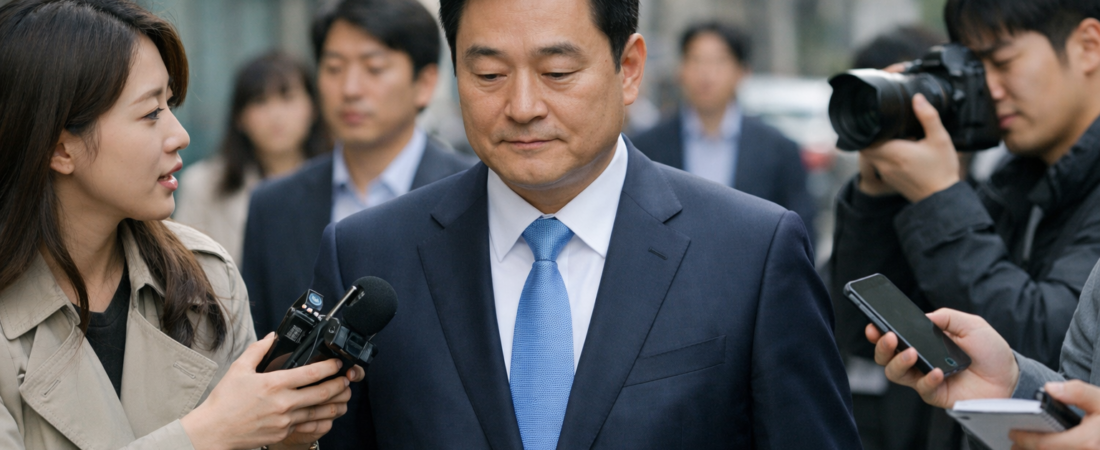
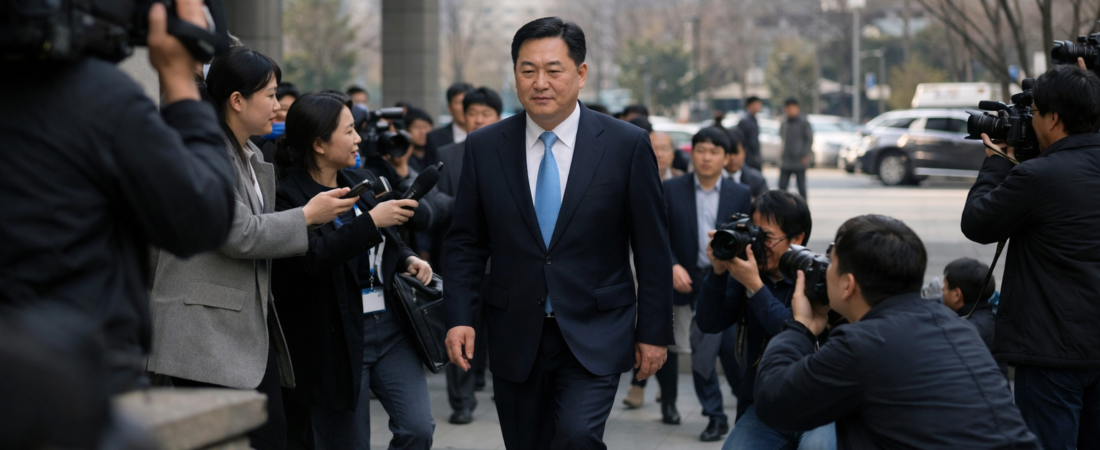
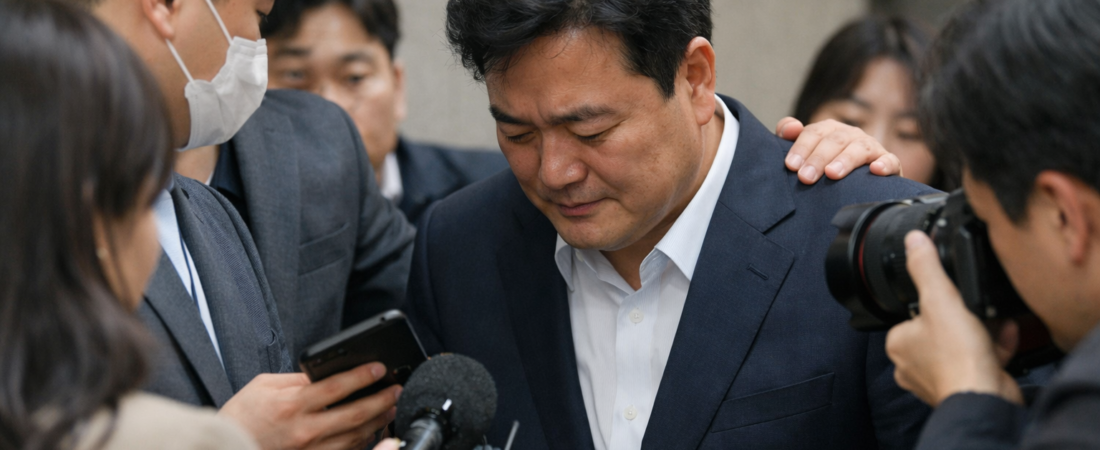
AI-Generated Photorealistic Image — All people, scenes, and details in this image are entirely AI-generated and fictional. Not a real photograph of an actual person or event. 이 이미지는 AI로 생성된 가상 이미지입니다.



Leave a Reply