Table of Contents
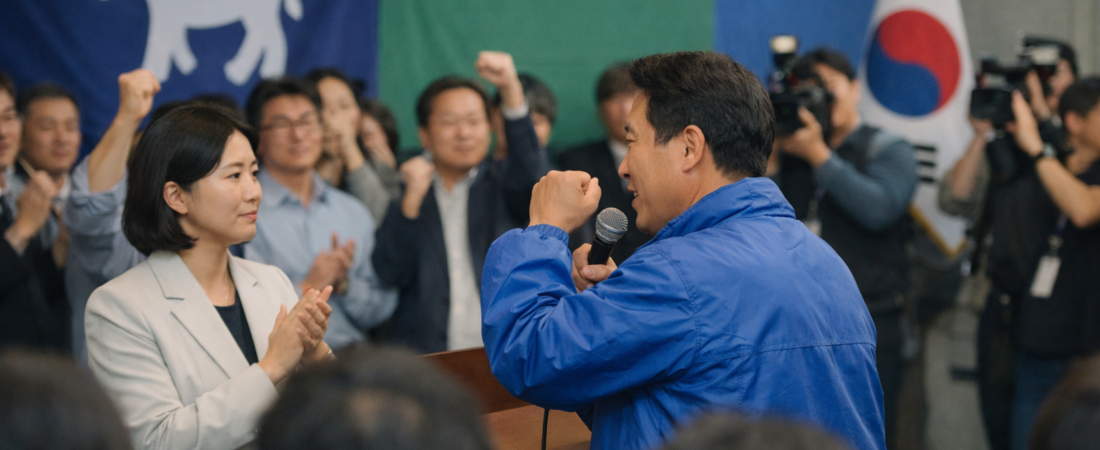
Can three names really decide the direction of Korea’s most powerful political party? That question sits at the heart of the current Democratic Party leadership race. After a tense preliminary round, the field has narrowed sharply, and the real contest is just beginning.
The Democratic Party convention just eliminated most of its candidates in a single sweep. What used to be a crowded field is now a tight three-way race. And for anyone watching Korean politics, this moment matters more than it might first appear.
The Democratic Party Leadership Race Narrows to Three
The Democratic Party has officially trimmed its leadership contest down to three finalists. Former Prime Minister Kim Min-seok, former party leader Jung Chung-rae, and lawmaker Song Young-gil will now compete head-to-head. Out of a much larger pool of hopefuls, only these three survived the preliminary screening.
Why does this matter so much? Because whoever wins will steer the party’s strategy heading into future elections. That includes decisions on policy priorities, coalition building, and how the party positions itself against its rivals.
The Supreme Council race saw a similar squeeze. Fourteen candidates competed for spots on the party’s top decision-making body. That number has now dropped to eight, meaning competition for every remaining seat just got fiercer.
This kind of narrowing isn’t unusual in Korean party politics. Preliminary rounds exist precisely to filter out candidates who lack broad support. But the speed and scale of this cut still surprised some political observers, who expected a closer preliminary field.
Meet the Contenders Shaping the Democratic Party’s Future
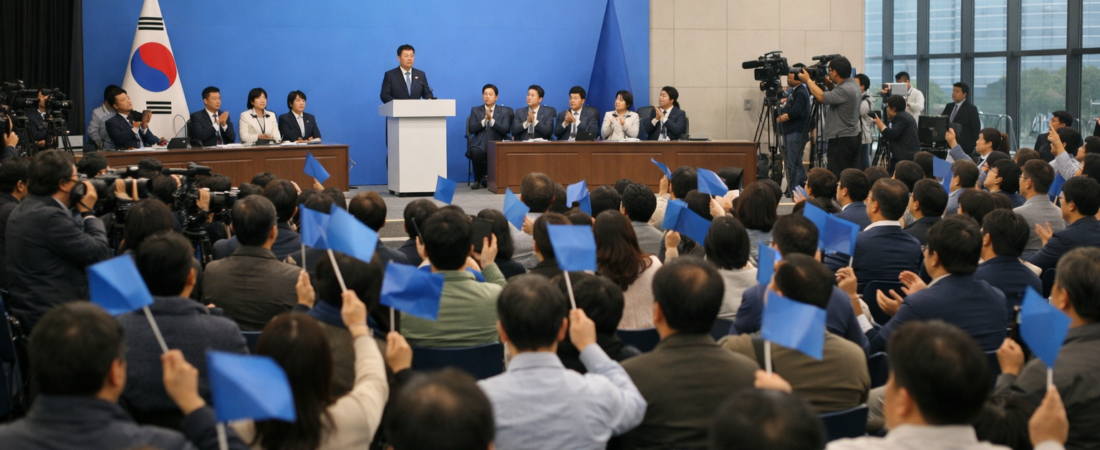
Let’s look at who’s actually left standing. Each of these three finalists brings a distinct political identity to the Democratic Party race, and each represents a different vision for where the party should go next.
Kim Min-seok served as Prime Minister, giving him executive experience few rivals can match. That background lets him frame himself as a steady, experienced hand. Voters weighing stability against reform will likely see him as the safer choice.
Jung Chung-rae previously led the party, so he knows its internal machinery well. Having already held the top job once, he understands both the power and the limits of the position. That familiarity could be an asset—or a liability, depending on how members view his prior tenure.
Song Young-gil rounds out the trio as a sitting lawmaker with his own base of support. His candidacy adds another layer of ideological diversity to the race. Together, these three candidates offer Democratic Party members a genuine choice, not just a formality.
It’s worth asking: does experience always win in party politics? Not necessarily. Korean party members have shown before that they’ll back fresher faces when the mood calls for change, and this race will test that appetite once again.
How the Democratic Party’s Regional Primary System Works
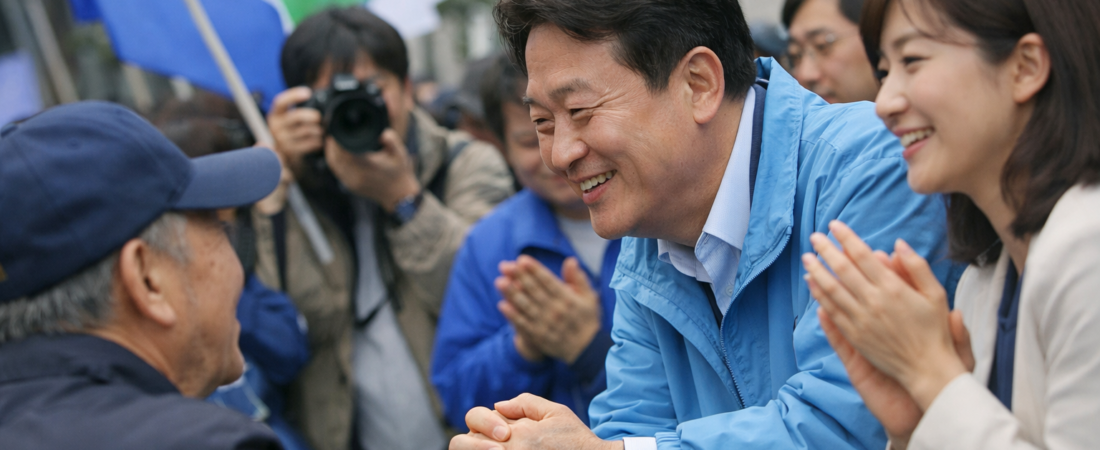
Starting next month, the real voting begins. The Democratic Party will hold its main primary through a regional touring format, meaning members across different provinces cast votes in staggered stages. This system rewards candidates who can build support outside the capital, not just within it.
Why use a regional touring model instead of one single national vote? It forces candidates to campaign broadly, engaging local party chapters instead of only courting Seoul-based media and elites. This structure has deep roots in Korean party tradition, designed to balance regional influence within a party that draws support from every corner of the country.
Each stop in the tour functions almost like its own mini-election. Momentum can shift from region to region, and early wins often shape media narratives for the rest of the race. Candidates who stumble in the first few stops sometimes struggle to recover, even if their national polling looks strong.
For readers unfamiliar with Korean party structures, this might sound complicated. Think of it like a series of state primaries in a presidential race, rather than one single vote. That comparison isn’t perfect, but it captures the staggered, momentum-driven nature of the process.
You can follow more background on Korean party primary structures through outlets like Korea Herald, which regularly covers these internal party mechanics. Understanding this system helps explain why candidates spend so much energy on regional tours instead of just national television appearances.
What This Contest Means for the Democratic Party and Korea
So what happens to the candidates who didn’t make the cut? Interestingly, several of them accepted the result gracefully. Many emphasized generational change and diversity within the Democratic Party, signaling that the conversation about the party’s future extends beyond just this one race.
That reaction says something important about where the party sees itself heading. Calls for generational change aren’t new in Korean politics, but they carry extra weight when they come from candidates who just lost. It suggests real pressure is building beneath the surface, even among senior party figures.
Does this leadership race actually matter to people outside Korea? Absolutely, and here’s why. The Democratic Party holds significant power in the National Assembly, shaping everything from foreign policy positions to economic legislation that affects trade partners worldwide.
Whoever wins this race will influence how the party approaches upcoming elections and legislative battles. That leadership choice ripples outward, affecting everything from US-Korea policy coordination to how Seoul handles regional diplomacy. Global observers of Korean politics should watch this three-way contest closely.
Looking ahead, the regional primary tour will likely reveal which candidate resonates beyond party headquarters. Kim Min-seok’s executive experience, Jung Chung-rae’s institutional knowledge, and Song Young-gil’s independent base each offer a different bet on the party’s direction. The Democratic Party membership now holds that decision in their hands.
What do you think about the Democratic Party’s approach to choosing its next leader through this regional touring system? Does experience matter more than fresh energy in a moment like this?
AI-Generated Photorealistic Image — All people, scenes, and details in this image are entirely AI-generated and fictional. Not a real photograph of an actual person or event. 이 이미지는 AI로 생성된 가상 이미지입니다.


Leave a Reply