Table of Contents
A New Safety Rule for Korea’s Tourism Boom
Would you stay in a cozy hanok guesthouse without knowing who covers the bill if something goes wrong? Starting soon, that question gets a clearer answer. Korea’s Ministry of the Interior and Safety just announced that disaster compensation liability insurance will become mandatory for foreign tourist urban guesthouses and hanok stay businesses.
This might sound like a small bureaucratic footnote. It is not.
Thousands of small hosts across Seoul, Jeonju, and beyond now fall under a stricter safety net. Disaster compensation liability insurance has existed for years in Korea, but it rarely applied to these specific tourism categories. That gap is now closing.
Why K-Culture Growth Changed the Insurance Picture
K-pop, K-dramas, and Korean food have pulled millions of curious travelers into the country. Many of them skip big hotels entirely. They want the real thing — a wooden-floored hanok room, a family-run guesthouse near a palace wall.
That demand exploded fast. Faster, honestly, than the regulations meant to protect it.
Foreign tourist urban guesthouses and hanok stay businesses saw a sharp rise in bookings over the past few years. More guests means more risk exposure — fires, structural accidents, unexpected injuries. Yet many of these small operators had no legal requirement to carry disaster compensation liability insurance at all.
The government calls this an “insurance blind spot,” and that phrase captures it well. Picture a beautifully restored 19th-century hanok, all charm and lattice windows, technically operating without a modern safety net underneath it. It is a bit like driving a vintage car with no seatbelt law attached — lovely to look at, risky in practice.
Officials from the Ministry of the Interior and Safety confirmed the policy shift is designed to close exactly this gap. You can read more background on the broader disaster insurance framework through Yonhap News Agency.
What Disaster Compensation Liability Insurance Actually Covers
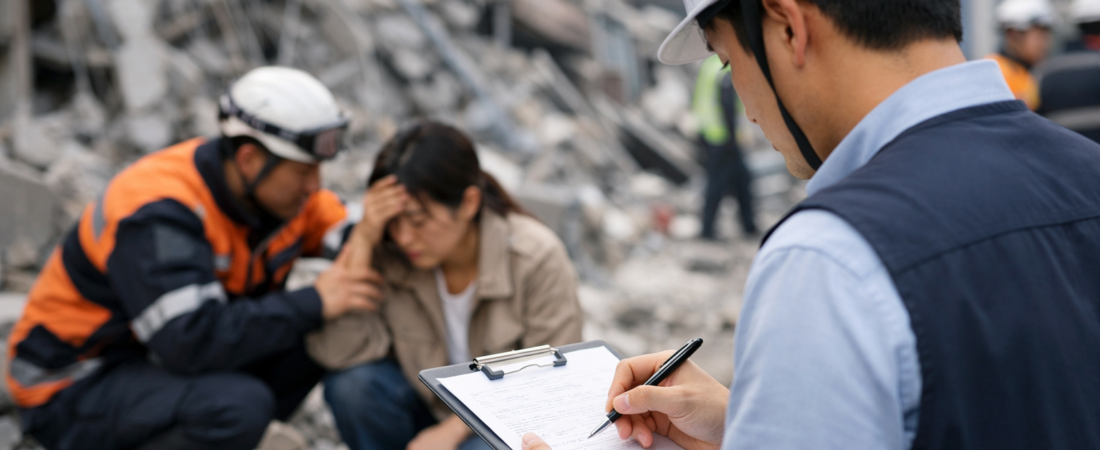
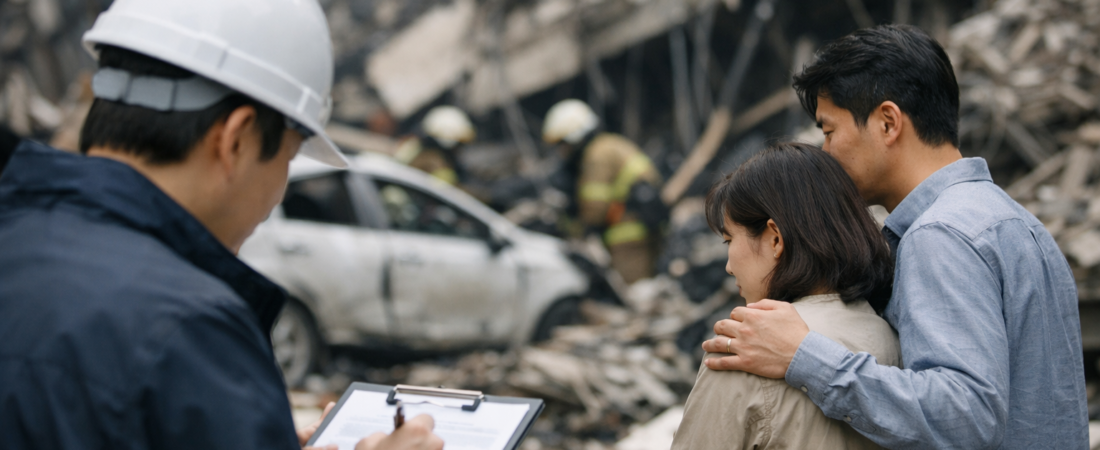
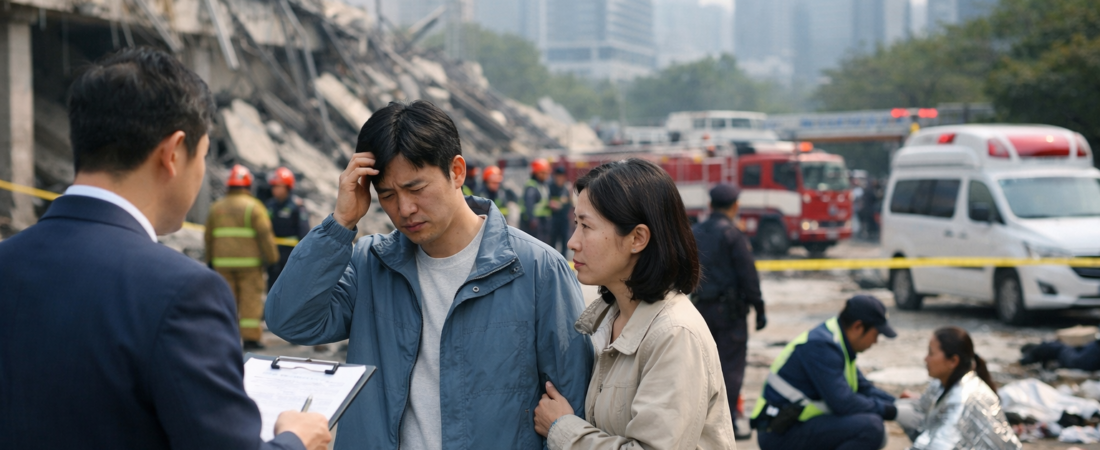
So what does this insurance actually do? In plain terms, disaster compensation liability insurance protects guests who suffer harm from accidents inside a covered business. Think fire damage, building collapse, gas leaks, or other sudden disasters.
Without it, an injured guest might have to fight a small business owner directly for compensation. That process can drag on for months, sometimes with no real payout at the end. With mandatory disaster compensation liability insurance in place, guests get a faster, more predictable path to compensation.
Hosts benefit too, even if it does not always feel that way at first. A single serious accident without insurance coverage could bankrupt a small hanok operator overnight. Disaster compensation liability insurance spreads that risk, so one bad incident does not end a family’s livelihood.
Here is the part worth sitting with: this rule does not target big corporations. It targets the small, personal, often family-run businesses that give Korean tourism its warmth. Urban guesthouses. Hanok stays. The very places K-culture fans specifically seek out.
That raises a fair question. Does adding insurance costs squeeze these small operators too hard, right when demand is finally rewarding them? It is a real tension, and the government will need to watch it closely as enforcement begins.
What This Means for Travelers and Korea’s Future
Look at this from a traveler’s seat for a moment. You book a hanok stay in Jeonju, excited for the tiled roof and warm floor heating called ondol. Should you now feel safer knowing disaster compensation liability insurance stands behind that booking? Largely, yes — and that peace of mind matters more than most guests realize until something actually goes wrong.
For hosts, the calculation is different. Many run these hanok and guesthouse businesses as a second income, or as a passion project tied to family property. Adding a new insurance requirement means new paperwork, new premiums, new administrative pressure on people who may already be stretched thin.
This is the honest tension inside the policy: real protection for guests, real burden for hosts. Neither side disappears just because the other looks good on paper.
But there is a hopeful thread here too. The Ministry of the Interior and Safety has signaled it plans to expand support and guidance for small operators adjusting to the new disaster compensation liability insurance rule, rather than simply penalizing those caught unprepared. Local tourism associations in areas like Jeonju’s hanok village have also started offering group insurance plans, which lower individual costs through shared risk pools.
That is the quieter story underneath the headline. Growth without safeguards eventually breaks something — a building, a business, someone’s trust. But safeguards built with care, alongside the people they affect rather than on top of them, tend to last longer and protect more than rules imposed all at once.
Korea’s tourism boom did not happen because of luck. It happened because real people opened their homes, their hanoks, their small guesthouses to strangers from around the world. Disaster compensation liability insurance is one small, practical way to honor that trust — by making sure a shared dream does not collapse under an unexpected disaster nobody planned for.
Korea’s tourism sector will keep growing as long as K-culture keeps pulling curious travelers in. Disaster compensation liability insurance is just one piece of a larger effort to make that growth sustainable, not just fast. What do you think — should small hosts get more government support to cover these new insurance costs, or is this simply the price of doing business in a booming industry?
AI-Generated Photorealistic Image — All people, scenes, and details in this image are entirely AI-generated and fictional. Not a real photograph of an actual person or event. 이 이미지는 AI로 생성된 가상 이미지입니다.


Leave a Reply