
Table of Contents
Would you hand over your business’s login information to a stranger who simply says they work for a government office? Probably not, on paper. But that is exactly what scammers are counting on right now, and the National Human Rights Commission of Korea just issued a formal warning about it.
According to the Commission, people are showing up at cafes and restaurants claiming to represent the National Human Rights Commission of Korea. They are not. They are using that trusted name to get close to small business owners and their point-of-sale kiosks.
A New Warning From the National Human Rights Commission of Korea
On August 3, 2026, the National Human Rights Commission of Korea confirmed a troubling pattern. Individuals are approaching small business operators — cafes, restaurants, and similar shops — while falsely claiming to be Commission staff.
Their pretext usually involves kiosk-related business. Since kiosks now handle everything from ordering to payment across Korea’s small business sector, they make a convincing cover story.
The Commission has not detailed exactly how much money has been lost so far. But the warning itself signals something important: this is not a one-off incident, it’s a pattern serious enough for a national institution to speak out publicly about.
You can read more background on the Commission’s public advisories through Yonhap News Agency, which first reported this alert.
How the Kiosk Impersonation Scam Actually Works
So how does someone actually pull this off? The scheme relies on borrowed credibility, not technical sophistication.
A person walks into a business, introduces themselves as a National Human Rights Commission of Korea employee, and mentions kiosk-related duties — maybe an “inspection,” a “compliance check,” or a “system update.” Because the name sounds official, most owners don’t think to question it immediately.
From there, the scammer may ask to access the kiosk system directly, request account details, or push the owner toward an unfamiliar payment or verification step. Any of these openings can lead to financial loss, exposed customer data, or unauthorized transactions.
Notice the pattern here: it isn’t really a “kiosk scam.” It’s a trust scam that simply uses a kiosk as the entry point.
The National Human Rights Commission of Korea itself has no operational role in restaurant or cafe kiosk systems. That single fact is the easiest way to spot the fraud — if anyone claims otherwise, that claim alone should raise a red flag.
Why Small Business Owners Are Easy Targets

Why does this kind of scam work so well in Korea specifically? Part of the answer lies in how fast the small business sector has digitized.
Self-service kiosks became standard in Korean cafes and restaurants within just a few years, driven by rising minimum wages and labor shortages. Many owners adopted this technology quickly, but not always with full technical confidence behind it.
That gap between adoption and understanding is exactly where scammers operate. If you don’t fully understand how your own kiosk system works, a confident stranger with an official-sounding title can seem like help rather than a threat.
Add to this the general public respect Koreans hold for institutions like the National Human Rights Commission of Korea, and you get a near-perfect setup for impersonation fraud. The Commission’s name carries authority precisely because it exists to protect ordinary citizens — which makes its misuse here particularly troubling.
This isn’t unique to Korea, either. Similar impersonation scams involving tax offices, utility companies, and consumer protection agencies have surfaced worldwide as small businesses everywhere lean more heavily on digital payment systems.
What You Should Do — And What This Says About Trust in Korea
The National Human Rights Commission of Korea’s advice is direct: verify before you trust. If someone claims to represent the Commission, ask for identification and confirm their identity through an official channel before giving any access or information.
If something feels off, contact the police or reach out to the National Human Rights Commission of Korea directly to confirm. Waiting a few extra minutes to verify costs far less than losing your business’s financial data.
Here’s the harder question worth sitting with: why do scams like this keep finding new ways to succeed, even as awareness campaigns multiply? Partly because trust itself is not a flaw to fix — it’s the very thing that lets small businesses, neighborhoods, and institutions function at all.
Small business owners in Korea already operate under real pressure — thin margins, rising costs, and now the added burden of vetting every stranger who walks through the door with an official-sounding claim. That pressure is real, and it shouldn’t be dismissed as simple carelessness on the owner’s part.
But the same social fabric that makes trust exploitable is also what makes recovery possible. Business associations are sharing scam alerts in group chats, local police are responding faster to kiosk-related fraud reports, and the Commission’s own willingness to publicly name the problem is itself a form of protection. Vigilance and warmth toward strangers don’t have to cancel each other out — they just need a little more verification built into the middle.
Looking ahead, expect more institutions to issue similar warnings as digital tools spread deeper into small business life. The real safeguard won’t be suspicion of everyone who walks in the door — it will be a simple habit of checking credentials before granting access, paired with agencies like the National Human Rights Commission of Korea staying visible and responsive when their name gets misused.
What would you do if someone claiming to represent a government agency walked into your shop tomorrow — would you know how to verify them on the spot?
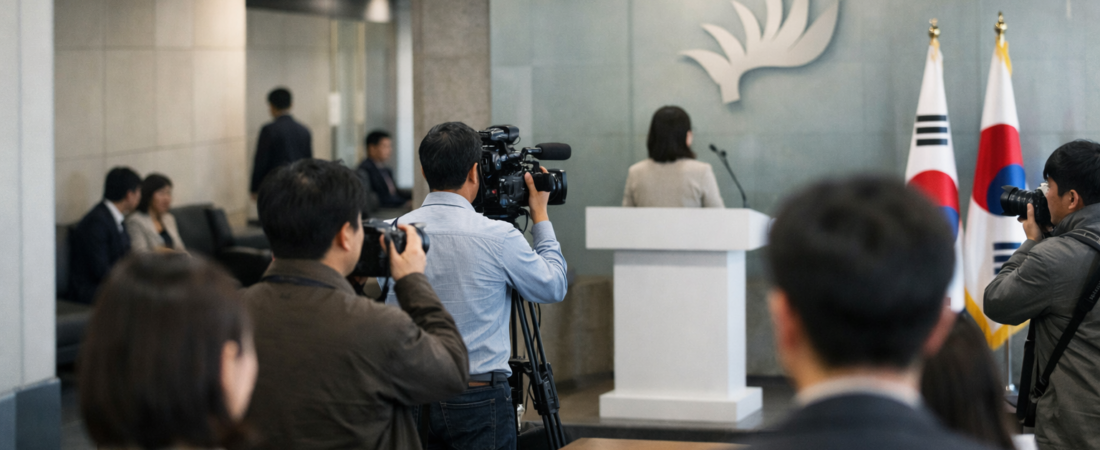
AI-Generated Photorealistic Image — All people, scenes, and details in this image are entirely AI-generated and fictional. Not a real photograph of an actual person or event. 이 이미지는 AI로 생성된 가상 이미지입니다.



Leave a Reply