
Table of Contents
What happens when a country quietly stops talking about land it once called home? For decades, most Koreans barely heard the word Gando in daily conversation. Yet a small group of scholars just decided that silence has gone on long enough.
In December 2004, a new academic body called the Korean Society for Gando Studies launched a mook-style journal titled the Gando Studies Journal. A mook, if you’re unfamiliar with the term, blends a magazine and a book — irregular, focused, and built for deep dives rather than daily headlines. This particular launch was not about entertainment; it was about a forgotten border.
What Is the Gando Issue, and Why Does It Still Matter?
Gando refers to a stretch of land now inside China, near the Tumen and Yalu rivers, historically tied to Korean settlement and Joseon-era claims. Today it sits within China’s Yanbian Korean Autonomous Prefecture. So why should a border dispute from over a century ago concern anyone in 2026?
Because sovereignty questions rarely disappear on their own. The Korean Society for Gando Studies was formed specifically to secure territorial rights over Gando and other northern territories. Its stated mission includes collecting historical records, developing legal arguments, and raising public awareness of Korea’s territorial consciousness.
That last goal deserves attention. Most Koreans today associate national territory debates with Dokdo, not Gando. Yet the society argues Gando represents an equally significant, if far less discussed, piece of unfinished historical business.
A New Journal Enters the Gando Debate
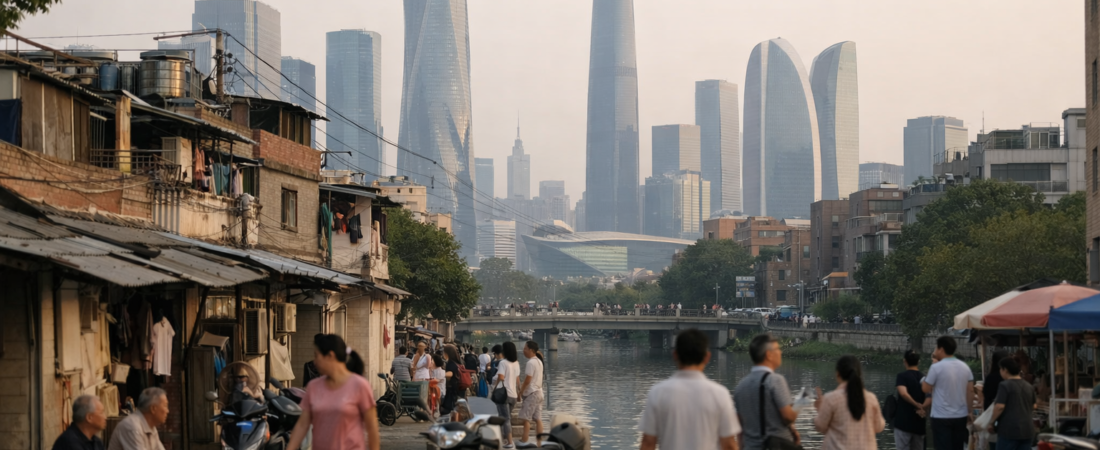
The Gando Studies Journal was published under Shin Hyung-sik, who served as both the society’s president and the journal’s publisher. Launching a mook journal is not a small undertaking for a niche academic organization. It signals a long-term commitment, not a one-time protest.
The founding statement is worth reading closely. It states that the society exists so “our people can correctly understand the Gando issue.” That single sentence carries real weight — it frames Gando not as a fringe topic, but as a matter of national historical literacy.
The statement goes further, calling on politics, media, and academia to jointly investigate the truth behind Gando and push for concrete measures. According to reporting by OhmyNews, the founders placed particular emphasis on the National Assembly, arguing lawmakers must correctly understand the problem before any policy response can follow.
Why single out the National Assembly specifically? Because territorial claims ultimately require political will, not just historical research. Scholars can gather documents and build arguments, but only elected officials can turn those arguments into diplomatic action or formal government position.
The Historical Roots of the Gando Territorial Dispute
To understand why Gando still stirs debate, you need a bit of background. The dispute traces back to unclear boundary markers between Joseon Korea and Qing China, most notably around Baekdusan (Mount Baekdu), a mountain both nations considered sacred.
The most consequential moment came in 1909, with the signing of what is now called the Gando Convention. Japan, acting as Korea’s colonial overseer at the time, negotiated directly with Qing China and effectively ceded Gando to Chinese administration. Korea itself had no seat at that negotiating table.
This is the crux of the modern legal argument. If Korea was not a sovereign, willing party to that 1909 agreement, some scholars argue the convention lacks full legal legitimacy under international law. That argument does not automatically restore territory, but it does keep the historical question legally alive rather than settled.
Consider a rough comparison for readers less familiar with East Asian border history. Imagine a colonial power signing away a neighboring nation’s disputed land while that nation was under occupation and unable to object. Decades later, descendants of that nation ask a simple question: was that agreement ever truly valid?
That is essentially the position the Korean Society for Gando Studies has taken since its founding. The organization does not claim Gando will realistically return to Korean administration soon. Instead, it argues Korea must at minimum preserve the historical record and its legal position, rather than letting the issue fade into complete obscurity.
Why Gando Deserves a Seat in Korea’s National Assembly
Here is the uncomfortable question at the center of this whole issue: does raising Gando now help Korea, or does it simply complicate an already delicate relationship with China? Reasonable people disagree, and that disagreement is exactly why the topic needs structured, informed debate rather than silence.
The society’s founding statement is explicit about where responsibility should land first. It calls on the National Assembly to “correctly understand and recognize” the Gando problem before anything else happens. That is a modest ask on paper, but a meaningful one in practice — awareness tends to precede policy, not the other way around.
Modern Korea has shown it can sustain long-term public interest in territorial issues when the cause is framed clearly. Dokdo advocacy became a well-organized, internationally visible campaign over several decades. Whether Gando follows a similar path likely depends on whether academic groups like this society can translate niche research into broader public understanding.
There’s also a generational angle worth considering. Younger Koreans today learn history increasingly through digital media, not printed mooks distributed to specialist libraries. If Gando awareness is going to spread beyond academic circles, it will likely need to move from journal pages onto platforms younger citizens actually use.
That transition is neither guaranteed nor simple, and the Korean Society for Gando Studies cannot manage it alone. But the founding of a dedicated Gando Studies Journal in 2004 marked a clear starting point — a deliberate attempt to keep a complicated historical claim from disappearing entirely from national memory.
So where does this leave the rest of us, watching from outside Korea’s political system? Territorial memory rarely resolves quickly, and Gando is unlikely to become a headline diplomatic issue overnight. But how a nation chooses to remember, research, and discuss its unresolved borders says a great deal about how seriously it takes its own history.
What do you think — should territorial questions like Gando stay primarily in academic hands, or does an issue like this eventually require full political engagement from Korea’s National Assembly?
AI-Generated Photorealistic Image — All people, scenes, and details in this image are entirely AI-generated and fictional. Not a real photograph of an actual person or event. 이 이미지는 AI로 생성된 가상 이미지입니다.




Leave a Reply