
Table of Contents
What happens to a piece of land when the paperwork disappears? That question sits at the heart of the Gando debate, a territorial issue most Koreans rarely discuss but few have fully forgotten.
A small academic journal called Gandohakbo just reopened that question. Its founding statement, written by the historian Shin Hyung-sik, argues that Korea has never truly settled the Gando issue.
You might be wondering why a region north of the Korean peninsula still stirs debate in 2026. The answer says a lot about how colonial history quietly shapes modern politics.
What Is Gando and Why It Still Matters
Gando refers to a stretch of land along the Tumen and Yalu river basins, now part of northeastern China. For centuries, Koreans farmed there, crossed borders there, and eventually built entire villages there.
During the late Joseon period, the border between Korea and Qing China around this region stayed unclear on purpose and by accident. Neither side fully policed it, so Korean farmers kept moving north in search of better soil.
By the early 20th century, Gando had become something unusual: a Korean cultural zone sitting outside Korean political control. Independence fighters later used this same ambiguity to their advantage.
Groups based in Gando organized resistance against Japanese colonial rule, including forces connected to the famous 1920 battles near Cingshanli. This history is why many Koreans still feel an emotional pull toward the region, even without a legal claim today.
Then came 1909. Japan, acting as Korea’s colonial overlord after the 1905 Protectorate Treaty, signed the Gando Convention with Qing China without Korea’s consent.
That agreement effectively handed administrative control of Gando to China in exchange for railway concessions Japan wanted elsewhere. Korea, stripped of diplomatic sovereignty at the time, had no seat at that table.
Here’s the uncomfortable part. Because Korea was not a sovereign negotiating party in 1909, some scholars argue the Gando Convention itself lacks full legal standing under international law.
If that argument holds, does the modern border quietly rest on a treaty Korea never actually agreed to? This is precisely the puzzle the Korea Gando Society was built to investigate.
The Korea Gando Society and Its New Journal
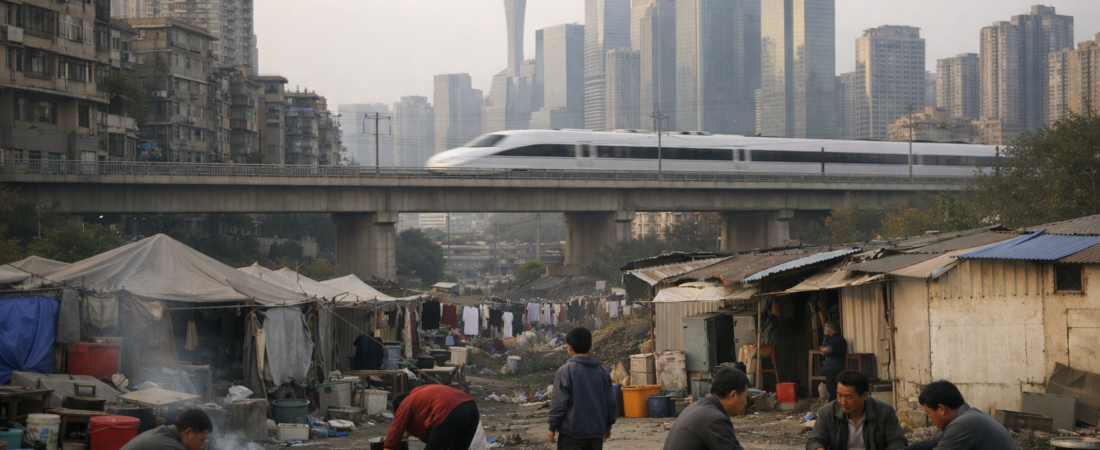
The Korea Gando Society describes its own mission plainly. It exists to collect historical records, develop legal reasoning, and raise public awareness about Gando and Korea’s broader northern territorial claims.
In December 2004, the society launched a mook publication called Gandohakbo. A mook sits somewhere between a magazine and a book, usually irregular in schedule but serious in scholarly ambition.
Shin Hyung-sik, chairman of the society, served as the journal’s publisher. The Korea Gando Society itself stood as the official publishing body behind the project.
Why start a journal instead of simply lobbying lawmakers directly? Because Shin and his colleagues believed the Gando issue first needed a foundation of solid, citable research before any political action could succeed.
You cannot argue a territorial claim on emotion alone. International boundary disputes require documents, maps, treaties, and precedent, and that groundwork takes years of patient archival work.
This is not unlike how other countries handle contested borders. Historical societies, legal scholars, and government archives often work for decades before any formal claim reaches a diplomatic table or an international court.
The Korea Gando Society positioned itself as that quiet, unglamorous first step. Readers interested in following ongoing territorial scholarship can find related reporting through outlets like OhmyNews, which continues to track these historical and political developments.
Reading the Founding Statement Closely
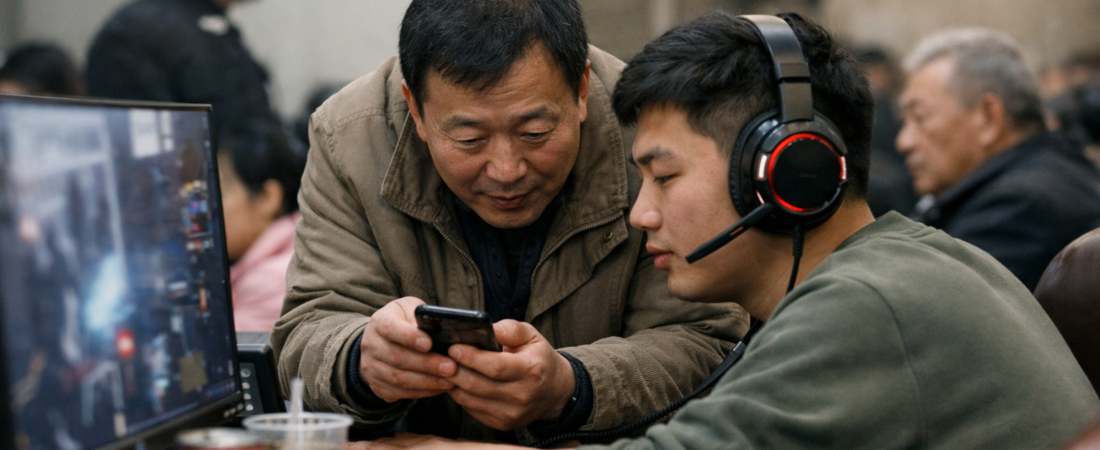
The founding statement of Gandohakbo is short, but its message is direct. Shin writes that the society was created so the Korean people could understand the Gando issue correctly.
Notice that word choice: correctly. It suggests Shin believed public understanding of Gando had, until then, been incomplete or distorted.
That is a fair criticism. Gando rarely appears in standard Korean history textbooks beyond a brief mention, and most citizens learn almost nothing about the 1909 convention or its disputed legality.
The statement then calls on three groups specifically: politics, media, and academia. Each, Shin argues, needs to investigate the true facts of the Gando issue and push for real solutions together.
This is a coordinated appeal, not a lone academic complaint. Shin understood that a territorial claim gains no traction if it stays locked inside university seminar rooms.
Media coverage builds public awareness. Academic research builds legal and historical credibility. Political will, though, is what actually moves a government toward formal action.
Without that third piece, Gando risks becoming a subject only historians discuss at conferences, never a matter states discuss at negotiating tables. Shin’s statement seems written with that exact fear in mind.
Read together, the founding statement functions almost like a mission brief. It is short on rhetoric and long on responsibility, assigning specific homework to specific institutions rather than issuing vague nationalist appeals.
Why the National Assembly Holds the Key to Gando
Here is where the founding statement gets its sharpest edge. Shin singles out the National Assembly, urging lawmakers to correctly understand and recognize the Gando problem.
Why single out the legislature specifically? Because in Korea’s system, only the National Assembly and the executive branch can turn historical research into actual foreign policy or formal diplomatic protest.
A journal can publish findings. A society can hold conferences. But no border question moves forward internationally without political institutions choosing to act on it.
This puts real pressure on lawmakers, and understandably so. Raising the Gando issue formally could affect Korea’s relationship with China, a major trading partner and regional power that generally treats current borders as settled and non-negotiable.
That diplomatic caution explains why Gando rarely surfaces in mainstream political debate, even among lawmakers who privately find the historical arguments compelling. Territorial claims carry economic and security consequences that go far beyond old maps.
Still, Shin’s core argument deserves serious consideration on its own terms. If the 1909 convention truly lacked proper legal authority, then the historical record around Gando remains genuinely unresolved, whatever the practical diplomacy demands today.
Korea has revisited difficult historical claims before, often decades after the original event. The ongoing Dokdo sovereignty position shows that Korea is willing to sustain a long, patient, evidence-based argument on territorial matters when it believes the historical case is strong.
Gando, in that light, is not a fringe obsession. It is part of a broader pattern where Korea insists that colonial-era decisions, made without Korean consent, deserve continued historical scrutiny rather than quiet acceptance.
So where does this leave ordinary readers, inside Korea and beyond it? Probably with more questions than answers, and that may be exactly the point of publishing a journal in the first place.
Territorial history rarely resolves quickly. It moves through slow stages: research, publication, public awareness, and eventually, if the evidence holds up, political attention.
The Korea Gando Society and its journal represent an early stage in that longer process. Whether Gando ever becomes a formal diplomatic issue again depends less on any single mook publication and more on whether Korean institutions choose to keep asking Shin’s original question.
What do you think about Korea’s approach to unresolved historical territories like Gando?
AI-Generated Photorealistic Image — All people, scenes, and details in this image are entirely AI-generated and fictional. Not a real photograph of an actual person or event. 이 이미지는 AI로 생성된 가상 이미지입니다.




Leave a Reply