
Table of Contents
Have you ever heard of a piece of land that Korea lost without ever agreeing to give it up? That land is called Gando, and it sits at the center of one of Korea’s quietest but most persistent territorial questions. A small group of scholars believes Korea has forgotten too much about it, and they built an entire journal to fix that.
In December 2004, a mook — a hybrid between a magazine and a book — called the Gando Hakbo was born. It came from the Korean Society for Gando Studies, a research group with one clear mission. They wanted to collect evidence, build legal arguments, and remind ordinary citizens why Gando still matters.
What Is the Gando Territorial Dispute?
Gando refers to a historically contested region located in what is now northeastern China. It stretches across parts of present-day Yanbian, near the Tumen and Yalu rivers, close to the border Korea shares with China today. For centuries, Koreans farmed, settled, and lived in this area, believing it belonged to their ancestral land.
The trouble started in 1909. Japan, which had already stripped Korea of its diplomatic rights through the 1905 Eulsa Treaty, signed something called the Gando Convention with Qing China. That agreement handed the territory to China in exchange for railway construction rights elsewhere in Manchuria.
Here’s the problem with that deal. Korea never signed it, never agreed to it, and had no real voice in the negotiation. So can a treaty made by an occupying power over someone else’s land ever be considered legitimate?
Many Korean historians say no. The Korean Society for Gando Studies takes that argument seriously, treating the 1909 convention as a colonial-era imposition rather than a valid international agreement. This is exactly the kind of historical wound the Gando Hakbo was created to examine.
Why a Journal Launched to Study Gando in 2004

Founding a journal is not a small gesture. It signals that a topic deserves sustained, serious attention rather than passing outrage. The Korean Society for Gando Studies chose this path because scattered public interest in Gando was not enough.
The society’s founding purpose, according to their own mission statement, was threefold. First, gather historical and legal materials related to Gando and Korea’s northern territories. Second, develop logical arguments and long-term strategy for asserting sovereignty claims.
Third, and perhaps most important, raise ordinary citizens’ awareness of territorial identity. Shin Hyung-sik, then president of the society, served as publisher of the inaugural issue. The Korean Society for Gando Studies itself stood as the publishing organization behind the launch.
Their founding statement made the goal explicit. Korean citizens needed to understand the Gando issue correctly, not through vague nationalist emotion but through documented fact. That distinction matters more than it might seem at first glance.
Emotional nationalism fades quickly when it lacks evidence behind it. A journal, by contrast, builds a paper trail — sources, maps, treaty analysis, and historical records — that can outlast any single news cycle. You could call it a slow-burning form of territorial advocacy, one footnote at a time.
This approach reflects something distinctly Korean about how historical grievances get processed. Rather than only protesting in the streets, scholars often retreat into archives first. They believe that a well-documented claim carries more weight decades later than a loud but undocumented one ever could.
The Political Stakes: National Assembly and Public Awareness
Reading materials is one thing. Turning research into policy is another challenge entirely, and the founding statement of the Gando Hakbo does not shy away from that gap. It calls directly on Korea’s political world, press, and academia to work together.
Specifically, the statement urges these three groups to establish the facts of the Gando issue and push for concrete countermeasures. That’s a bold ask for a niche academic journal to make. But why aim so high right from the first issue?
Because territorial claims rarely move forward through scholarship alone. They need lawmakers willing to raise the issue publicly, journalists willing to cover it accurately, and researchers willing to keep the evidence current. The founding statement singles out the National Assembly in particular, urging lawmakers to correctly understand the problem.
That is a pointed message. It suggests the society believed, back in 2004, that even Korea’s own elected representatives lacked a clear grasp of the Gando issue. If lawmakers themselves needed education on this topic, how much of the general public truly understood it either?
This tension between academic knowledge and political action shows up again and again in territorial disputes worldwide. Scholars build the case; politicians decide whether and how to use it. Readers interested in the original founding statement and its full historical framing can find further reporting through OhmyNews, the outlet that published this piece.
The gap between research and policy is not unique to Korea, of course. Many countries with unresolved border histories — from Central Europe to South Asia — face the same lag between what historians document and what governments are willing to act on. Gando simply represents Korea’s version of that universal political puzzle.
What This Means for Korea’s Territorial Debate Today
More than two decades have passed since this founding statement was written. Has the situation actually changed much since then? In some ways, awareness of Gando has grown among younger Koreans through documentaries, textbooks, and online discussion.
In other ways, the core problem remains exactly the same. Gando still sits inside Chinese territory, the 1909 convention has never been formally revisited by any government, and the National Assembly has never made Gando a sustained legislative priority. The Korean Society for Gando Studies continues its work largely outside the political spotlight.
This slow pace does not mean the effort is wasted. Territorial and historical claims often take generations to resolve, if they resolve at all. Consider how long Korea has pursued its position on other disputed maritime and border issues in the region — decades of steady documentation eventually shape how future negotiations unfold.
What made this founding statement notable was its insistence on precision over passion. It did not demand immediate return of the territory. Instead, it demanded that Koreans first understand the facts correctly, then let political and academic institutions build a coordinated response from there.
That sequencing — knowledge first, action second — offers a useful lesson beyond this one issue. Territorial disputes fueled only by emotion tend to burn bright and fade fast. Disputes backed by decades of careful scholarship, like the kind the Gando Hakbo aimed to produce, tend to remain credible long after the initial headlines disappear.
Korea’s relationship with its northern territorial history is still being written, quite literally, one journal issue at a time. Whether future governments ever revisit the legal status of Gando remains uncertain. But the groundwork laid by researchers and publications like this one ensures the conversation cannot simply be forgotten.
What do you think — should Korea’s National Assembly take a more active role in addressing historical territorial claims like Gando today?
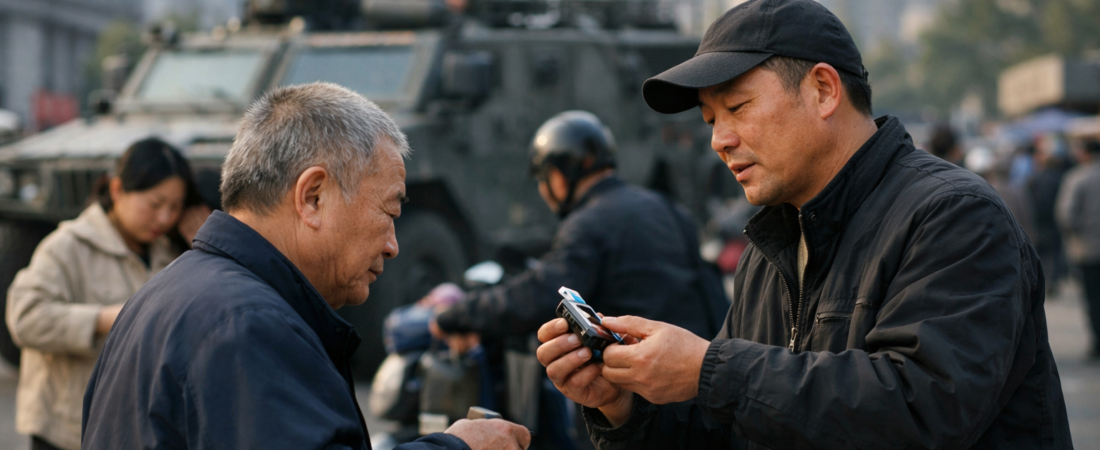
AI-Generated Photorealistic Image — All people, scenes, and details in this image are entirely AI-generated and fictional. Not a real photograph of an actual person or event. 이 이미지는 AI로 생성된 가상 이미지입니다.




Leave a Reply