Table of Contents
An employee in his 30s handling finances for Gimpo FC has been arrested for embezzling roughly 5.8 billion won. Police say he used the stolen funds to buy real estate and luxury cars. Gimpo FC, a K League 2 club, is now under scrutiny as investigators dig deeper.
Can you imagine trusting someone with your club’s bank account, only to find millions missing? That’s exactly what happened at Gimpo FC. This case has shaken fans and raised hard questions about how much oversight small clubs actually have.
What Happened at Gimpo FC
Gimpo FC plays in K League 2, South Korea’s second-tier professional football division. The club is based in Gimpo, a city near Seoul known for its growing population and expanding infrastructure. Football here matters, both for local pride and civic identity.
According to Yonhap News Agency, the accused worked as the club’s accounting staff member. He allegedly diverted about 5.8 billion won over an extended period. Police confirmed his arrest this week and are still investigating the full scope of the damage.
What makes this case sting even more is the amount involved. Fifty-eight hundred million won isn’t pocket change — it’s enough to buy multiple properties outright. Investigators say he used the money for real estate purchases and high-end vehicles, suggesting a pattern of deliberate, sustained fraud rather than a single lapse in judgment.
How the Embezzlement Unfolded
Details are still emerging, but police believe the scheme ran for a significant stretch before anyone noticed. That raises an obvious question: how did nobody catch this sooner? Financial controls at smaller sports organizations often lag behind bigger corporations, and Gimpo FC may be a case study in that gap.
Investigators are now tracing exactly how the funds moved from club accounts into personal purchases. This kind of paper trail can take months to fully untangle, especially when real estate and vehicle registrations are involved. Police have said additional victims or damages could still surface as the probe continues.
You might wonder whether this was a one-person operation or something bigger. Right now, authorities haven’t named any accomplices. But the scale of the embezzlement — spanning years, not weeks — makes many observers ask whether internal checks simply failed to function at all.
Financial Oversight in Korean Football
Korean professional football has grown rapidly over the past two decades, but administrative infrastructure hasn’t always kept pace. Many K League 2 clubs operate with lean staff and limited financial auditing compared to clubs in Europe or even Korea’s top-tier K League 1. This isn’t unique to Gimpo FC.
Smaller clubs often rely on a handful of employees to manage budgets that can reach into the billions of won annually, covering player salaries, stadium operations, and youth development programs. When one person controls too much without a second set of eyes, opportunities for fraud multiply. It’s a structural weakness, not just a personal failing.
For context, similar financial scandals have surfaced at other semi-professional Korean sports organizations in recent years, though rarely at this scale. According to Yonhap News Agency, the Korea Football Association has periodically pushed for stronger financial reporting standards among member clubs. Whether those standards get enforced consistently is another matter entirely.
Sports governance experts have long argued that Korean football needs mandatory third-party audits, not just self-reporting. This case may finally give that argument more weight. Change often comes only after a costly lesson, and unfortunately, this lesson cost Gimpo FC dearly.
What This Means for Gimpo FC’s Future
Gimpo FC now faces the difficult task of rebuilding trust with fans, sponsors, and the league itself. Financial recovery will take time, and reputational damage tends to linger longer than any single legal case. The club will likely need to overhaul its internal financial procedures immediately.
It’s worth pausing here. Institutions built on community trust — a hometown club, a local bank, even a neighborhood association — can be quietly hollowed out by one person’s greed. That’s the discouraging part of this story, and it deserves honest acknowledgment rather than easy dismissal.
But the same community spirit that made Gimpo FC matter to its fans is also what tends to drive recovery after scandals like this. Clubs that face fraud head-on, tighten their systems, and communicate openly with supporters often emerge more resilient than before. Trust, once broken, can still be rebuilt — slowly, and through visible, consistent accountability rather than promises alone.
Investigators are continuing to examine the full financial trail, and more details about Gimpo FC’s internal review process will likely surface in coming weeks. For fans and sponsors, patience and transparency will matter just as much as the final legal outcome. This case, in many ways, is a test of whether small clubs can modernize their financial safeguards before the next crisis hits.
Football clubs everywhere run on more than talent and tactics — they run on trust between staff, fans, and the institutions that support them. Gimpo FC’s case is a reminder that even passionate, well-supported clubs aren’t immune to internal failure. What do you think clubs like Gimpo FC should do differently to prevent this kind of financial abuse in the future?
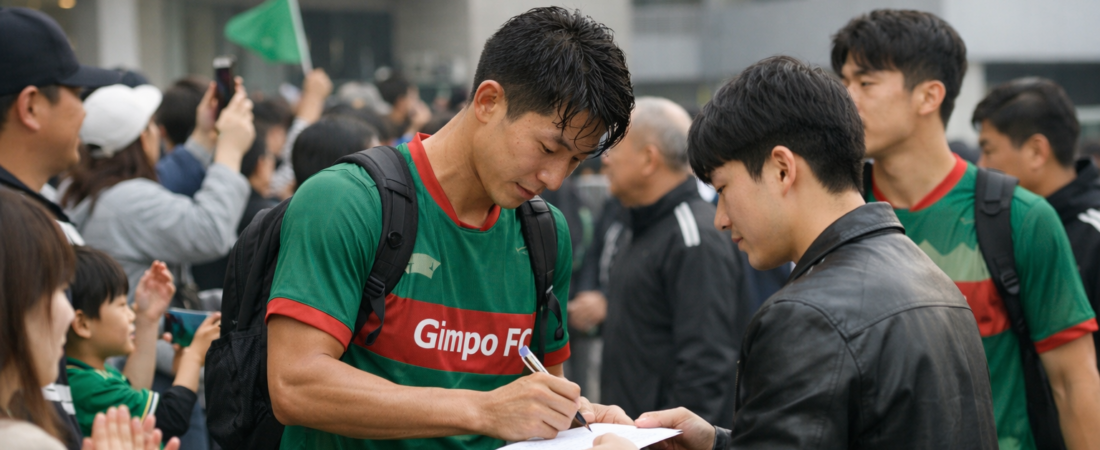
AI-Generated Photorealistic Image — All people, scenes, and details in this image are entirely AI-generated and fictional. Not a real photograph of an actual person or event. 이 이미지는 AI로 생성된 가상 이미지입니다.




Leave a Reply