Table of Contents
Korea and Indonesia have signed a formal agreement to streamline halal certification for Korean food and cosmetic exports. Food and Drug Safety Minister Oh Yu-kyoung signed the memorandum of understanding with Indonesia’s Halal Product Assurance Organizing Agency (BPJPH). The goal is simple: keep Korean products on Indonesian shelves as new religious compliance rules take effect.
Why does one signature matter so much to your favorite Korean snacks and skincare brands? Because without halal certification, they simply cannot enter Indonesia’s massive consumer market anymore.
That market happens to be the largest Muslim-majority nation on earth. Let’s break down what this deal actually does, and why it matters for anyone who follows Korea’s global export story.
What Halal Certification Means for Korean Exporters
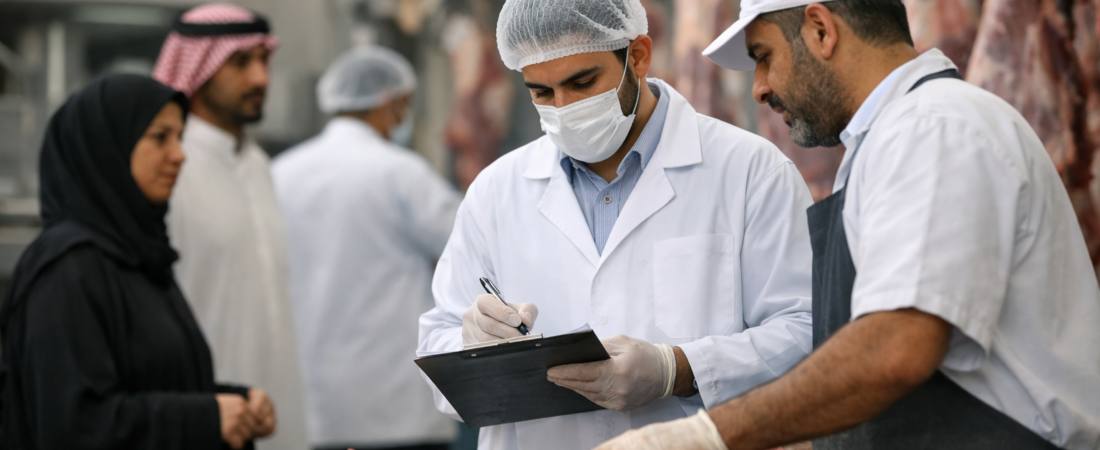
Halal certification confirms that a product meets Islamic dietary and lifestyle standards. For food, this usually means no pork, no alcohol, and specific slaughtering and processing methods. For cosmetics, it means checking ingredients like collagen, alcohol-based preservatives, or animal-derived compounds.
You might think of it as a quality seal, but it’s really a trust signal. Muslim consumers rely on that seal to make daily purchasing decisions, from instant noodles to face cream.
For Korean companies, earning this seal has become a business necessity, not an optional extra. Global halal food and cosmetics demand keeps climbing, driven by populations across Southeast Asia, the Middle East, and beyond.
Korea’s K-food and K-beauty industries have grown into major export engines over the past decade. Instant noodles, seaweed snacks, sheet masks, and cushion foundations now travel far beyond Seoul’s convenience stores.
But growth brings new gatekeepers. Halal certification has quietly become one of the biggest gatekeepers standing between Korean brands and hundreds of millions of potential customers.
Why Indonesia’s Rules Matter So Much
Indonesia is home to over 230 million Muslims, making it the single largest halal consumer base in the world. That number alone should tell you why Korean regulators moved so quickly on this issue.
Indonesia has been tightening its halal certification requirements for imported food, beverage, and cosmetic products. Under the updated framework, products lacking proper certification risk being pulled from shelves or blocked at customs entirely.
For Korean small and medium-sized exporters, that risk is not abstract. Many of them lack the resources to navigate Indonesia’s certification bureaucracy alone, and delays can mean lost contracts or spoiled shipments.
This is where government-to-government cooperation becomes essential. A streamlined halal certification pathway reduces paperwork, shortens approval times, and gives smaller companies a fighting chance against larger multinational competitors.
Indonesia isn’t acting alone here, either. Malaysia, Brunei, and parts of the Middle East have all strengthened halal compliance rules in recent years, signaling a broader regional trend that Korean exporters need to watch closely.
Inside the Korea-Indonesia Halal Certification Agreement
The memorandum was signed during the fifth Halal 20 Summit held in Depok, Indonesia. This event brings together halal industry regulators, business leaders, and government officials from around the world.
Signing there was not accidental. It signals that Korea wants a visible seat at the table where global halal standards are shaped, not just a passive compliance role.
The agreement builds directly on a bilateral summit held earlier this year, where Korea and Indonesia pledged expanded market access under their Special Strategic Partnership. Think of that summit as the handshake, and this halal certification deal as the actual contract.
Under the new framework, Korean and Indonesian regulators will work together to recognize each other’s certification processes more efficiently. That means less duplication, fewer delays, and clearer guidance for Korean companies preparing export documentation.
For readers unfamiliar with export bureaucracy, this might sound dry. But for a mid-sized Korean cosmetics company shipping thousands of units, a faster certification process can mean the difference between profit and a warehouse full of unsold inventory.
You can find more background on Indonesia’s regulatory shift through Korea Times, which has tracked the halal certification issue closely.
What This Means for the Future of K-Food and K-Beauty
So where does this leave Korean brands looking ahead? Halal certification is quickly becoming as standard as nutrition labeling or ingredient lists.
Companies that treat it as a core part of product development, rather than an afterthought, will likely gain a real competitive edge. Those that delay may find themselves scrambling later, and in export markets, scrambling rarely ends well.
There’s a quieter lesson here too, one that goes beyond spreadsheets and trade statistics. Global commerce increasingly asks companies to respect belief systems different from their own, and that respect takes real effort, not just marketing language.
Korea’s food and cosmetics industries built their global reputation on innovation and speed, and that same adaptability is now being tested in a different arena. It would be easy to view halal certification as pure red tape, a bureaucratic hurdle imposed from outside.
But there’s another way to see it: as an invitation to build genuine trust with communities Korean companies once knew little about. That kind of trust-building is slow, sometimes frustrating, and rarely gets headlines, yet it reflects something worth honoring in how nations do business with each other.
None of this erases the real difficulty smaller exporters face, since compliance costs money and time they may not have. Still, government support like this agreement shows a path where cooperation, not just competition, can carry Korean products further than they could travel alone.
Halal certification will likely keep expanding into new categories as global consumer demand grows more diverse. K-beauty and K-food companies that build compliance into their culture now will be better prepared for whatever new markets open next.
What do you think about Korea’s growing effort to meet halal certification standards for global markets?
AI-Generated Photorealistic Image — All people, scenes, and details in this image are entirely AI-generated and fictional. Not a real photograph of an actual person or event. 이 이미지는 AI로 생성된 가상 이미지입니다.



Leave a Reply