Table of Contents
Attendance at Hwangsan Park’s water play area in Yangsan, South Gyeongsang Province, has fallen for three straight years, even during this year’s record-breaking heat wave. Local residents have filed complaints about poor management and aging facilities. City officials now face pressure to explain why a popular summer spot is losing visitors despite scorching temperatures.
As of this week, the heat wave has become the biggest story in Korean summer news, with cities scrambling to open cooling centers and extend water park hours. Yet Hwangsan Park tells a different story. Why would a public water facility lose visitors during the very conditions that should draw crowds?
Yangsan’s Water Park Faces a Puzzling Decline
Hwangsan Park sits along the Nakdong River in Yangsan, a mid-sized city just north of Busan. For years, its water play area has served as a free summer escape for local families. Kids splash in shallow pools while parents relax nearby, avoiding the cost of private water parks.
This year’s heat wave broke national records, with many cities reporting the hottest days in decades. You would expect Hwangsan Park to overflow with visitors seeking relief. Instead, attendance dropped for the third consecutive year, according to local officials cited in the original report.
That gap between expectation and reality is exactly what makes this story worth examining. Something structural seems to be pushing people away, even when the weather practically begs them to come. Understanding what’s happening here tells us something bigger about how Korean cities manage aging public infrastructure.
Why Hwangsan Park Attendance Keeps Dropping
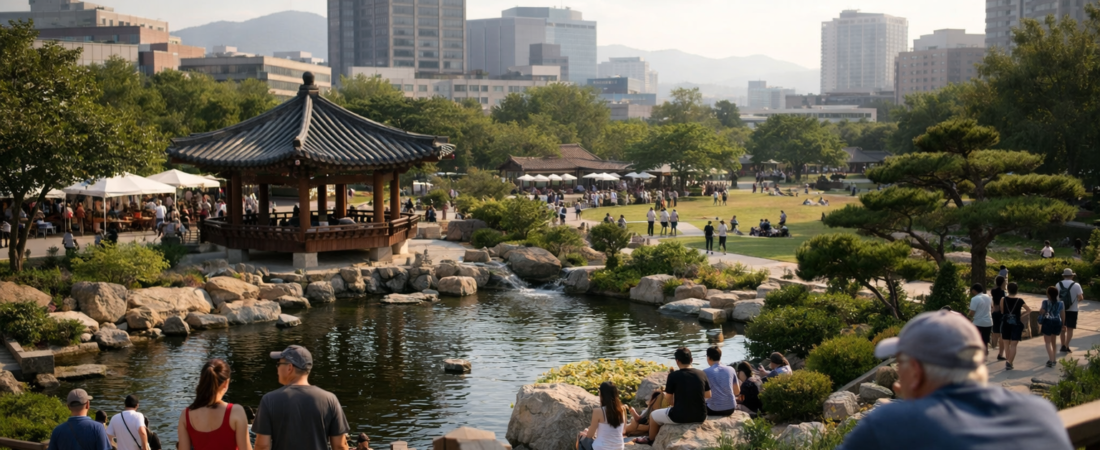
Local residents point to two main issues: facility upkeep and service quality. Complaints filed with the city describe worn-out equipment, unclear operating hours, and insufficient staff during peak visiting times. For a facility built to handle summer crowds, these gaps matter more than they might elsewhere.
Think about it this way: if you drove your family to a water park expecting fun, only to find broken slides or confusing signage, would you come back next year? Probably not. Word travels fast in a mid-sized city like Yangsan, and disappointed visitors often share their experience with neighbors and friends.
There’s also a competition factor. Private water parks and air-conditioned indoor pools have expanded across South Gyeongsang Province in recent years. Families with the means to pay often choose comfort and reliability over a free but aging public option.
According to Yonhap News Agency, city officials acknowledged the complaints but have not yet detailed a concrete improvement plan. That silence itself raises a question. Is this a budget problem, a management problem, or both?
What Local Complaints Reveal About Public Facilities
Public water facilities like Hwangsan Park exist for a specific reason. They give lower and middle-income families a way to enjoy summer without paying private park fees. When these facilities decline, the people most affected are often those with fewer alternatives.
Here’s the honest part. Many Korean cities built public recreational facilities decades ago during periods of rapid growth, but maintenance budgets haven’t always kept pace with rising public expectations. That’s a real gap, and pretending otherwise helps no one.
But here’s the hopeful part too. Several Korean municipalities have successfully renovated aging public facilities through public-private partnerships and citizen feedback programs. Busan’s own waterfront parks, for example, underwent major upgrades after sustained community pressure led to dedicated renovation funding.
Hwangsan Park could follow a similar path if Yangsan’s city government treats these complaints as useful data rather than background noise. Public frustration, when channeled well, has pushed real change in other Korean cities before. The question is whether Yangsan will move quickly enough before another summer passes.
The Road Ahead for Hwangsan Park
Fixing Hwangsan Park won’t require reinventing the wheel. Basic steps like repairing worn equipment, extending staffed hours during heat waves, and improving communication about operating schedules would likely address most complaints. Cities across Korea have used exactly these kinds of fixes to reverse declining attendance elsewhere.
Korean summers are getting hotter almost every year now, so demand for accessible cooling spaces will only grow (someone should probably start counting exactly how many degrees hotter, because it feels like a new record every August). That makes reliable public infrastructure more important, not less. A well-maintained Hwangsan Park isn’t just a nice-to-have; it’s becoming a public health necessity for vulnerable residents during extreme heat.
What does a declining local water park in a mid-sized Korean city have to do with you, wherever you’re reading this from? It’s a small window into how any society balances public investment against private convenience. The families choosing between a free but tired public facility and a costly private alternative are making a decision playing out in cities worldwide, from aging swimming pools in the American Midwest to community parks across Europe.
There’s something quietly telling about how a community treats its shared spaces when nobody’s watching closely. Neglect creeps in slowly, complaint by complaint, until a once-beloved gathering spot feels forgotten. Yet the same community voices raising these concerns are also the ones capable of demanding and achieving repair, as other Korean cities have shown.
That tension between decline and renewal isn’t unique to Yangsan. It shows up wherever people share public resources and wherever budgets compete with need. The outcome usually depends less on the size of the problem and more on whether enough people keep asking the right questions out loud.
Hwangsan Park’s story is still being written. Will Yangsan invest in the repairs residents are asking for, or will attendance keep falling for a fourth year? What do you think cities should prioritize when balancing free public recreation against tightening budgets?
AI-Generated Photorealistic Image — All people, scenes, and details in this image are entirely AI-generated and fictional. Not a real photograph of an actual person or event. 이 이미지는 AI로 생성된 가상 이미지입니다.
Leave a Reply