Table of Contents
Korea’s national skills team left Incheon on the morning of September 19 for Shanghai. They are chasing a 20th overall title at the 48th International Skills Olympics. No country has ever come close to that record.
Twenty championships. Let that number sit for a second.
That is not luck. That is decades of quiet, disciplined investment in vocational training that most outsiders barely notice. Have you ever wondered why Korean-made electronics, cars, and construction projects feel so precisely engineered? A big part of the answer boards a plane every two years, heads to a host city, and competes for national pride.
Korea’s Team Departs for Shanghai
The Korean delegation departed Incheon International Airport early Saturday morning, bound for the 48th International Skills Olympics in Shanghai. This biennial event, officially known as WorldSkills Competition, gathers young technicians from dozens of countries. They compete head-to-head in trades ranging from welding to mobile robotics.
Korea is not a newcomer here. The country has claimed the overall championship 19 times since it began competing decades ago. This year’s squad hopes to make it 20 — a milestone number that would cement Korea’s status as the most dominant nation in International Skills Olympics history.
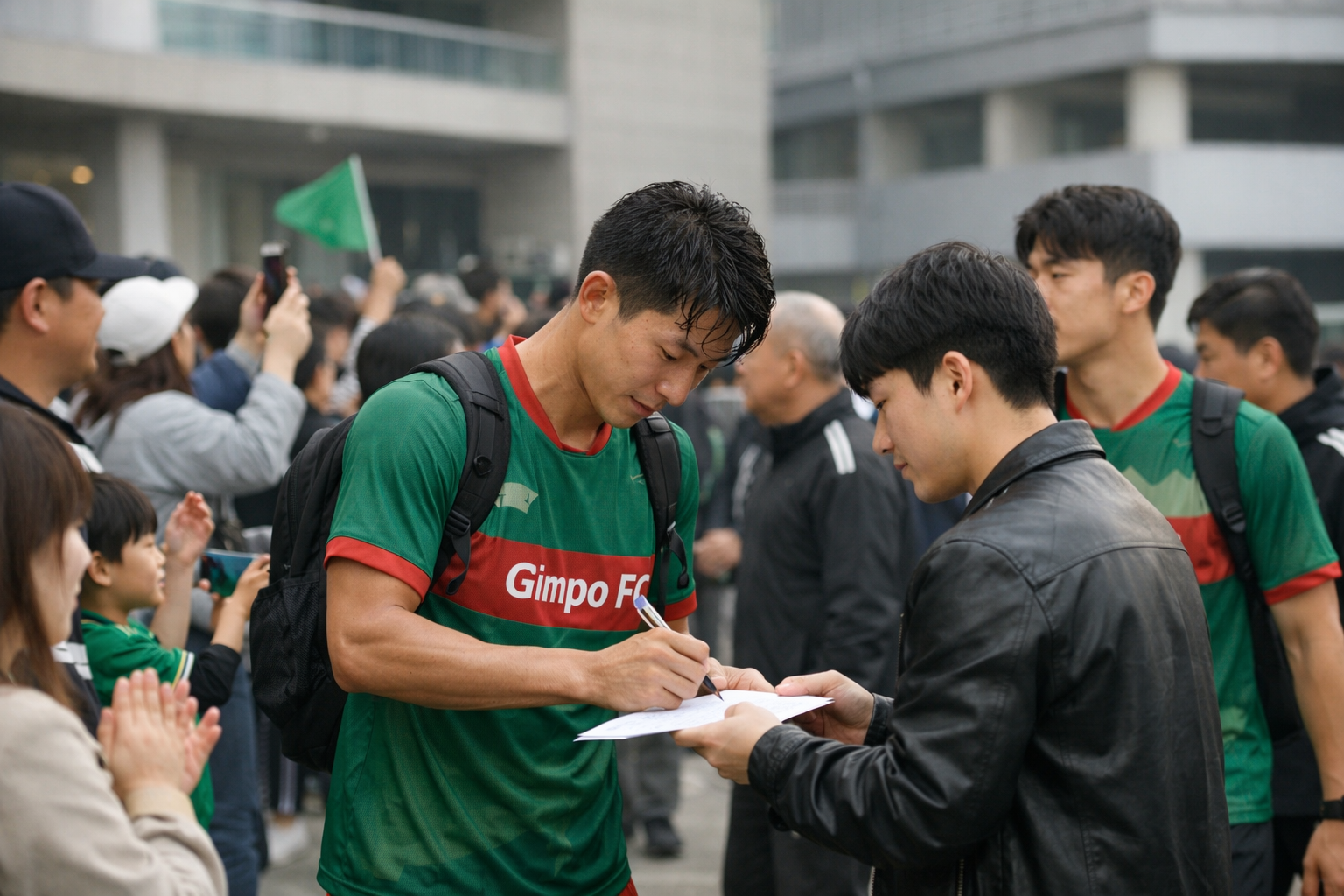
Reporter Han Hye-won covered the send-off ceremony, where officials and family members gathered to wish the athletes well. The mood, by most accounts, mixed nervous energy with quiet confidence. That combination tends to define Korean competitive culture — serious preparation paired with real emotional stakes.
You might picture skills competitions as low-key trade fairs. Think again. These events carry Olympic-level ceremony, national anthems, and medal podiums, just with soldering irons instead of javelins.
What Is the WorldSkills Competition?
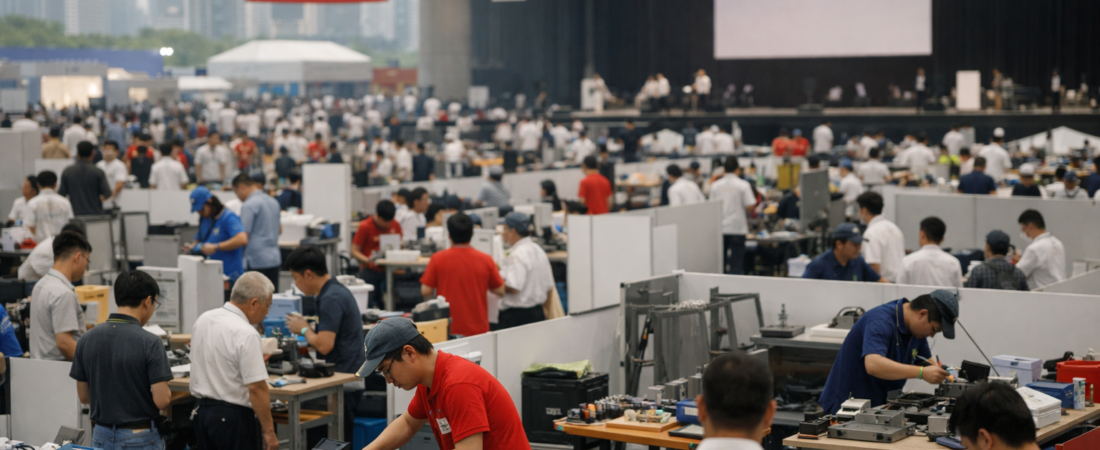
The International Skills Olympics is not a household name for most global readers. Still, it functions much like the Olympic Games, just for hands-on trades instead of track and field. Competitors, typically under age 23, spend years training for a single multi-day event.
Categories span dozens of fields: cabinetmaking, hairdressing, industrial mechanics, IT network systems, and increasingly, robotics and renewable energy technologies. Each competitor works under strict time limits, judged by international panels using standardized criteria. There is no room for shortcuts — precision decides everything.
Why does this matter beyond bragging rights? Because these skills directly translate into manufacturing quality, infrastructure safety, and technological competitiveness back home. A country that trains disciplined welders and technicians also builds safer bridges and more reliable factories.
You can read more background on the competition’s history and scope through Yonhap News Agency. The organization behind the event, WorldSkills International, was founded in the aftermath of postwar Europe. Spain and other nations wanted to rebuild economies through skilled labor — a mission that still resonates today.
Why Korea Keeps Winning the International Skills Olympics
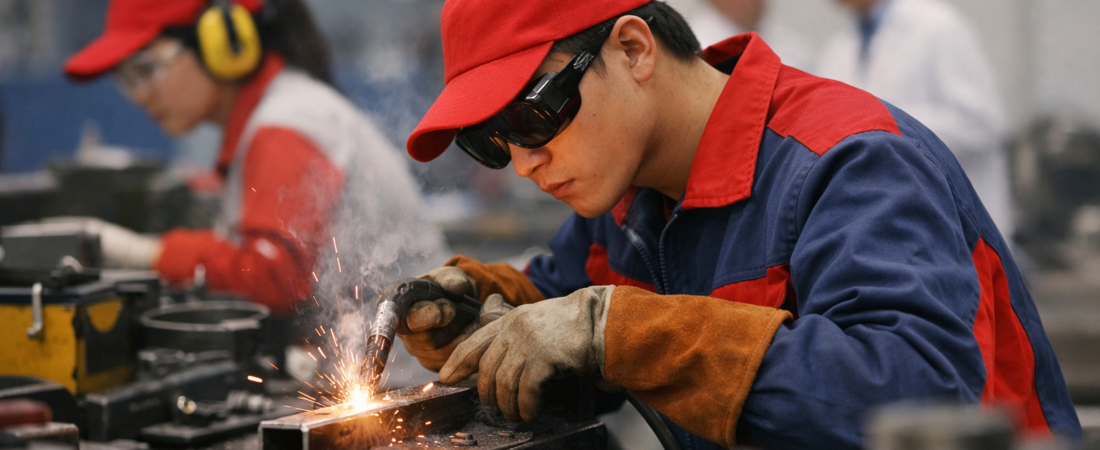
Nineteen titles is not an accident. Korea built an entire ecosystem around vocational excellence, starting with specialized technical high schools and government-backed training centers. The Human Resources Development Service of Korea coordinates much of this pipeline, scouting talent years before competitors ever reach an international stage.
Ask yourself this: what does it take to sustain dominance across five decades? Consistency, mostly. Korea treats the International Skills Olympics as a matter of national pride, similar to how other countries treat the actual Olympic Games.
Government ministries, corporate sponsors, and local governments all pour resources into preparation. Selected athletes often train for a year or more, sometimes full-time, under expert mentors from industry. This is less like a school club and more like an elite athletic training camp — minus the stadium lights.
There is a cultural layer here too. Korean society has historically prized craftsmanship and mastery, from Joseon-era ceramics to modern semiconductor fabrication. That respect for precision did not disappear with industrialization. It simply moved into new trades, new tools, and now, new robotics categories.
What This Means for Korea’s Future Workforce
Here is the harder truth, though. Vocational training in Korea still carries less social prestige than a university degree, even as skilled trades open solid, well-paying careers. Many talented young people avoid these paths, pressured instead toward four-year colleges regardless of fit or interest.
That gap is real, and it is worth naming honestly. But there are signs of repair worth watching closely.
Companies increasingly recruit directly from technical high schools, and some International Skills Olympics medalists become minor celebrities, inspiring younger students to see trades as a genuine, respected career choice. Government campaigns now actively promote these alternative paths, and salaries for skilled technicians in fields like semiconductors and shipbuilding have climbed noticeably. The system is not perfect, but it is visibly moving toward valuing many kinds of talent, not just one.
What happens after Shanghai matters just as much as the competition itself. If Korea wins its 20th title, expect renewed national conversation about vocational education’s place in the broader economy. If it does not, expect equally intense reflection on how to close any emerging skills gap.
Either outcome pushes Korea to keep refining how it trains its next generation of engineers, technicians, and craftspeople. The International Skills Olympics is, in that sense, a mirror — reflecting how seriously a country takes its own workforce. What do you think — should more countries treat vocational training with the same seriousness Korea gives the International Skills Olympics?
AI-Generated Photorealistic Image — All people, scenes, and details in this image are entirely AI-generated and fictional. Not a real photograph of an actual person or event. 이 이미지는 AI로 생성된 가상 이미지입니다.
Leave a Reply