
One Woman, 2,600 Tickets, and $319,000
A woman in her 30s allegedly used an automated macro program to buy about 2,600 K-pop tickets, including nine seats to BTS’s sold-out Gwanghwamun concert, netting roughly $319,000. The Seoul Metropolitan Police Agency referred her to prosecutors this week without detention. Charges include violating the Information and Communications Network Act, obstruction of business, and the Public Performance Act.
Can you imagine trying to grab BTS tickets, refreshing your screen for the tenth time, only to lose out to a computer program? That’s exactly what happened to countless fans this year. This case shows just how organized ticket scalping has become in Korea’s entertainment industry.
K-pop tickets are supposed to be a fair race — first come, first served. But according to Korean police, this woman’s bot never really raced anyone. It simply outran everyone before the starting gun even fired.
How Macro Programs Beat Real Fans
A macro program is software that automates repetitive clicks and form-fills faster than any human hand. In ticketing terms, it means selecting seats, entering payment details, and confirming purchases in milliseconds. Real fans, meanwhile, are still typing their card numbers by hand.
Police say this particular case involved industrial-scale activity, not a one-time shortcut. Buying 2,600 K-pop tickets requires multiple accounts, multiple devices, and constant software tweaks to dodge anti-bot systems. This wasn’t a hobby — it looked more like a business.
The BTS Gwanghwamun show became a flashpoint because demand vastly outpaced supply. Nine tickets to one of the most sought-after concerts of the year is a small number compared to 2,600 total. Yet it symbolizes the exact kind of high-value target that scalping bots chase first.
Why does this matter to fans outside Korea? Because K-pop tickets increasingly move through global platforms, and the same bot problem shows up at Coldplay shows, Taylor Swift tours, and beyond.
Korea’s Legal Response to Ticket Scalping
Korea’s Public Performance Act was updated specifically to fight ticket bots and resale schemes. Using unauthorized software to purchase tickets is now a clear criminal offense, not just a gray-area annoyance. This case is one of the more visible tests of that law.
The Information and Communications Network Act adds another layer, targeting unauthorized access and manipulation of ticketing systems. Obstruction of business charges suggest police view this as active interference with legitimate ticket sellers and venues. Together, these three charges show Korean authorities treating large-scale scalping as organized crime, not petty rule-breaking.
For context, ticket platforms like Interpark and Ticketlink have poured resources into CAPTCHA systems, queue randomization, and identity verification. Scalpers adapt just as quickly, which is part of why this cat-and-mouse game keeps escalating. You can read more on how Korean media covered this story from Korea Herald.
Enforcement against K-pop tickets fraud has intensified as fandoms grow larger and more global. What used to be a niche domestic issue now touches international fans booking flights around a single concert date.
What This Means for K-pop Fans Everywhere

This case lands at an uncomfortable intersection of fandom loyalty and profit-driven exploitation. It’s easy to feel angry at scalpers, and that anger is fair — real fans lose real chances to see artists they love. But it’s worth remembering that ticketing platforms, artists’ agencies, and regulators are also pushing back with better verification tools and stronger laws, not standing still.
There’s something almost touching about how deeply fans want that shared concert moment, singing along in a stadium with thousands of strangers who feel like friends. That same intensity, though, is exactly what scalpers exploit for profit. Progress here won’t come from fan devotion alone — it comes from smarter systems, tougher laws, and platforms willing to close loopholes before bots find new ones.
Fans have also started organizing informally, sharing warnings about suspicious resale listings and reporting bot activity to platforms directly. That kind of community vigilance, paired with legal enforcement, is a more realistic path forward than either side acting alone. K-pop tickets will likely stay a target as long as demand outpaces supply, so the fight against automated buying is far from finished.
So where does this leave the average fan trying to see their favorite group live? Probably still refreshing a browser tab nervously, hoping the queue number loads before seats disappear (we’ve all been there, staring at a spinning loading wheel like it owes us money). Better verification systems and stricter K-pop tickets laws should, over time, tilt the odds back toward real fans.
Korea’s response to this case will likely shape how seriously future scalping operations are punished. If prosecutors pursue strong penalties, it sends a clear signal that automated ticket fraud carries real consequences. If the punishment feels light, expect similar schemes to keep popping up around every major concert announcement.
What do you think — should platforms bear more responsibility for stopping bots, or does the fix ultimately come down to tougher laws and enforcement?
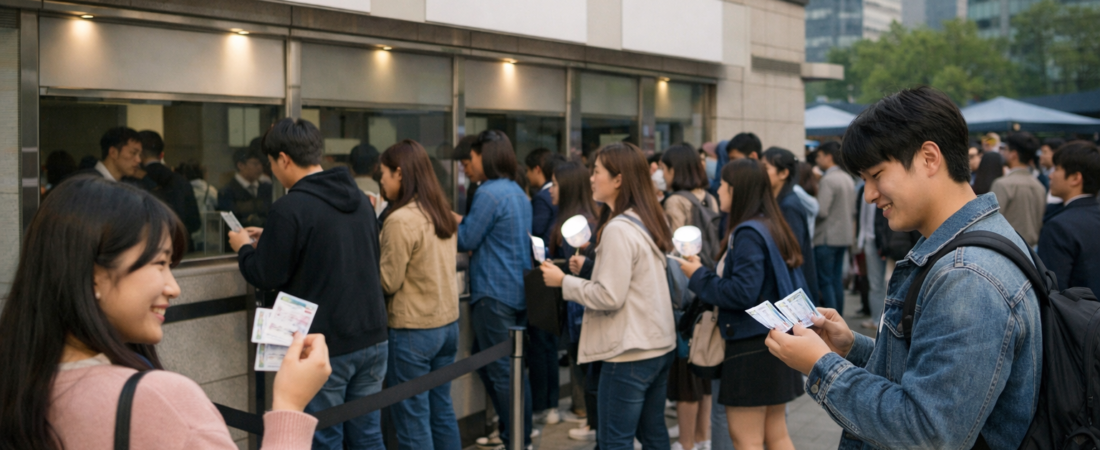
AI-Generated Photorealistic Image — All people, scenes, and details in this image are entirely AI-generated and fictional. Not a real photograph of an actual person or event. 이 이미지는 AI로 생성된 가상 이미지입니다.




Leave a Reply