
Table of Contents
Can one lawmaker’s radio interview reveal the mood inside Korea’s ruling party? Kim Young-jin thinks so, and his recent comments prove it. Speaking on SBS Radio, this Democratic Party of Korea lawmaker touched on four hot topics at once.
He addressed Seoul Mayor Oh Se-hoon’s court verdict, internal party controversy, a former minister’s controversial remarks, and a sensitive prosecution reform issue. Kim Young-jin’s measured tone stood out. Let’s break down what he actually said, and why it matters.
Who Is Kim Young-jin and Why His Words Matter
Kim Young-jin serves as a lawmaker for the Democratic Party of Korea. He’s known for careful, fact-based commentary rather than fiery rhetoric.
That reputation makes his SBS Radio appearance worth examining closely. Why do his words carry extra weight right now? Because the Democratic Party faces multiple pressure points at once — legal battles, internal disputes, and policy debates.
When a party insider speaks with this much caution, people listen. Kim Young-jin didn’t rush to score political points. Instead, he urged patience and fact-checking on nearly every issue raised.
This approach reflects a broader pattern in Korean politics. Lawmakers often face pressure to react instantly to breaking news. Kim Young-jin chose a different path, one rooted in verification before judgment.
That choice itself sends a signal. It suggests the Democratic Party leadership wants calm, not chaos, heading into a politically sensitive period. Readers outside Korea might wonder why this matters beyond domestic politics.
The answer is simple. Korea’s ruling party decisions ripple into policy, the economy, and diplomatic posture. Understanding how figures like Kim Young-jin frame internal debates helps you read Korean politics more accurately.
Kim Young-jin on the Oh Se-hoon Verdict and By-Election Talk

Seoul Mayor Oh Se-hoon recently received a first-instance court verdict. Kim Young-jin called the ruling a decision based on facts, not politics.
That’s a notable statement. Many politicians spin court rulings to fit their narrative, but Kim Young-jin avoided that trap. He described the verdict simply as fact-based, without adding partisan color.
Why does this matter? Because how a ruling party lawmaker frames an opposition figure’s legal troubles often previews future political strategy. Kim Young-jin’s neutral framing suggests the Democratic Party isn’t ready to weaponize the verdict yet.
He also addressed speculation about by-election preparation. Some observers assumed a guilty verdict against Oh Se-hoon would trigger immediate campaign planning. Kim Young-jin pushed back firmly, saying such preparation is still premature.
Is this restraint or realism? Probably both. A first-instance verdict isn’t final — appeals can overturn or modify rulings, and Korean legal proceedings often stretch across years.
Jumping into by-election mode too early risks looking presumptuous, even disrespectful toward due process. Kim Young-jin’s caution here fits his broader pattern of restraint. He seems to prefer letting legal processes finish before political maneuvering begins.
That’s a mature stance in a political culture often criticized for reacting too fast. For readers unfamiliar with Korean electoral law, by-elections fill vacant seats mid-term, often triggered by resignations, deaths, or disqualifying convictions.
If Oh Se-hoon’s conviction eventually became final, Seoul could face a mayoral by-election. Kim Young-jin’s comment reminds everyone that this scenario remains hypothetical for now, not a near-certain outcome. You can read more background on Korean election procedures through SBS Radio.
The Shincheonji Controversy and Yoo Si-min’s Remarks
Kim Young-jin also faced questions about allegations raised at the Democratic Party’s national convention. These allegations involve claims of Shincheonji religious organization involvement in party affairs.
This is a sensitive topic in Korean society. Shincheonji has faced public scrutiny before, particularly during the COVID-19 pandemic, when the group’s gathering practices drew intense media coverage.
Any suggestion of religious organization influence inside a major political party raises serious concerns. Kim Young-jin didn’t dismiss the allegations outright. Instead, he insisted that fact-checking must come first before anyone draws conclusions.
That’s a careful, responsible answer. Rushing to judgment on unverified claims could damage reputations unfairly, or worse, distract from real issues. Kim Young-jin’s insistence on verification echoes his earlier comments about the Oh Se-hoon verdict.
A clear pattern emerges here, doesn’t it? He consistently prioritizes facts over speculation, even when pressed by an interviewer to react emotionally. Kim Young-jin then turned to comments made by Yoo Si-min, a former government minister known for outspoken political commentary.
Yoo Si-min recently made remarks that stirred controversy within Democratic Party circles. Kim Young-jin didn’t attack Yoo Si-min personally. Instead, he offered a nuanced critique, one worth quoting carefully.
He said Yoo Si-min’s recent statements had moved beyond simple criticism or evaluation. According to Kim Young-jin, these remarks entered territory resembling that of an actual political player, not just a commentator judging from the sidelines.
What does that distinction mean? In Korean political discourse, there’s a recognized difference between commentators who critique from outside, and politicians who actively shape outcomes from inside. Kim Young-jin suggested Yoo Si-min needs to decide for himself which role he now occupies.
Is Yoo Si-min still a neutral observer, or has he effectively become a political actor? That question carries real weight in Korean media culture. Former officials often maintain public platforms long after leaving office, blurring lines between commentary and active political involvement.
Kim Young-jin’s comment invites Yoo Si-min to clarify his own position rather than letting others assume it. This kind of gentle but pointed pushback shows how internal party dynamics play out through media interviews rather than direct confrontation.
Kim Young-jin’s Call for Caution on Supplementary Investigation Rights
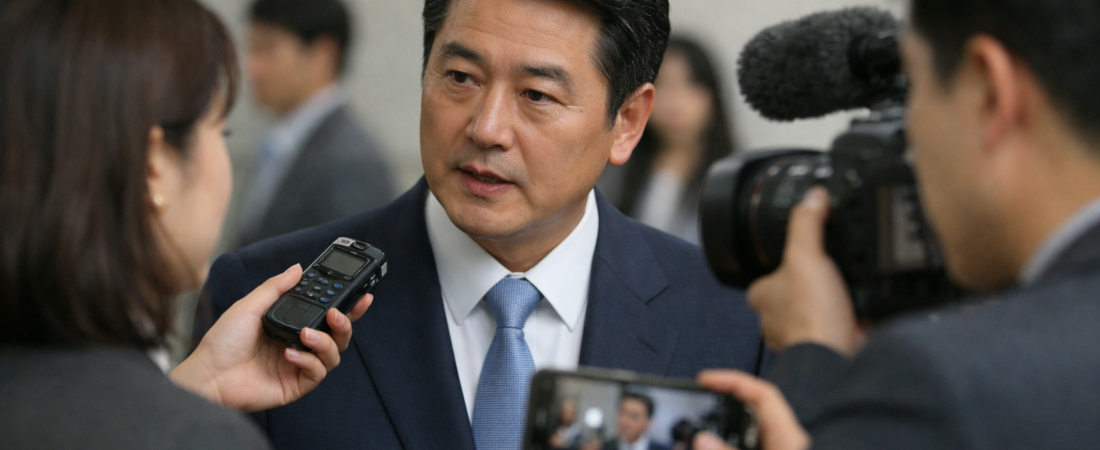
The final topic Kim Young-jin addressed involves supplementary investigation rights, a legal and institutional issue with major implications for Korea’s justice system. This debate concerns how much investigative authority prosecutors should retain after recent reforms limited their powers.
It’s a complicated issue, tied closely to Korea’s broader prosecution reform movement over the past several years. Kim Young-jin didn’t offer a firm conclusion. Instead, he emphasized process.
He called for further discussion through the party’s general assembly of lawmakers before reaching any final decision. Why insist on more deliberation? Because supplementary investigation rights touch on fundamental questions about checks and balances between police and prosecutors.
Rushing legislation on such matters risks creating loopholes or unintended consequences. Kim Young-jin also stressed the need for what he called institutional improvement. This phrase suggests he sees flaws in the current system that require fixing, regardless of which direction reform ultimately takes.
That’s a balanced position, acknowledging problems exist while resisting pressure for a hasty fix. For international readers, this debate might sound technical, but it reflects a real struggle familiar in many democracies. How much power should investigative bodies hold, and who should hold them accountable?
Korea has wrestled with this question intensely since prosecution reform laws passed in recent years. Kim Young-jin’s call for caution reflects lessons learned from those earlier reform battles, which sometimes moved faster than public consensus could support.
His comments suggest the Democratic Party wants to avoid repeating past mistakes. Taking time to build consensus through the general assembly shows institutional respect. It also signals that party leadership recognizes the sensitivity of prosecutorial power in a democracy still refining its checks and balances.
What Kim Young-jin’s Restraint Tells Us About Korean Politics
Step back and look at the full picture. Kim Young-jin addressed four separate controversies in one interview, yet his tone stayed remarkably consistent throughout.
He called for facts before conclusions on the Shincheonji allegations. He resisted premature political calculation on the Oh Se-hoon verdict. He challenged Yoo Si-min to clarify his role rather than attacking him directly.
He pushed for careful deliberation on supplementary investigation rights rather than a rushed vote. What connects all these positions? A clear preference for process over impulse.
Is this simply Kim Young-jin’s personal style, or does it reflect a broader shift inside the Democratic Party of Korea? Perhaps both.
Korean politics often rewards bold, quick statements that generate headlines. Kim Young-jin chose the opposite approach, betting that measured caution builds more lasting credibility. That bet might pay off, especially as Korean voters grow increasingly skeptical of political theatrics.
Looking ahead, expect more scrutiny on all four fronts Kim Young-jin discussed. The Oh Se-hoon case will likely move through appeals, keeping by-election speculation alive but unresolved for now.
The Shincheonji allegations will demand actual fact-finding, not just public statements. Yoo Si-min will need to clarify his political identity one way or another. The supplementary investigation rights debate will return to the National Assembly floor eventually, requiring real legislative action.
Kim Young-jin’s careful framing this week offers a preview of how these stories may unfold. What do you think about Kim Young-jin’s cautious, fact-first approach to Korean political controversies?
AI-Generated Photorealistic Image — All people, scenes, and details in this image are entirely AI-generated and fictional. Not a real photograph of an actual person or event. 이 이미지는 AI로 생성된 가상 이미지입니다.



Leave a Reply