
Table of Contents
A woman in her sixties was found dead inside a freezer storage unit at a cafe in Paju, Gyeonggi Province. She had been reported missing before her body was discovered. Police in Paju are now investigating exactly how she died and how she ended up inside the freezer.
Why does a single local case in Paju matter to readers far beyond Korea? Because it opens a window into how missing persons investigations actually work here, and what protections exist for ordinary citizens. Paju is often known for its publishing town, its DMZ tours, and its quiet border-region charm. This case reminds us that even peaceful towns like Paju face hard questions about safety and accountability.
What Happened in Paju
According to Yonhap News Agency, the woman had already been reported missing when her body turned up frozen inside a cafe’s storage freezer in Paju. Local police are treating the case as an active investigation rather than a closed matter. They want to know the exact cause of death and the circumstances that led her into that freezer.
Details remain limited at this stage, and that is normal for early-stage investigations. Korean police typically release only confirmed facts, holding back speculation until forensic results come in. This measured approach protects both the victim’s dignity and the integrity of the investigation.
For readers unfamiliar with Paju, it sits northwest of Seoul, close to the inter-Korean border. It is a mix of quiet farmland, cultural attractions, and small commercial districts. A case like this feels especially jarring in a town known more for book cafes than crime headlines.
How Missing Persons Cases Unfold in Korea
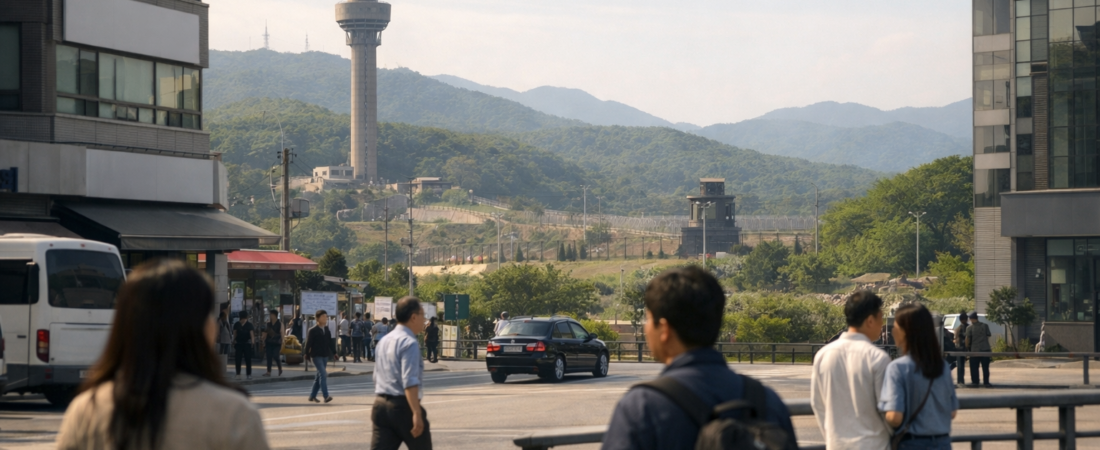
Korea has a structured system for handling missing persons reports, run through local police stations and the National Police Agency. Once someone is reported missing, officers can request phone location data and review CCTV footage across the area. This system has grown more sophisticated over the past decade, especially in cities and towns like Paju that sit along major transit routes.
Have you ever wondered how quickly Korean police can locate a missing person using footage alone? South Korea has one of the highest CCTV densities in the world, and that network often becomes the first tool investigators use. In many cases, this leads to fast resolutions, sometimes within hours rather than days.
But not every case ends quickly, and this Paju case shows why. When someone disappears without leaving a clear digital trail, investigators must rely on tips, physical searches, and painstaking follow-up. That is exactly what is happening now, as police in Paju work backward from the discovery to reconstruct her final days.
This process matters for another reason too. It shows families that a report does not simply disappear into a bureaucratic void. Even in Paju, a smaller city compared to Seoul, resources get mobilized the moment someone is flagged as missing.
Why Small Businesses Like Cafes Matter to Public Safety
Cafes are everywhere in Korea, and Paju is no exception. With its scenic book village and riverside views, the city has become something of a cafe destination for weekend visitors from Seoul. That popularity also means cafes carry real responsibility, from food safety to basic facility maintenance, including freezer storage units.
Freezer storage in commercial kitchens is normally used for food preservation, not for anything else. So how did a person’s body end up there? That question sits at the center of the Paju investigation, and it likely involves reviewing the cafe’s ownership records, employee schedules, and building access history.
This case also raises a broader point about small business oversight in Korea. Local health and safety inspections tend to focus on food hygiene, not on unusual scenarios like this one. Paju authorities may need to reconsider what kinds of checks matter most for public trust in local businesses.
None of this should make you afraid to visit a cafe in Paju or anywhere else in Korea. These cases remain extremely rare exceptions, not everyday risks. Still, rare does not mean irrelevant, and that tension is worth sitting with for a moment.
Every death like this leaves behind hard, unanswered questions about how a person’s final days went unnoticed. That kind of gap between disappearance and discovery says something uncomfortable about how easily someone can slip through a community’s attention, even in a connected place like Paju. But look closer, and you also see a system responding with real effort: officers gathering evidence, forensic teams working carefully, and a public willing to ask hard questions instead of looking away.
Human systems will never catch every tragedy before it happens, and pretending otherwise helps no one. What matters more is whether a community keeps improving its response when something goes wrong, and whether neighbors stay willing to notice when someone quietly disappears from daily life. That quiet vigilance, more than any single policy, is what protects people in towns like Paju.
What This Means for Communities Going Forward
Cases like this one in Paju often lead to policy conversations, even if slowly. Local governments may review safety protocols for commercial freezer units, or push for clearer reporting timelines when someone goes missing. Change in Korea tends to come from specific incidents like this, then spreads into broader regulation.
If you live in Korea, or plan to visit places like Paju, what should you take from a case like this? Stay aware of your surroundings, keep your family informed of your plans, and trust that local police response systems, while imperfect, are actively built to help. Paju’s investigators are already working to answer the hardest questions this case has raised.
What do you think communities like Paju should do differently to protect vulnerable residents before they disappear rather than after?
AI-Generated Photorealistic Image — All people, scenes, and details in this image are entirely AI-generated and fictional. Not a real photograph of an actual person or event. 이 이미지는 AI로 생성된 가상 이미지입니다.
Leave a Reply