
Table of Contents
The Korea Meteorological Administration issued a heavy rain advisory for Ulleungdo and Dokdo at 6:30 a.m. on August 31, 2026. At the same hour, heat advisories remained active across 11 areas of North Gyeongsang Province, including Pohang. Two very different weather threats are hitting the same region at once.
Does that sound strange to you? Rain warnings and heat warnings, active at the same moment, in neighboring parts of the same province. Korea’s late-summer weather often works exactly this way, and it tells us something important about how the peninsula transitions between seasons.
Heavy Rain Warning Hits Ulleungdo and Dokdo
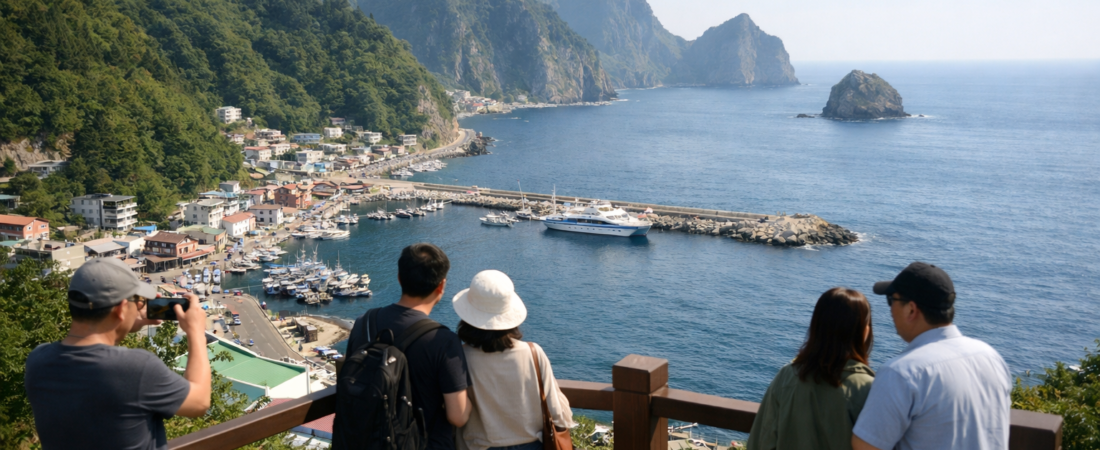
Ulleungdo is a small volcanic island sitting far off Korea’s east coast. Dokdo, the pair of rocky islets Korea administers nearby, sits even further into the East Sea. Both places now face a heavy rain advisory as of Monday morning.
The Korea Meteorological Administration timed the warning precisely: 6:30 a.m., August 31. That kind of precision matters for island communities. Ferries, fishing boats, and small businesses on Ulleungdo depend on accurate timing to plan their day safely.
Why does Ulleungdo get hit with heavy rain so often in early autumn? The island sits directly in the path of moisture-heavy air masses moving across the East Sea. Mountainous terrain then forces that moist air upward, squeezing out intense rainfall in short bursts.
Local authorities on Ulleungdo now watch closely for landslides and flash flooding. Steep slopes and narrow coastal roads make the island especially vulnerable during heavy rain events. Residents there have learned, often the hard way, to take these advisories seriously.
Heat Warnings Stay in Place Across North Gyeongsang
Meanwhile, 11 areas across North Gyeongsang Province remain under heat advisories. Pohang, a major industrial and port city, is among them. This means the same province is fighting flooding risk on one side and heat stress on the other.
Late August in Korea can feel unpredictable this way. One district battles rising rivers while another struggles through blistering afternoon heat (Korean summers do not go quietly, and this year is no exception). The gap between coastal islands and inland cities creates two entirely different weather stories under one provincial umbrella.
Heat advisories typically trigger when daytime highs stay dangerously elevated for consecutive days. Officials use these warnings to protect outdoor workers, elderly residents, and children from heat-related illness. Pohang’s steel industry workforce, for example, faces real risk during prolonged heat advisories.
You might wonder how a single meteorological agency tracks such contrasting conditions simultaneously. The Korea Meteorological Administration divides the country into detailed observation zones, each monitored independently. That system lets forecasters issue a heavy rain advisory for Ulleungdo and a heat advisory for Pohang on the very same morning.
Why Rain and Heat Together Matter

Late August sits at Korea’s seasonal turning point. Summer heat has not fully released its grip, yet autumn rain systems are already arriving from the sea. This overlap creates exactly the kind of split conditions we see today around Ulleungdo and North Gyeongsang.
Climate researchers have tracked this pattern for years. As sea surface temperatures around the Korean peninsula rise, moisture-loaded systems intensify even as land heat lingers longer into the season. You can read more background on Korea’s seasonal weather patterns from Yonhap News Agency, which has tracked these advisories for decades.
For island regions like Ulleungdo, this transition period brings real risk. Heavy rain advisories during this window often precede stronger storm systems moving up from the south. Local fishing communities time their work around these forecasts, sometimes losing entire days of income to stay safe.
Is this pattern getting more extreme over time? Many meteorologists believe so, though attributing any single advisory to long-term climate shifts requires caution. What’s clear is that Ulleungdo residents and Pohang workers alike now face compounding weather stress each late summer.
What This Means for Korea’s Late Summer
So what should you take away from a heavy rain advisory on a remote island and a heat advisory in an industrial port city? Korea’s geography creates dramatically different local climates within a single province. That diversity shapes how communities prepare, adapt, and recover.
There’s something worth sitting with here. Communities on Ulleungdo have built real resilience against sudden storms, passing down practical knowledge through generations of fishermen and farmers. But that same isolation that strengthens local bonds also means slower emergency response times when a serious flood or landslide actually hits.
The hope lies in how seriously South Korea takes early warning systems. The Korea Meteorological Administration issues precise, time-stamped advisories exactly like this one, giving residents real hours to prepare rather than facing disaster blind. That infrastructure, built over decades, represents genuine progress even as the underlying weather grows harder to predict.
Looking ahead, expect more of these split conditions as Korea moves deeper into September. Rain systems will likely intensify around the coasts while heat lingers inland a while longer. Understanding this pattern helps you make sense of why a small island like Ulleungdo can dominate a weather headline on the same day a city battles heat.
What does your own hometown do when two opposite weather threats hit at once? I’d love to hear how you think Korea’s regional weather warning system compares to where you live.
AI-Generated Photorealistic Image — All people, scenes, and details in this image are entirely AI-generated and fictional. Not a real photograph of an actual person or event. 이 이미지는 AI로 생성된 가상 이미지입니다.


Leave a Reply