Table of Contents
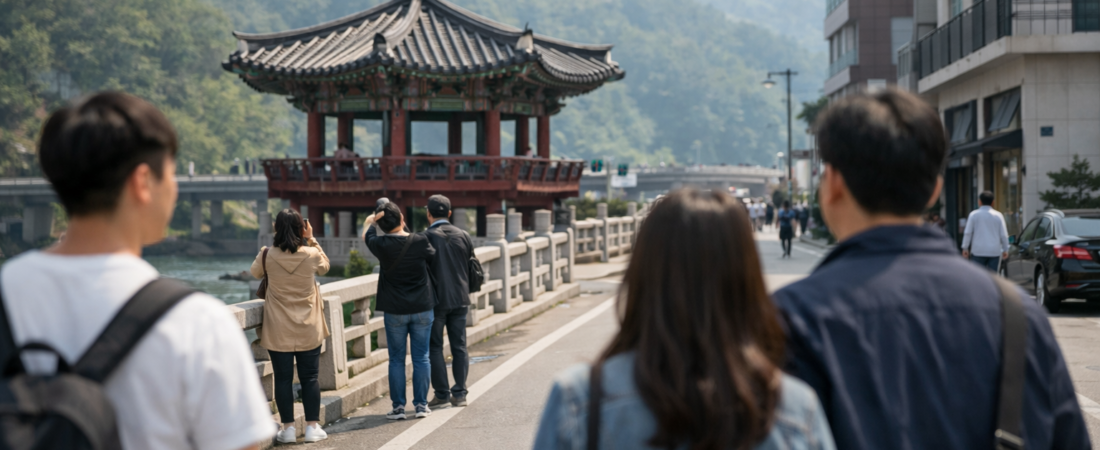
Can a bus tour actually save a traditional market? In Yeongwol-gun, a small county tucked into Gangwon Province, the answer looks like yes. Local officials have launched a city tour program that links traditional markets directly to popular tourist sites, and visitors are responding with real enthusiasm.
This isn’t just another sightseeing package. It’s a deliberate strategy to turn tourist foot traffic into local spending. Yeongwol-gun wants you to see the sights, sure, but it also wants you to shop, eat, and linger in its old markets.
What Is the Yeongwol-gun City Tour Program?
The program carries a playful name: “2026 Yeongwol-bogo Jangbogo.” At first glance, it sounds like a tongue twister. But there’s real cultural wit packed into it.
“Yeongwol-bogo” means “look at Yeongwol,” inviting visitors to explore the county’s landscapes and historic sites. “Jangbogo” is a clever double meaning. It echoes Jang Bogo, the legendary ninth-century maritime trade commander who once controlled sea routes across East Asia, while also sounding like the Korean phrase for “let’s go shopping at the market.”
It’s a pun worthy of a pretty good dad joke, and honestly, Yeongwol-gun deserves credit for making a market tour sound like an adventure. This wordplay isn’t just cute branding. It signals the program’s dual purpose clearly: sightseeing paired with shopping, history paired with commerce.
The tour connects Yeongwol-gun’s well-known attractions, its river valleys, historic temples, and scenic overlooks, with traditional markets that many tourists would otherwise skip. Buses run set routes throughout the region. Visitors hop on, see a landmark, then get dropped near a market where they can browse stalls and grab a bite.
How Traditional Markets Are Benefiting
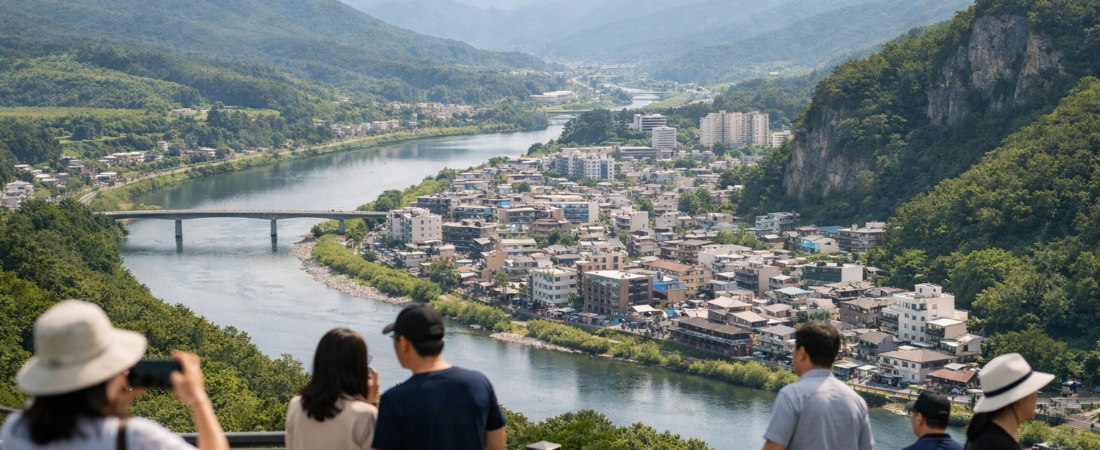
Traditional markets across Korea have struggled for years. Big discount chains and online shopping pull customers away, and many older merchants worry about who will take over their stalls next.
Yeongwol-gun’s approach tackles this problem directly. By routing tour buses through market areas, the county guarantees a steady stream of visitors who might never have stopped otherwise. Early results suggest this is working.
Local vendors report noticeably higher foot traffic since the tour launched. Tourists who came only for photos at a scenic overlook now leave with dried herbs, local produce, or a bowl of noodles from a market stall. That’s the kind of spending that stays in the community rather than flowing to a distant corporate headquarters.
Why does this matter so much for a county like Yeongwol-gun? Because tourism dollars that skip local business owners don’t actually help the local economy. A visitor who only takes photos and leaves contributes little.
A visitor who buys lunch, picks up souvenirs, and chats with a market vendor contributes real, circulating income. Yeongwol-gun’s officials clearly understood this distinction when designing the tour route.
Why This Model Matters for Local Tourism in Korea
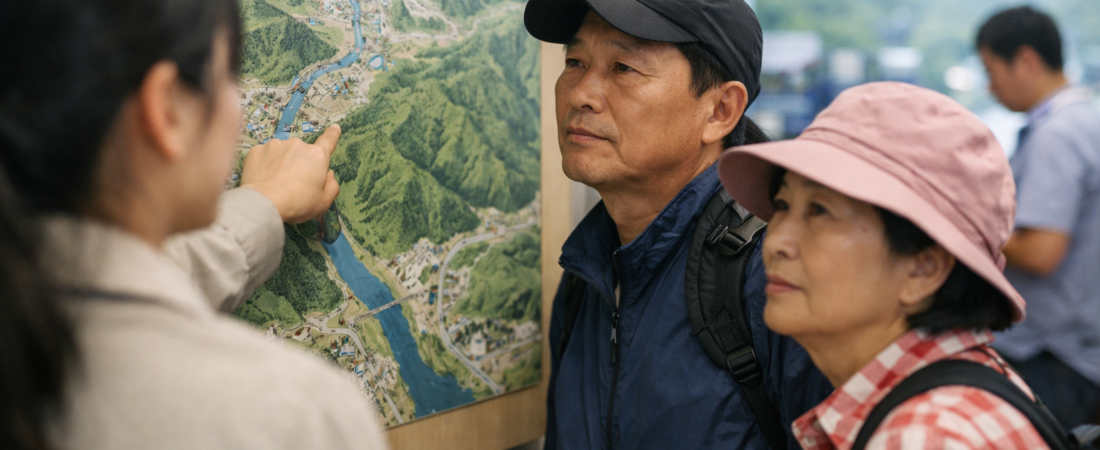
Rural counties across Korea face a shared challenge. Populations are aging, young people move to Seoul or other major cities, and local economies shrink year after year.
Tourism often gets pitched as a fix, but tourism alone doesn’t automatically help. Without a plan to connect visitors to local businesses, tourist money can bypass the towns that need it most.
Yeongwol-gun’s linked city tour offers a template other regions might study. You can read more about regional tourism development trends through sources like Yonhap News Agency, which has tracked similar efforts nationwide. The core idea is simple but often overlooked: pair the attraction with the marketplace, not just the scenery.
Isn’t that a lesson many tourist destinations could use? Plenty of regions build beautiful trails and viewpoints but forget to connect them to the small businesses nearby. Yeongwol-gun did the opposite, and it’s paying off in measurable local consumption.
This matters beyond Yeongwol-gun itself. If the model proves successful over multiple seasons, expect neighboring counties in Gangwon Province, and possibly beyond, to adopt similar linked tour designs.
Local governments watch each other closely when a program shows real economic results. Yeongwol-gun may end up as a case study in how rural tourism should be structured going forward.
There’s something honest worth sitting with here too. Traditional markets carry real warmth, the kind where a vendor remembers your face after one visit and tosses in an extra handful of vegetables for free.
But that same closeness can also mask quiet struggle, aging merchants with no successor, dwindling stalls, a slow fading that tourism alone cannot fully reverse. The hope lies not in nostalgia but in programs like this one, which give markets a genuine, structural reason to keep their lights on for another generation.
What Travelers Should Know Before Visiting Yeongwol-gun
Planning a trip? Yeongwol-gun sits in a scenic pocket of Gangwon Province, known for river landscapes and quieter, less crowded attractions than Korea’s major cities.
The city tour program runs scheduled routes connecting these sites with traditional markets, so check current departure times before you go. Weekend routes tend to fill up faster, especially during peak travel seasons.
Bring cash alongside cards. Many traditional market vendors still prefer cash for smaller purchases, and it speeds things up for everyone.
Give yourself time to actually browse rather than rush through. The whole point of Yeongwol-gun’s design is slowing down enough to notice the market stalls, not just the scenic overlooks.
If you’re building a Gangwon itinerary, consider anchoring a day around this tour rather than treating markets as an afterthought. You’ll likely leave with better food, better souvenirs, and a clearer sense of local life in Yeongwol-gun.
Looking ahead, Yeongwol-gun plans to expand this linked tourism model further. County officials have signaled interest in adding more market stops and possibly extending routes into neighboring towns.
If the current momentum holds, Yeongwol-gun could become a reference point for how small Korean counties balance tourism growth with genuine local economic support. That’s a future worth watching closely.
What do you think about Korea’s approach to linking traditional markets with tourism, and could this model work in your own hometown?
AI-Generated Photorealistic Image — All people, scenes, and details in this image are entirely AI-generated and fictional. Not a real photograph of an actual person or event. 이 이미지는 AI로 생성된 가상 이미지입니다.


Leave a Reply