Table of Contents
Ever wonder how Korea keeps producing world-class musicians, dancers, and filmmakers year after year? Part of the answer lies in institutions like the Korea National University of Arts, known widely as K-Arts. This month, the school made a quiet but important move — hiring five new full-time faculty members through its first open recruitment round of 2026.
It might sound like routine administrative news. But faculty appointments at a school like this shape the next generation of Korean artists.
Korea National University of Arts Announces New Faculty
On August 3, the Korea National University of Arts confirmed it had completed its first-round faculty recruitment for the year. Five candidates passed through a competitive, open selection process to become full-time professors.
The school stated that the hiring aims to strengthen both its educational quality and its artistic capacity. That phrase — educational and artistic capacity — is not just bureaucratic language.
At Korea National University of Arts, professors are expected to be practicing artists first, teachers second. This dual identity sets K-Arts apart from many conventional universities where research publications matter more than public performances.
Founded in 1993, the Korea National University of Arts has grown into one of Asia’s most respected conservatories. It trains students across six schools — music, drama, dance, film, fine arts, and traditional Korean performing arts.
Landing a permanent teaching post here is genuinely rare, about as rare as finding an open parking spot in downtown Seoul on a Saturday afternoon. That rarity is exactly why this announcement deserves attention.
Meet the New Faculty Joining Korea National University of Arts
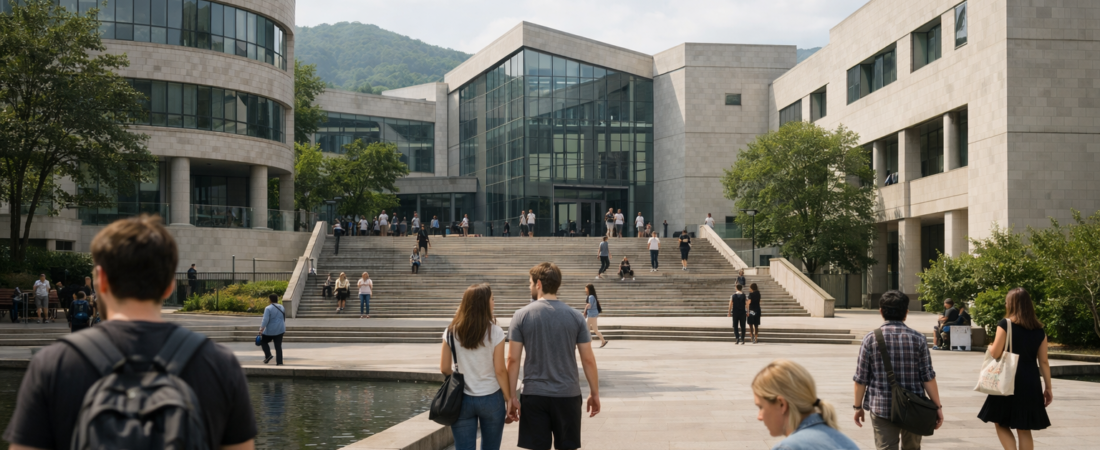
Among the five new hires, organist Park Jun-ho stands out. He joins the music school faculty at Korea National University of Arts, bringing a specialized skill set that few Korean universities can offer at a professional level.
Organ performance remains a niche field in Korea, where classical piano and strings dominate conservatory culture. Having a dedicated organist on staff signals that Korea National University of Arts wants to broaden its instrumental offerings, not just deepen the same well-worn paths.
Another named appointee, Choi Jin, also joins the newly expanded faculty roster. While the university did not release full biographical details on every new hire, the public selection process itself tells us something.
Korea National University of Arts uses open recruitment — a transparent, competitive hiring model — rather than closed-door appointments. Anyone with the right qualifications could apply, and finalists were chosen based on artistic achievement and teaching potential.
This matters more than it might seem at first glance. In many arts fields worldwide, hiring can depend heavily on personal networks and informal recommendations.
An open, merit-based process at Korea National University of Arts offers a counterexample. It gives talented artists — even those without insider connections — a real shot at a stable academic career.
Why This Hiring Matters for Korea National University of Arts

Why should anyone outside Korea care about five new professors at one university? Because Korea National University of Arts has become a launching pad for global cultural influence.
Graduates from this school have gone on to perform with major international orchestras, direct award-winning films, and choreograph productions staged around the world. The quality of instruction they receive as students traces directly back to who stands in front of the classroom.
Full-time faculty positions at Korea National University of Arts are notoriously difficult to secure. The competition reflects a broader reality in Korean arts education — a system that has produced remarkable global success, yet still struggles with limited job openings for a growing pool of highly trained artists.
Consider the numbers. According to Yonhap News Agency, this was only the university’s first recruitment round of the year, meaning five new positions had to be filled from what was likely a large applicant pool.
That imbalance — many gifted artists, few permanent teaching posts — is not unique to Korea. Conservatories from Vienna to New York face similar pressure.
But at Korea National University of Arts, the stakes feel especially high, given how tightly the school’s reputation is tied to Korea’s broader cultural rise, from K-pop’s global reach to Korean cinema’s award-season presence.
The Future of Korea National University of Arts in Global Arts Education
Where does Korea National University of Arts go from here? If this hiring pattern continues, expect more specialized instrumentalists, more interdisciplinary artists, and more faculty with international performance credentials joining the ranks.
The school’s willingness to hire someone with a niche specialty like organ performance suggests an institution thinking beyond conventional conservatory boundaries. That is a promising sign for students who want training outside the usual mainstream tracks.
Isn’t it worth asking what these five new professors will build over the coming decades? A single hiring round rarely changes an institution overnight, but it does shift what becomes possible for the next class of students walking through the doors.
There is something genuinely encouraging about a public university committing resources to open, competitive hiring rather than convenience or connections. It reflects a kind of institutional integrity that deserves recognition, especially in a field where talent can otherwise go unseen for years.
Still, honesty requires us to look at the other side of this picture. The same competitive rigor that makes a position at Korea National University of Arts prestigious also means countless equally talented artists never get a permanent academic home, and many spend years teaching on temporary contracts with little security or recognition.
That tension — between rewarding excellence and limiting opportunity — does not have a tidy resolution. But it does point toward something worth working on: expanding adjunct pathways, mentorship programs, and cross-institutional partnerships so that talent finds a place to grow even when a full-time post is not immediately available.
Korea’s arts education system, imperfect as it is, keeps producing artists who move audiences around the world. That should give us some confidence that the structures in place, however competitive, are doing something right, even as they leave room for improvement.
Looking ahead, Korea National University of Arts will likely continue this pattern of periodic, open faculty recruitment throughout 2026 and beyond. Each round represents a small but meaningful investment in Korea’s cultural future.
For readers outside Korea, this story offers a window into how seriously the country treats artistic training as national infrastructure, not a luxury. What do you think about the way Korea National University of Arts balances open competition with building a genuinely diverse teaching faculty?
AI-Generated Photorealistic Image — All people, scenes, and details in this image are entirely AI-generated and fictional. Not a real photograph of an actual person or event. 이 이미지는 AI로 생성된 가상 이미지입니다.



Leave a Reply