Table of Contents
What Is Goryeoin Maeul Planning for Liberation Day?
What happens when a neighborhood built by returning diaspora families decides to honor a forgotten general? This August, you can find the answer in Gwangju. Goryeoin Maeul, the city’s growing community of ethnic Korean returnees, is preparing a special art exhibition for Korea’s 81st Liberation Day.
The exhibition is called “Goryeo Arirang.” It opens at Hong Beom-do Park, a public space named after one of Korea’s most respected independence fighters.
Organizers say the show will bring together original paintings and hands-on programs. Visitors won’t just look at art — they’ll step into a story that spans continents and generations.
Why does this matter beyond one neighborhood? Because Goryeoin Maeul sits at the intersection of two histories that most people never connect: Korea’s independence struggle and its scattered diaspora.
Liberation Day, or Gwangbokjeol, marks August 15, 1945 — the day Korea regained sovereignty after 35 years of Japanese colonial rule. Every year, communities across the country mark it with ceremonies, flags, and reflection.
But Goryeoin Maeul is doing something different this year. It’s using art to tell a story that textbooks often skip: what happened to Koreans who never made it home.
General Hong Beom-do and the Roots of the Koryoin Diaspora
Who was Hong Beom-do, and why does a park in Gwangju carry his name? He was a guerrilla commander who led Korean forces to major victories against Japanese troops in the 1920s, including the famous battles at Fengwudong and Cheongsanri. For a colonized people with almost no army of their own, these wins were more than military — they were proof that resistance could work.
After years of fighting, Hong Beom-do relocated to the Russian Far East. Then, in 1937, Soviet authorities forcibly deported nearly 180,000 ethnic Koreans from that region to Central Asia. Hong Beom-do was one of them, and he died in exile in present-day Uzbekistan in 1943, two years before Korea’s liberation.
That deportation created the Koryoin — ethnic Koreans scattered across Kazakhstan, Uzbekistan, and Russia for generations. Many never saw their ancestral homeland. Others carried Korean language, food, and memory forward in places thousands of miles from the Korean peninsula.
Decades later, many Koryoin families began returning to South Korea, drawn by work opportunities and a search for roots. Gwangju became one of the largest landing points for this return migration. That’s how Goryeoin Maeul came to exist — not as a historical museum, but as a living, working neighborhood.
In 2021, Hong Beom-do’s remains were finally repatriated to South Korea and laid to rest with state honors. It was a symbolic homecoming, 78 years after his death. For Goryeoin Maeul residents, that moment wasn’t just about one general — it echoed their own families’ long journeys back.
Inside the Goryeo Arirang Exhibition at Hong Beom-do Park
So what will visitors actually see at “Goryeo Arirang”? The exhibition centers on original paintings depicting both Hong Beom-do’s independence movement and the broader Koryoin migration story. These aren’t reproductions or textbook illustrations — they’re original works created specifically to give this history a visual voice.
The setting itself carries weight. Hong Beom-do Park isn’t a random venue; it’s a public space that already commemorates the general, making it a natural home for art that continues his story.
Beyond the paintings, organizers have built in experience programs for visitors of all ages. These hands-on activities let people engage directly with independence-era history and Koryoin cultural traditions, rather than simply reading about them.
Why pair art with participation instead of a standard museum display? Because Goryeoin Maeul organizers seem to understand something important: history sticks better when you touch it, not just observe it. A painting can move you, but a workshop can teach your hands what your eyes only glimpsed.
The exhibition’s title itself carries meaning worth pausing on. Arirang is Korea’s best-known folk song, sung across generations and, remarkably, across both Koreas and diaspora communities worldwide. Even in translation, Arirang doesn’t quite land the same way — you really have to feel it, and that’s exactly the point organizers seem to be making with “Goryeo Arirang.”
By naming the show after this song, Goryeoin Maeul links its community’s specific migration story to a symbol every Korean recognizes. That’s a smart cultural bridge, connecting a lesser-known diaspora history to something universally Korean. For readers curious about the original report, you can find further coverage via Yonhap News Agency.
Why Goryeoin Maeul’s Story Matters Today
Should you care about a single neighborhood exhibition happening thousands of miles away? Here’s the honest answer: this small event says something bigger about how nations remember hard history. Goryeoin Maeul isn’t just decorating a park for a holiday — it’s insisting that displaced people belong in the national story, not as a footnote, but as a chapter.
The forced deportation of 1937 is not a comfortable memory. Families were separated, homes were lost, and an entire community was uprooted with almost no warning or choice in the matter.
That pain didn’t disappear just because decades passed or borders reopened. Many Koryoin families still navigate language gaps, workplace discrimination, and the quiet loneliness of never quite belonging fully to either country they call home.
And yet, look at what’s happening in Gwangju right now. A community built from displacement is choosing to tell its own story, on its own terms, through art and shared experience rather than silence or resentment.
That’s not a small thing. It’s the difference between a history that only wounds and a history that also teaches, connects, and slowly repairs itself through public memory and shared ceremony.
Communities like Goryeoin Maeul remind you that resilience is real, but it’s rarely simple. The same distance that scattered families across continents also produced a community strong enough to preserve language, food, and memory for generations without a homeland nearby.
But resilience built from necessity often carries an unspoken cost — the quiet grief of children who grew up between cultures, belonging fully to neither. Recognizing both truths at once, the hardship and the strength, is probably the more honest way to understand what Goryeoin Maeul represents this Liberation Day.
Looking ahead, expect more Korean cities to follow Gwangju’s lead. As diaspora communities grow more visible and vocal, their histories — including the hard parts — are becoming harder for mainstream Korea to ignore or simplify.
What do you think it takes for a country to fully honor the people it once lost track of?
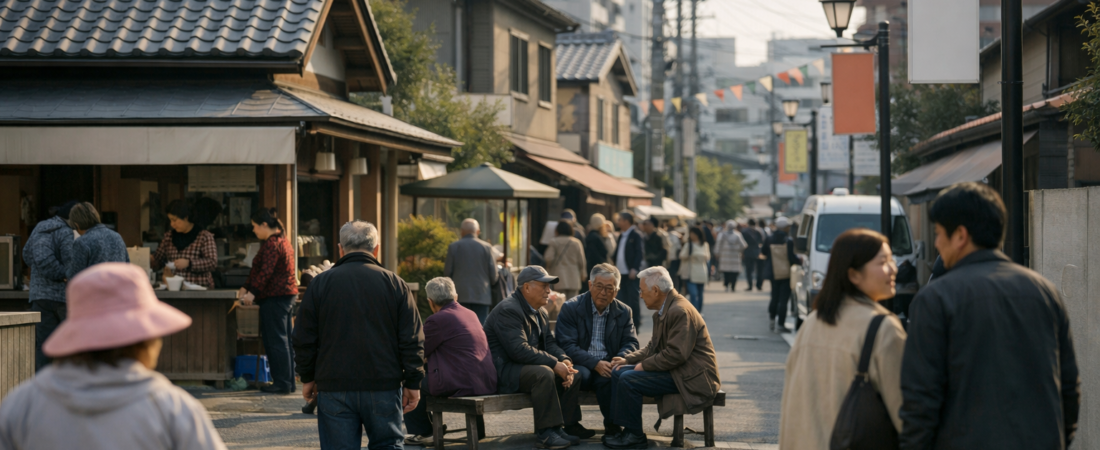
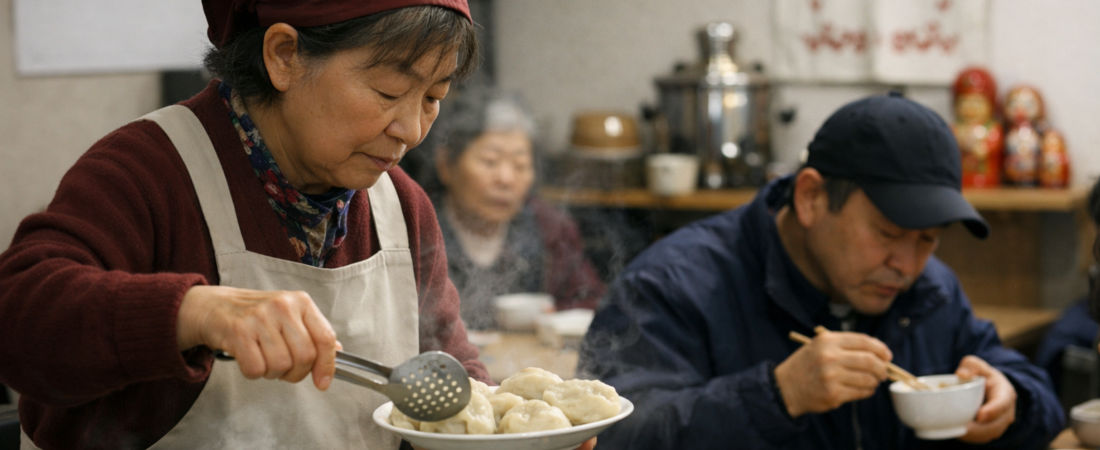
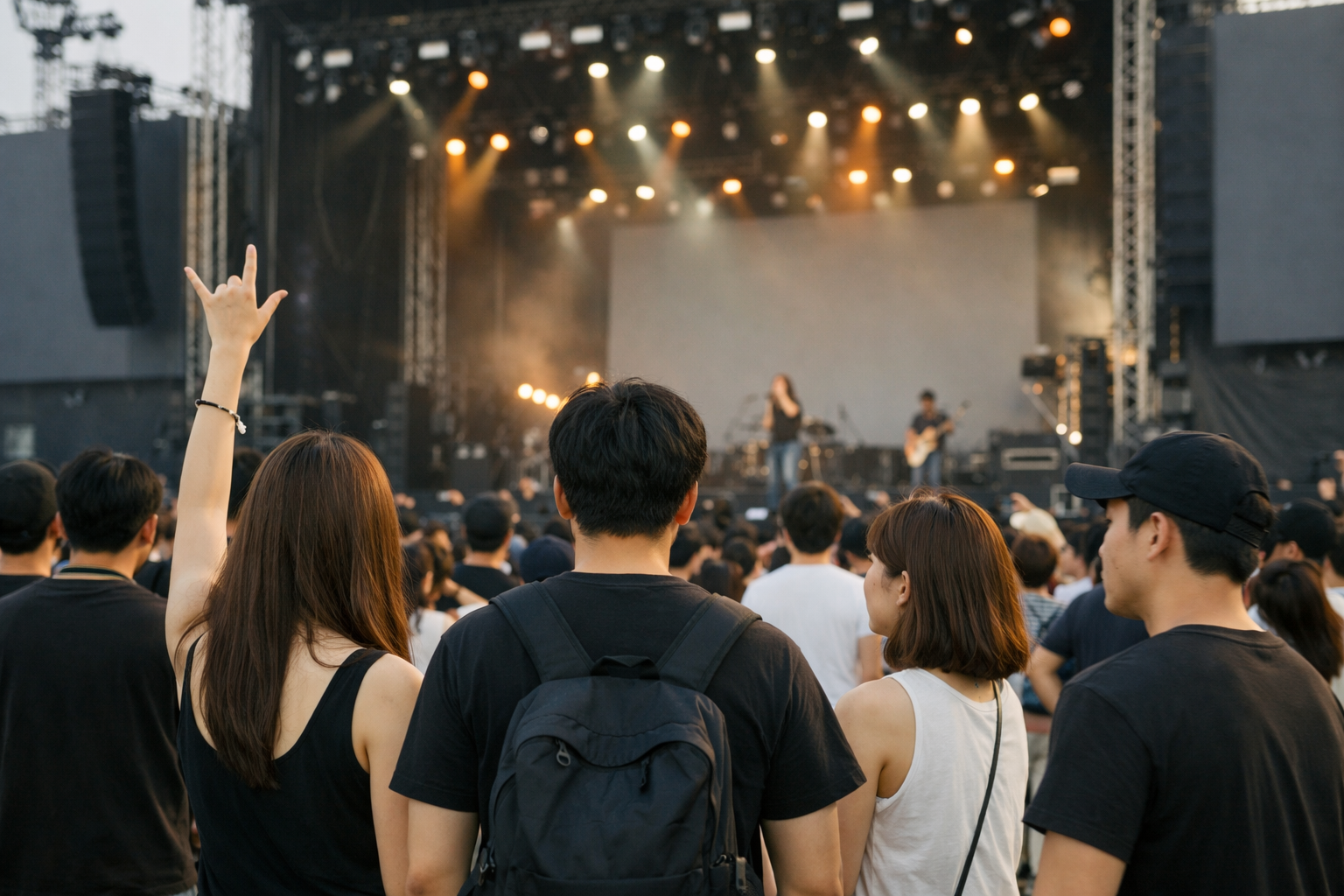
AI-Generated Photorealistic Image — All people, scenes, and details in this image are entirely AI-generated and fictional. Not a real photograph of an actual person or event. 이 이미지는 AI로 생성된 가상 이미지입니다.

Leave a Reply