Table of Contents
A Movie Reignites Interest in the Odysseia
Have you ever bought a book, promised yourself you’d finish it, then let it sit untouched for years? That’s exactly what happened to Korean writer Kang Ji-young with Homer’s ancient epic, the Odysseia. Now a new film adaptation is bringing this ancient story back into conversation, and readers are asking the same question: should you read the Odysseia before you watch it?
Kang shared her own story in a recent piece, and it struck a chord with many readers online. She bought a full, unabridged translation of the Odysseia years ago, excited to finally tackle a classic. What happened next is a familiar tale for anyone who has ever stared down a thick, intimidating book on a shelf.
What Makes Homer’s Odysseia So Legendary

The Odysseia is one of the oldest stories in Western literature. Composed by the Greek poet Homer around the 8th century BCE, it tells the story of Odysseus, a warrior trying to sail home after the Trojan War. Along the way, he meets monsters, gods, and temptations that test his patience and cunning.
This isn’t just an old adventure story, though. The Odysseia shaped how Western culture thinks about heroism, homecoming, and human weakness. Countless movies, novels, and even video games borrow its structure, whether creators realize it or not.
So why does a 2,700-year-old poem still matter today? Because its themes feel surprisingly modern. Loneliness, temptation, the longing for home — these are not ancient problems. They are your problems, and mine, dressed in togas and sea storms.
Why Reading the Odysseia Feels Like Climbing a Mountain
Here’s the honest part of the story. Kang described opening her copy of the Odysseia and finding something unexpected: the footnotes and scholarly notes took up more space than the actual story. Worse, the footnote text was printed so small it seemed designed for eagle eyes only.
Then there’s the cast of characters. Greek gods and mortals both carry long, tangled names — Poseidon, Telemachus, Polyphemus, Eurycleia. Try keeping track of who’s who after chapter three, and you might understand why so many readers quietly give up.
Kang isn’t alone in this struggle. Many readers who attempt the Odysseia in its full, annotated form find themselves buried under academic apparatus before they even reach the shipwreck scenes. The book becomes less a story and more a research project, and that shift kills momentum fast.
There’s a deeper irony here too. The Odysseia was originally meant to be heard, not read silently with a magnifying glass. Ancient Greek audiences gathered to listen as performers recited it aloud, verse by verse, under open skies. Somewhere between then and now, this oral adventure turned into a printed maze of footnotes.
Finding an Easier Way Into the Odysseia
Then life added its own twist to Kang’s story. A house fire damaged her home years later, and her soot-covered copy of the Odysseia ended up thrown away with other ruined belongings. The book she couldn’t finish was gone before she ever got the chance to try again.
But instead of giving up on the story entirely, Kang turned toward something different: a beginner-friendly retelling called First Reading of the Odysseia. This version strips away the dense footnotes and scholarly detours. It focuses on the plot, the characters, and the emotional core of the journey home.
This matters for anyone hoping to understand the movie before walking into the theater. You don’t need a graduate degree in classics to enjoy the Odysseia. You just need the right entry point — and thankfully, publishers have been creating exactly that kind of doorway for readers who want the story without the academic weight.
If you’re curious how other readers and critics are approaching the film, outlets like OhmyNews have covered the growing interest in classical adaptations reaching modern audiences. Interest in the Odysseia seems to be spreading well beyond literature classrooms these days.
What does it say about us that a story this old still refuses to let go of our imagination? Maybe it’s because getting lost — literally and emotionally — is something every generation understands. The barriers around the Odysseia are real, and pretending otherwise would be dishonest to anyone who has tried and failed to finish it.
But those barriers are not permanent walls; they are simply outdated doors. Simplified editions, guided retellings, and now films are quietly rebuilding the entrance so more people can walk through. There is something hopeful in watching an ancient text refuse to stay locked away in dusty academic editions, finding new life instead in classrooms, bookstores, and movie theaters around the world.
What This Means for You
Classic literature often carries an unspoken message: if you can’t handle the difficulty, you don’t deserve the story. The Odysseia’s dense footnotes reinforce that idea, whether intentionally or not. Yet the rise of accessible retellings pushes back against that gatekeeping, insisting that ancient wisdom belongs to everyone, not just specialists.
At the same time, something is genuinely lost when a 2,700-year-old poem gets smoothed into an easy summary. The original language, rhythm, and layered meaning don’t survive simplification untouched. That tension — between access and depth — doesn’t have a clean answer, and maybe it isn’t supposed to.
What we can say is this: reading, in any form, beats not reading at all. A simplified Odysseia that gets you curious about Odysseus’s journey might eventually lead you back to the fuller text, footnotes and all. Growth in understanding rarely happens all at once; it happens in stages, one accessible step leading to a harder one later.
So before the movie lights dim, maybe give yourself permission to start small. Pick up a beginner’s version, meet Odysseus without drowning in scholarly commentary, and let the story do its work. You can always climb the mountain later, once you’ve seen the view from the base.
Will you read the Odysseia before the movie, or let the film introduce you first? Either way, this ancient journey seems determined to find new readers, one accessible page at a time.
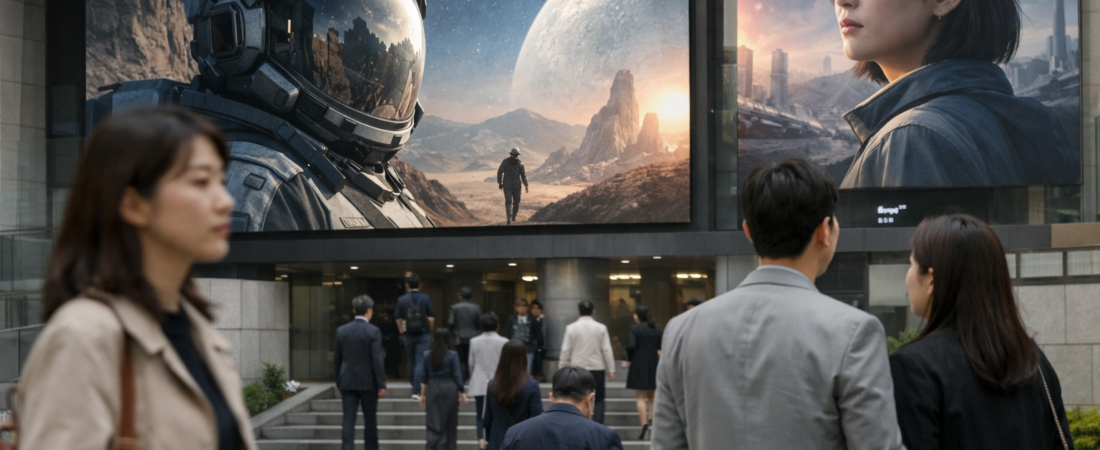
AI-Generated Photorealistic Image — All people, scenes, and details in this image are entirely AI-generated and fictional. Not a real photograph of an actual person or event. 이 이미지는 AI로 생성된 가상 이미지입니다.




Leave a Reply