Table of Contents
What happens when an old Korean spiritual tradition meets a teenager who doesn’t quite fit Korea’s usual definition of “Korean”? That question sits at the heart of Wollam Bosal, a 24-minute short film making waves in Korean film circles. You might expect a documentary about shamanism to feel familiar, even predictable.
But Wollam Bosal takes a sharp turn. It centers on a migrant-background teenager who experiences a self-induced spiritual awakening, becoming a shaman without the traditional mentor or ceremony you’d expect. That single creative choice makes Wollam Bosal feel unlike anything else in recent Korean short film.
What Is Wollam Bosal? A Short Film with Big Ideas
Let’s start with the basics. Wollam Bosal runs just 24 minutes, but it packs in a story that feels much bigger than its runtime.
The film follows a young person often labeled in Korea as an “이주배경 청소년,” or youth with a migrant background. Instead of leaning on the more common (and more stigmatized) term “다문화 자녀,” meaning “multicultural children,” the filmmaker chose language that centers the young person’s own experience of migration and identity.
That word choice matters more than you might think. Language shapes how society sees people, and Korea has been slowly shifting away from labels that frame mixed-heritage kids as different or “other.”
In this story, the teenager doesn’t wait for a shaman elder to guide them through the traditional initiation process. They go through what’s called “셀프 신내림,” or self-directed spirit possession — essentially becoming a shaman on their own terms.
Most teenagers rebel by dyeing their hair or skipping curfew. This one apparently skipped the mentor and went straight to summoning spirits, which is either the boldest coming-of-age story of the year or a very creative way to avoid a part-time job.
Critics reviewing the film, including commentary published by OhmyNews, noted that shamanic possession itself is a familiar theme in Korean film and drama. Wollam Bosal isn’t groundbreaking because of the shamanism angle alone.
It’s groundbreaking because of who gets to have that spiritual experience. Pairing shamanic awakening with a migrant-background protagonist is the twist nobody saw coming, and that combination is exactly why Wollam Bosal has drawn so much attention.
Understanding Korean Shamanism and Sinnaerim
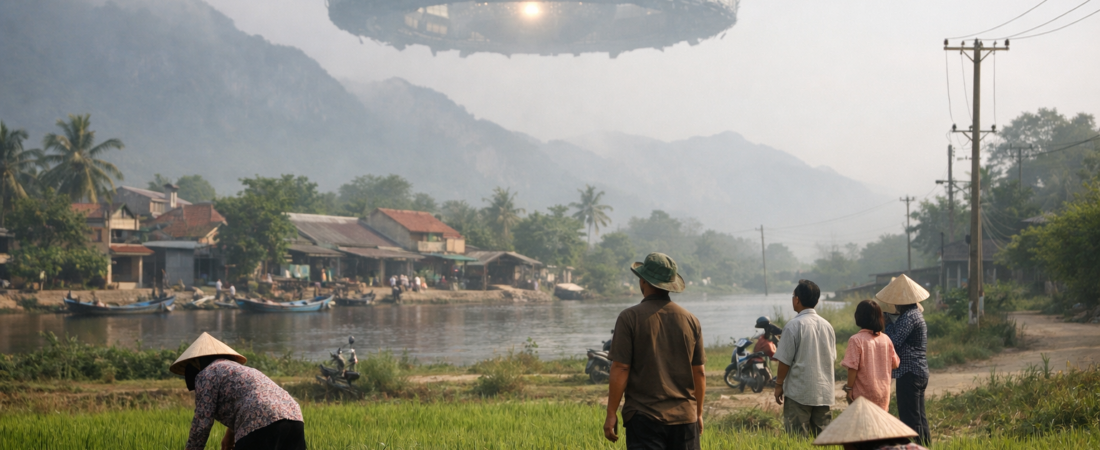
To appreciate why Wollam Bosal feels so fresh, you need some background on Korean shamanism itself. Known as “muism” or simply “shamanism,” this tradition stretches back thousands of years in Korea, long before Buddhism or Confucianism arrived.
A “mudang,” or shaman, acts as a bridge between the human world and the spirit world. They perform rituals called “gut” to heal illness, resolve family conflict, or guide the dead toward peace.
The path to becoming a shaman usually starts with “신내림,” which translates roughly to “the descent of the spirit.” This is often described as a calling a person cannot refuse — sudden illness, vivid dreams, or a deep unexplainable pull toward the spiritual world.
Traditionally, an experienced shaman guides the initiate through this process during a formal ceremony. So why does Wollam Bosal skip that step entirely?
By having the protagonist go through a self-directed version of sinnaerim, the film suggests something quietly radical. Maybe spiritual belonging doesn’t require permission from established institutions — Korean or otherwise.
For a migrant-background teenager who may already feel like an outsider to traditional Korean structures, claiming spiritual authority without asking permission carries real symbolic weight. Wollam Bosal uses this shamanic framework to ask a bigger question about who gets to belong, and on whose terms that belonging happens.
Migrant-Background Youth and a Changing Korea
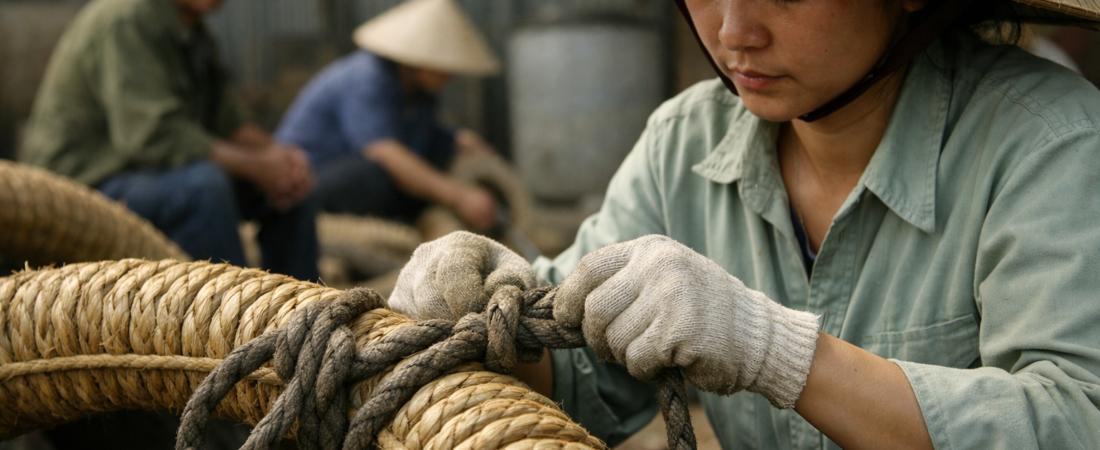
Korea’s demographic makeup has shifted dramatically over the past two decades. Rural marriages between Korean men and women from Vietnam, the Philippines, and other Southeast Asian countries became increasingly common starting in the early 2000s.
Their children, often called “이주배경 청소년,” now make up a growing share of Korean classrooms, especially outside Seoul. Government statistics have tracked this population for years, and the numbers keep climbing.
Yet growing numbers haven’t always translated into smooth acceptance. Many migrant-background youth report feeling caught between two identities, neither fully “Korean” in the eyes of classmates nor fully connected to their parent’s home culture.
The title Wollam Bosal itself plays with this tension. “Wollam” is an older Korean term for Vietnam, while “bosal” is an honorific term for a shaman, sometimes borrowed from Buddhist vocabulary.
Smashing these two words together creates a title that sounds almost like a contradiction — a distinctly Korean spiritual role paired with a distinctly non-Korean origin. Isn’t that exactly the kind of identity puzzle many migrant-background kids live with every single day?
The film doesn’t resolve that puzzle with easy answers. Instead, it lets the contradiction sit on screen, giving the audience space to feel the discomfort and the possibility at the same time.
Why Wollam Bosal Matters for Korea’s Cultural Future
Short films rarely make headlines outside festival circuits. So why has Wollam Bosal caught the attention of film writers and cultural commentators?
Part of the answer is timing. Korean cinema and television have spent the last decade exploring outsider perspectives, from disability to class struggle to regional identity.
Wollam Bosal adds migrant-background identity to that growing conversation, using a genre — shamanism — that feels distinctly, unmistakably Korean. That pairing forces viewers to ask a question they might otherwise avoid: what actually counts as authentically Korean culture in 2026?
It’s worth being honest here about the harder side of this story. Migrant-background youth in Korea still face real barriers — language gaps, subtle exclusion, and a school system that hasn’t always caught up with the country’s changing population.
That difficulty is real, and pretending otherwise would do a disservice to the young people living it. But alongside that struggle, something hopeful is happening in Korean creative spaces right now.
Filmmakers, writers, and artists with migrant-background stories are increasingly telling their own narratives, on their own terms, rather than waiting for someone else to represent them. Wollam Bosal is one small but meaningful example of that shift, using an ancient spiritual tradition to claim space rather than ask for it.
There’s something worth sitting with in a story where a young person claims spiritual power without waiting for anyone’s blessing. Korean shamanism has always carried a certain resilience — a way for ordinary people, often women, to hold authority in a society that didn’t always grant them much elsewhere.
That same resilience shows up in Wollam Bosal, reframed for a generation growing up between cultures. But resilience always comes with a cost that’s easy to overlook from the outside.
The pressure to represent two cultures at once, to be a bridge whether you asked for that role or not, can weigh heavily on a young person still figuring out who they are. Wollam Bosal doesn’t pretend that weight disappears just because the ending feels hopeful; it simply shows a character choosing to carry it on her own terms instead of someone else’s.
Korea’s cultural industry is watching closely to see whether stories like Wollam Bosal remain a niche curiosity or become part of a broader trend. Streaming platforms have already shown appetite for stories about outsiders finding their place in Korean society.
If Wollam Bosal signals anything, it’s that Korean audiences are ready for more complicated, less tidy versions of what “Korean identity” can look like. Where do you think Korean film and television should go next when it comes to telling migrant-background stories?
AI-Generated Photorealistic Image — All people, scenes, and details in this image are entirely AI-generated and fictional. Not a real photograph of an actual person or event. 이 이미지는 AI로 생성된 가상 이미지입니다.



Leave a Reply